-
Pages
-
Categories
-
Archives

Portland, OR | 503-922-1934
Bike Gallery
No infrastructure? No Problem. The Littleford Expedition Rig
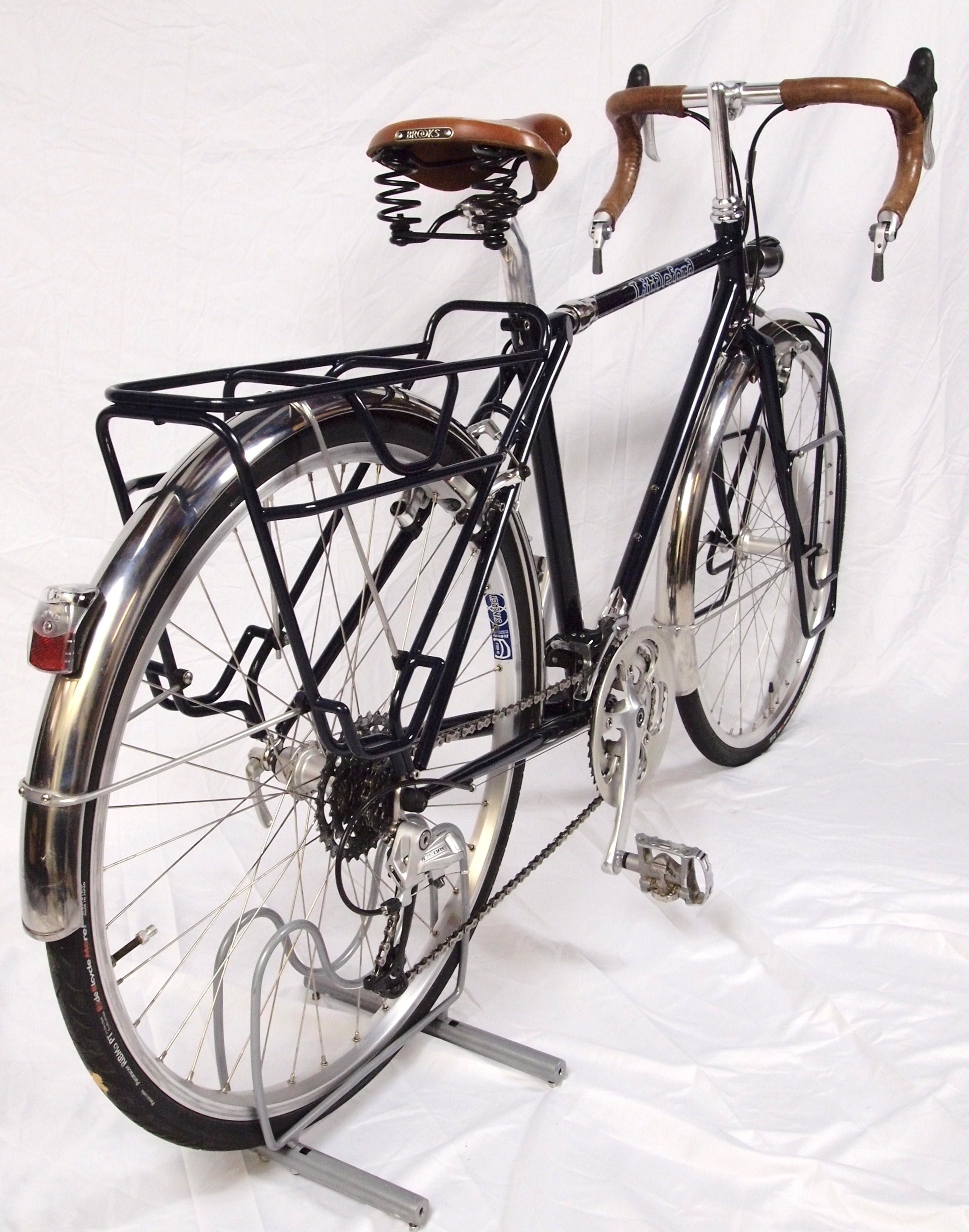
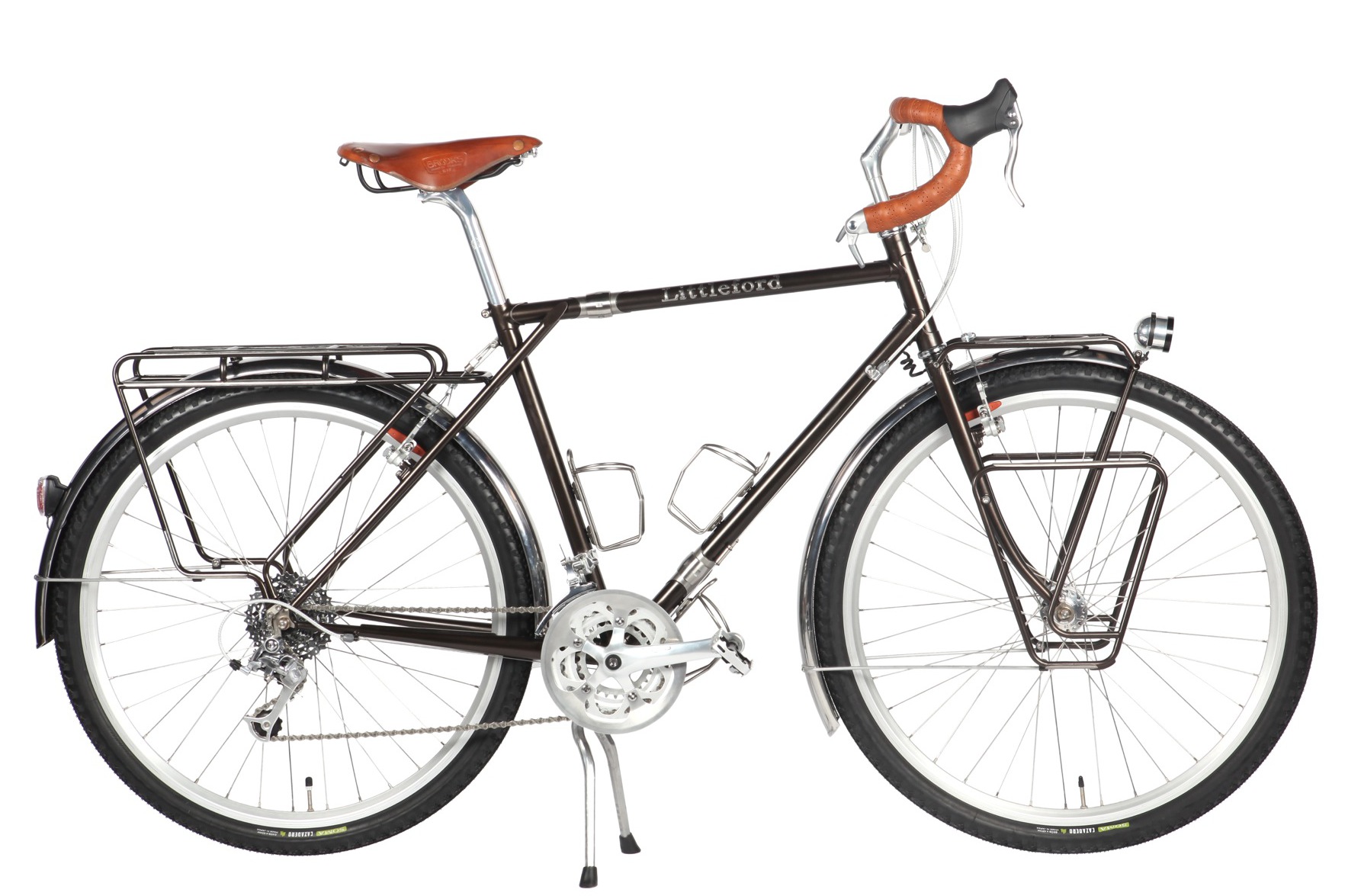
There are two lenses through which one can view a bike tour; a relaxation lens, or an adventure lens. For a tourist seeking relaxation, logistical troubles and unpleasant surprises just aren’t on the agenda, at least not if he can help it. The objective is to decompress, stay reasonably comfortable, and to see some part of the world on his own terms. The adventurer, on the other hand, sees things differently. She takes her comfort and relaxation on the world’s terms- which could mean comfort when the long-lost sun returns to dry clothes that have been wet for days, and relaxation when a scheduled ferry never comes. Terrible roads, inconsiderate drivers, hoards of dogs and/or sugar-crazed children in hot pursuit are all part of a greater experience, with the right mindset and a very capable bike. The Littleford Expedition is well designed for both varieties of tourists, and anyone in between.
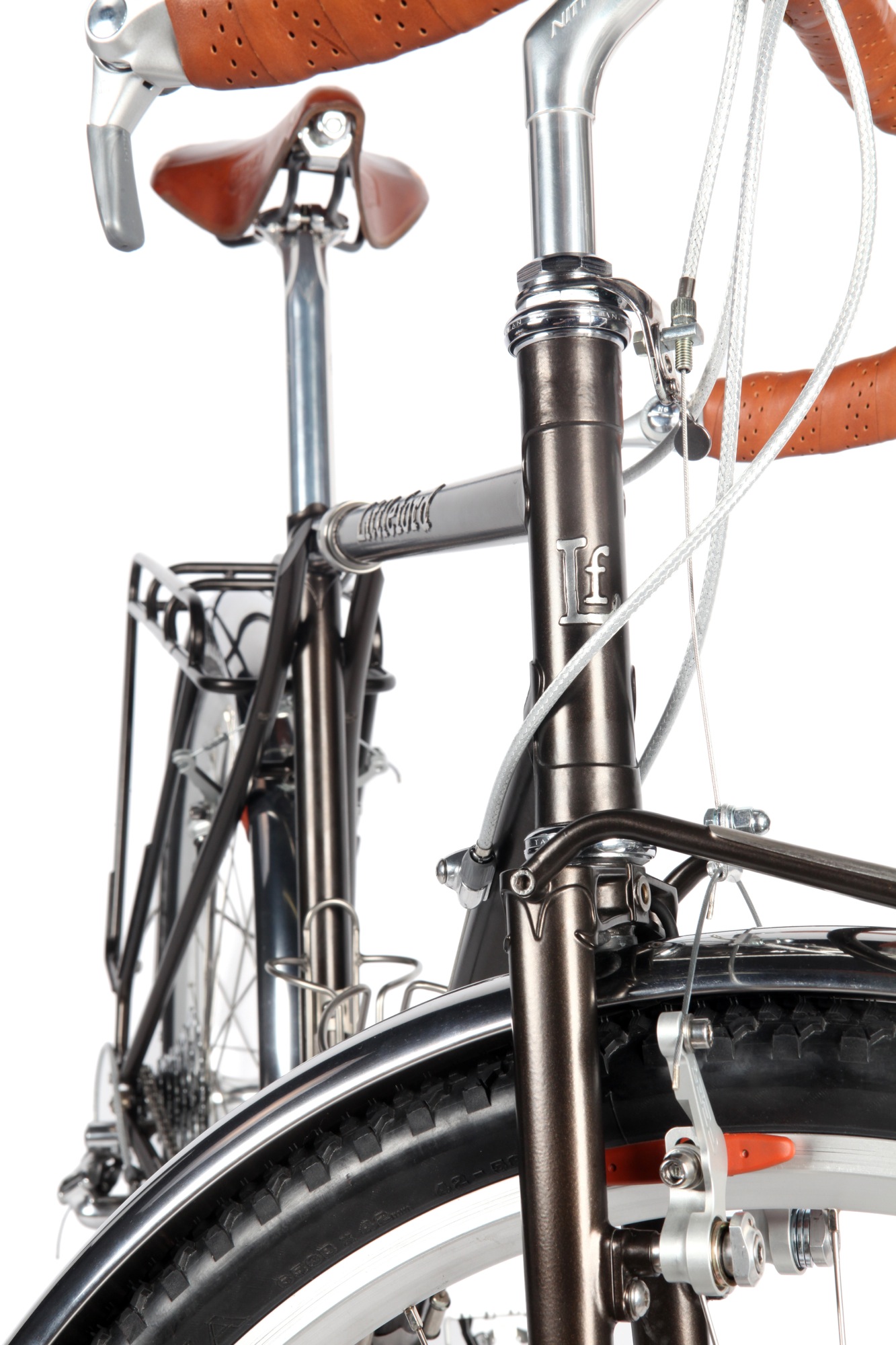
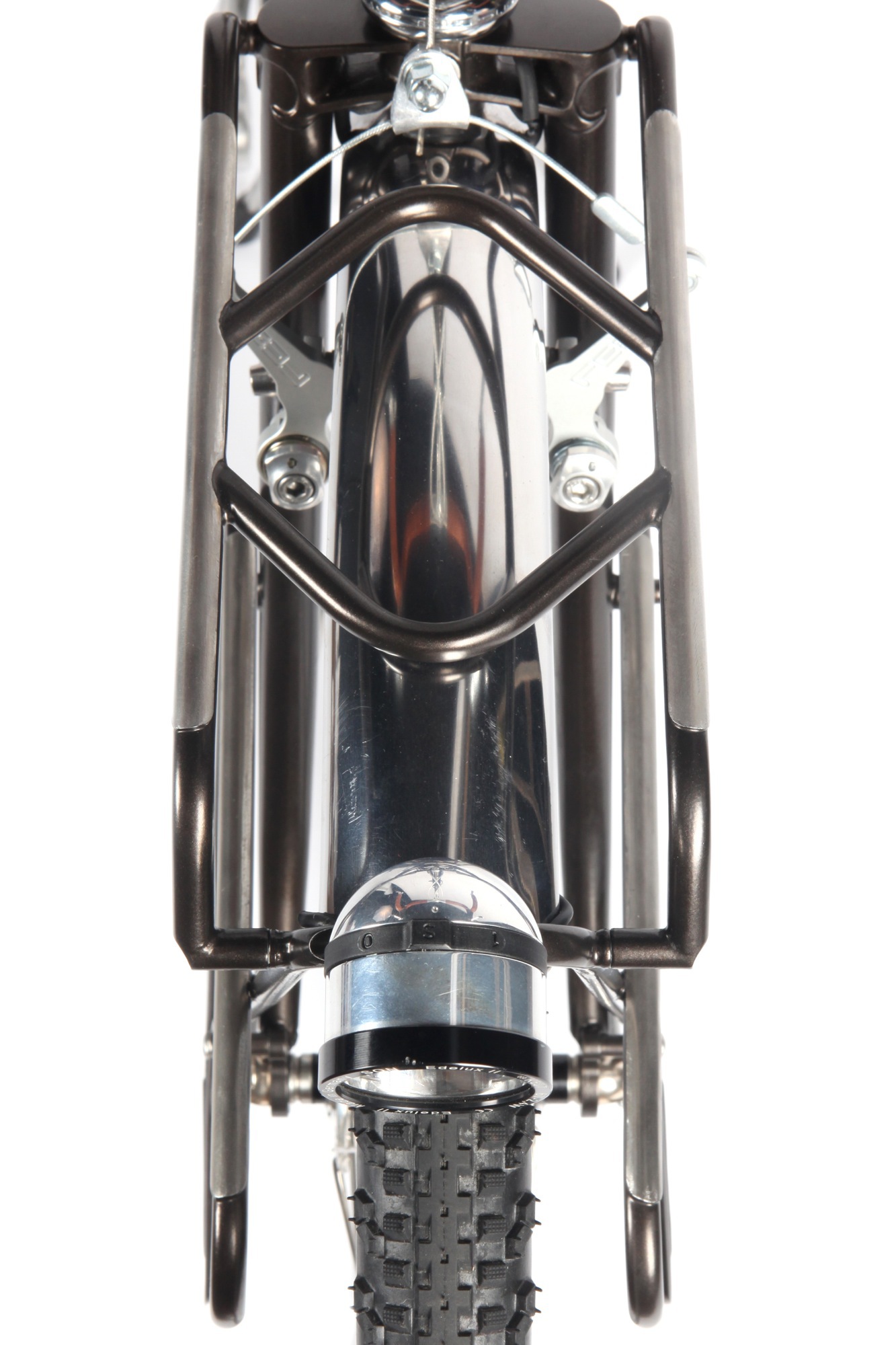
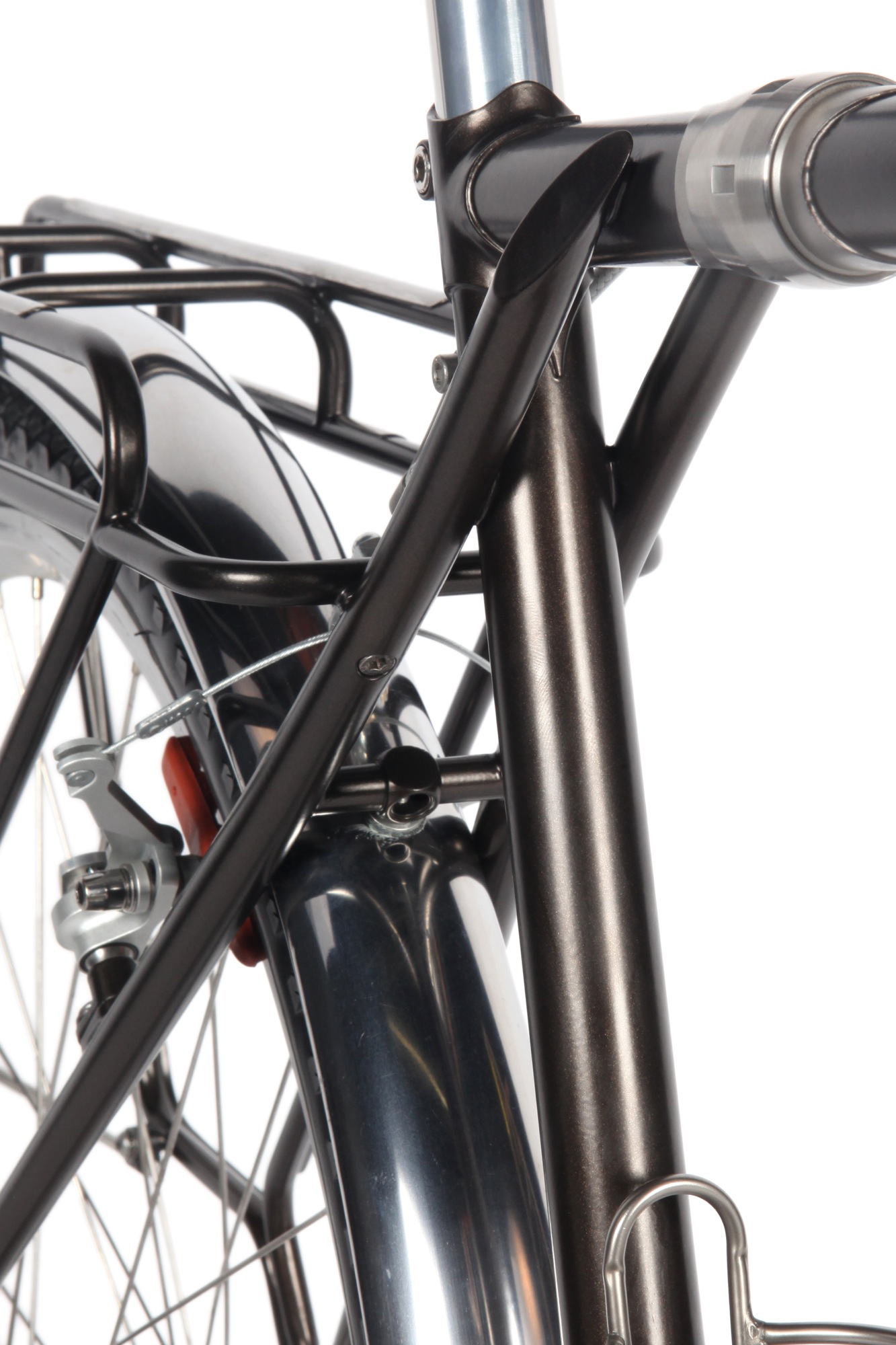
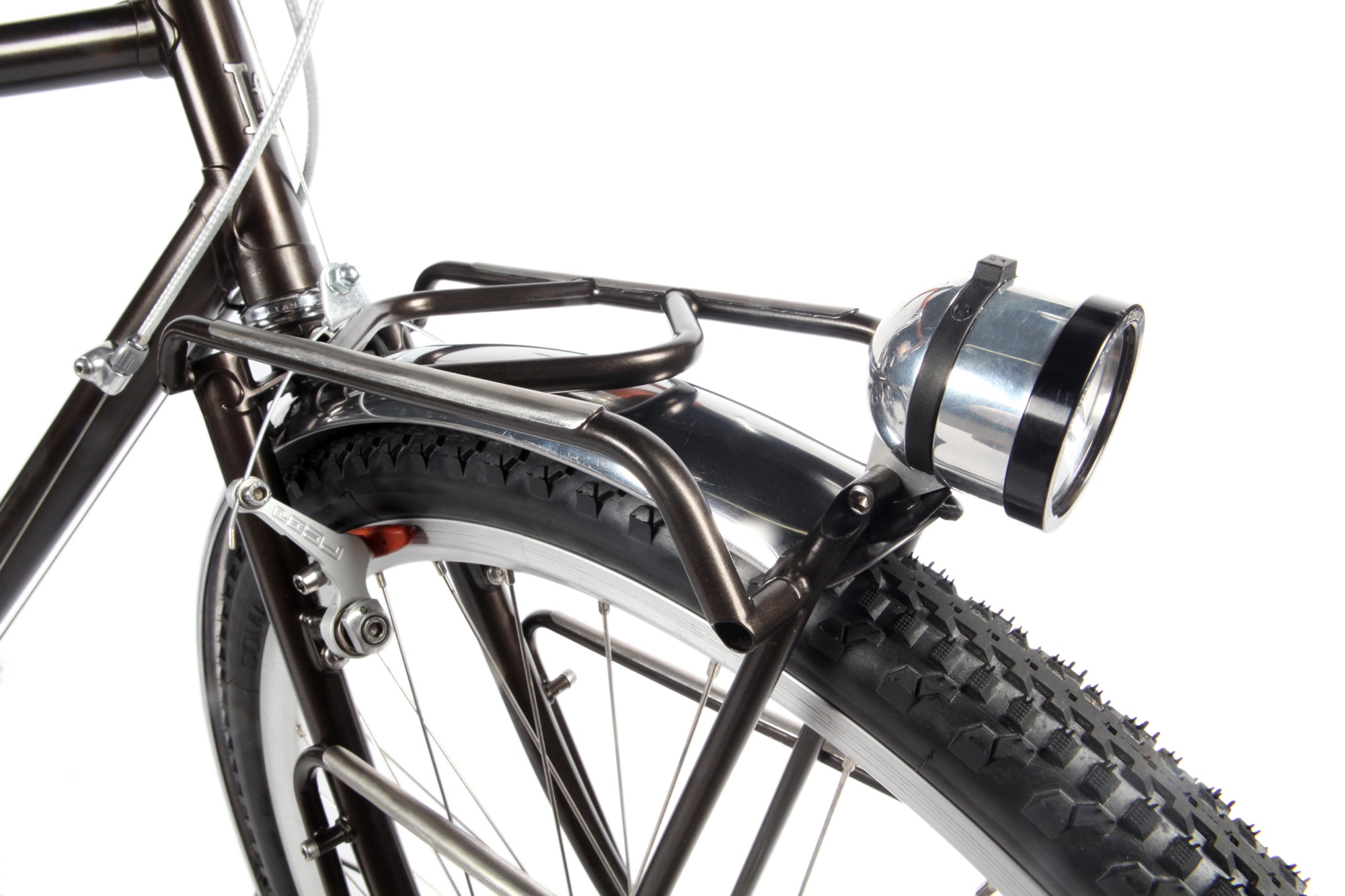
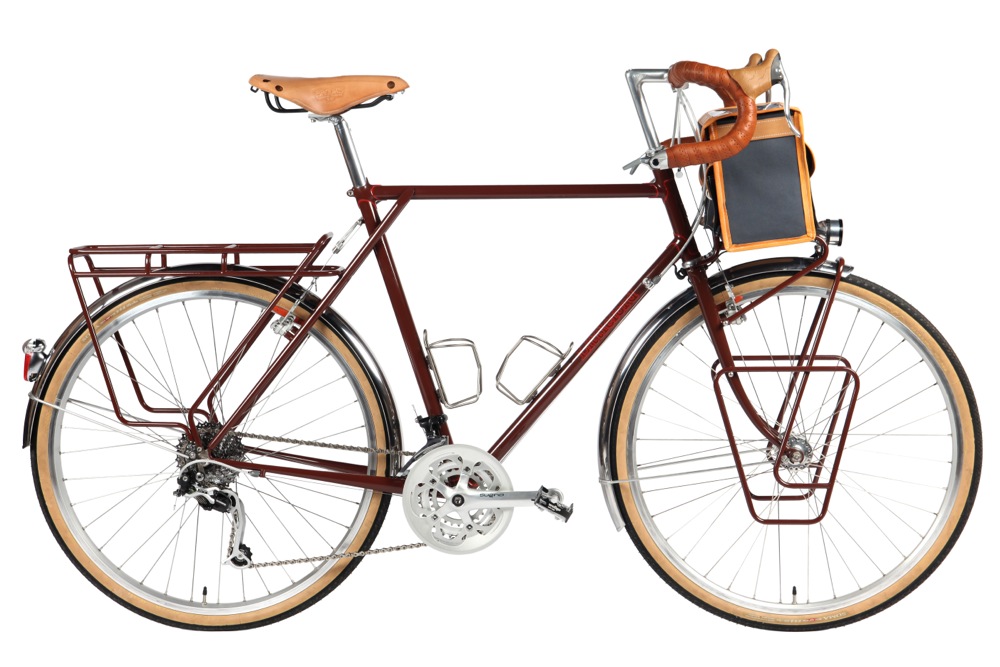
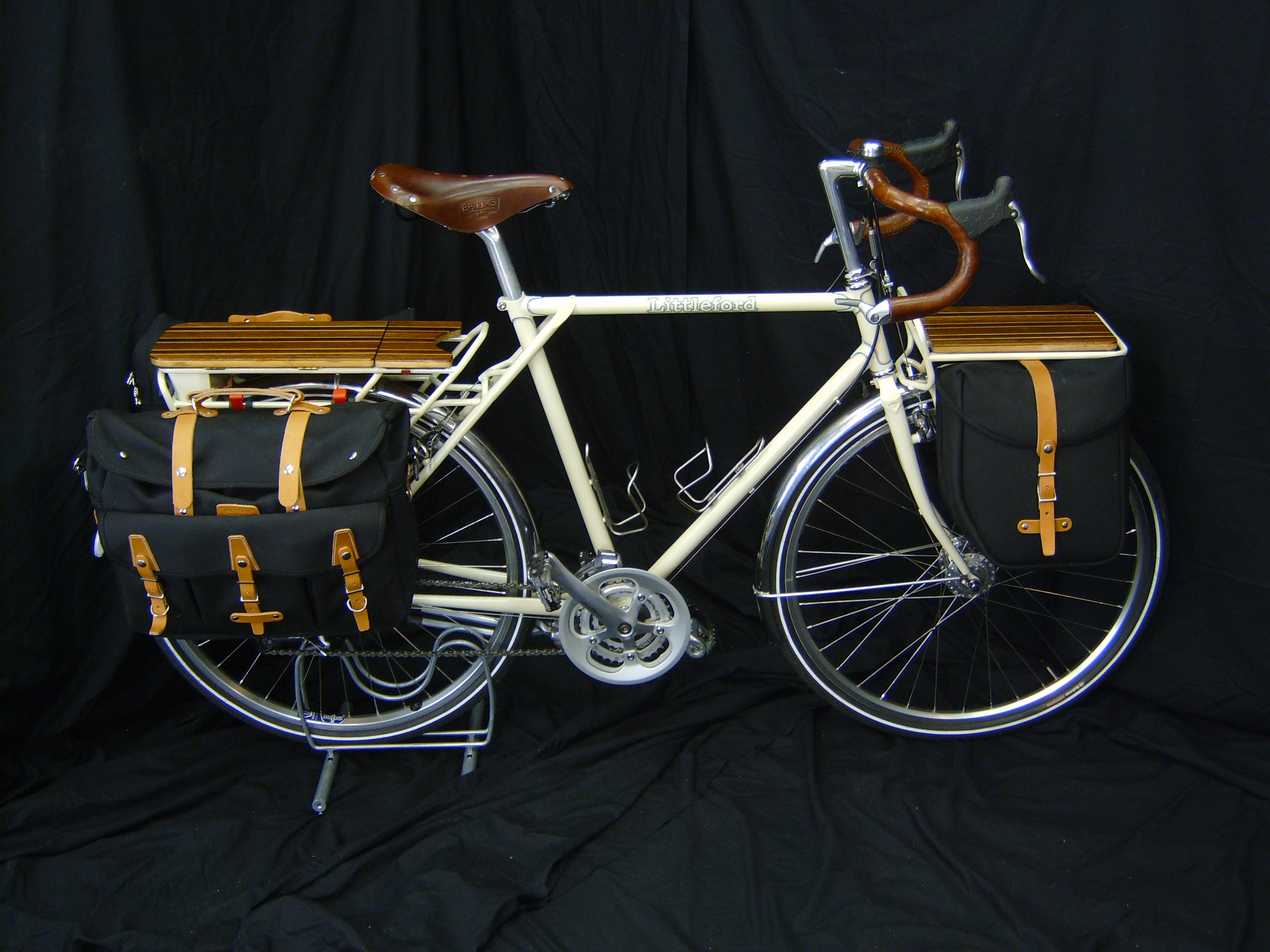
The Expedition pictured has some extra bells and whistles:
- Schmidt SL automatic front and rear dynamo lighting with Edelux II, Secula plus head and tail lights
- Fully internal wiring, now with magnetic wire connectors for easy breakdown and reassembly
- S & S couplings with coupled internal stainless brake housing
- Reversible canti bosses, adaptable to both 26″ and 650B wheels, plus bridges designed for 700C wheels and caliper brakes
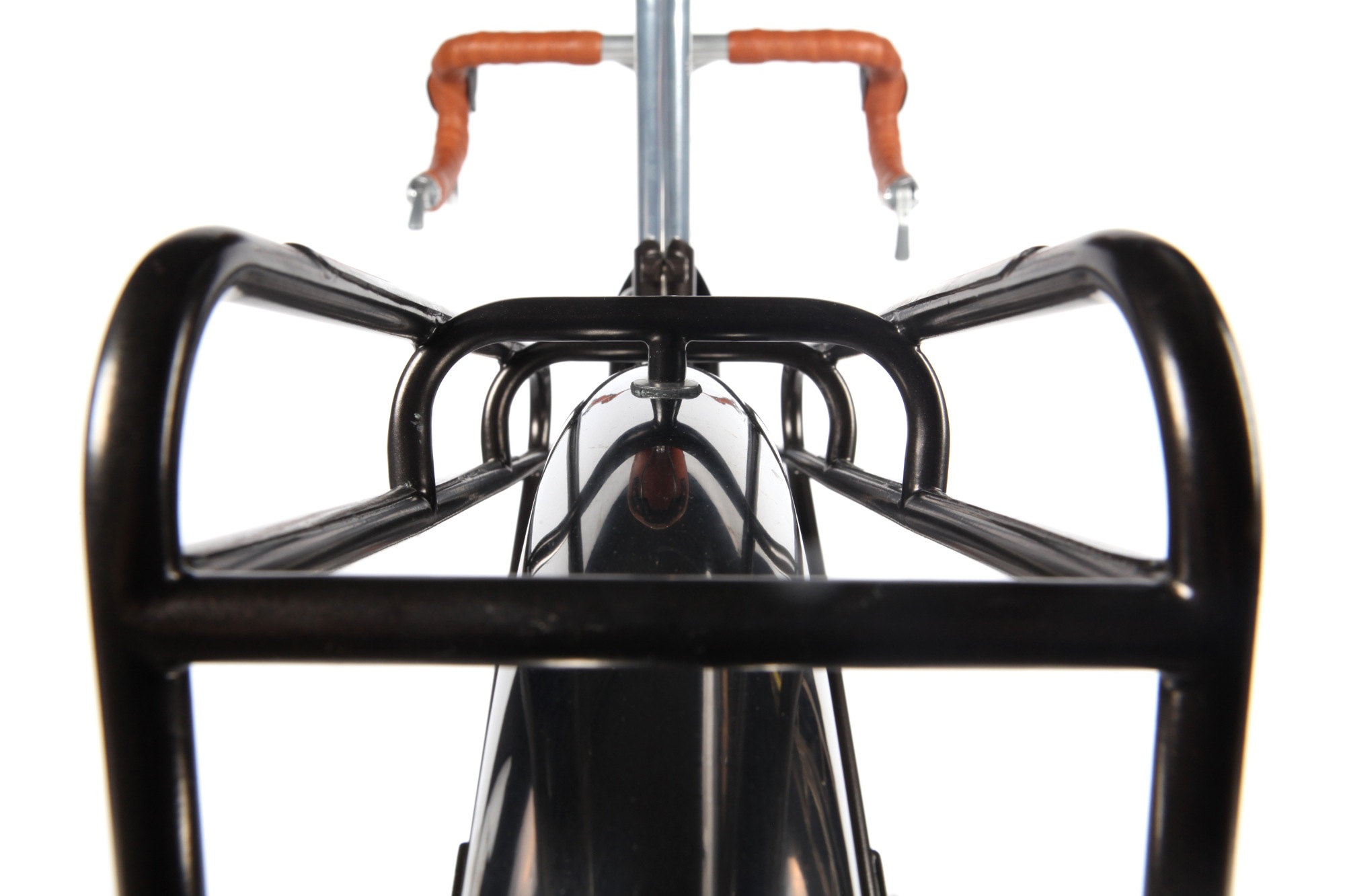
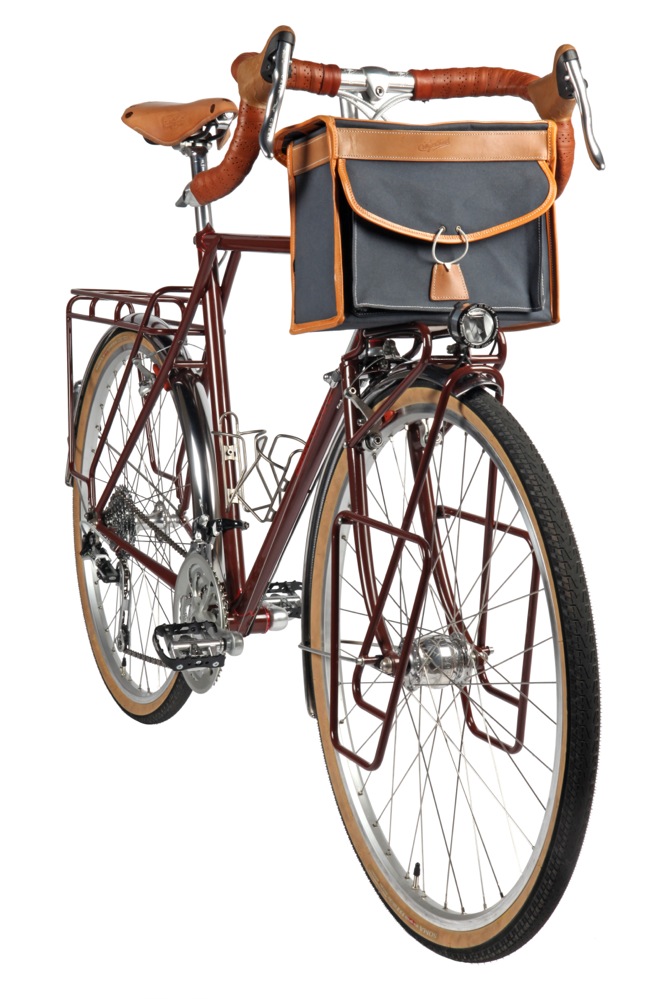
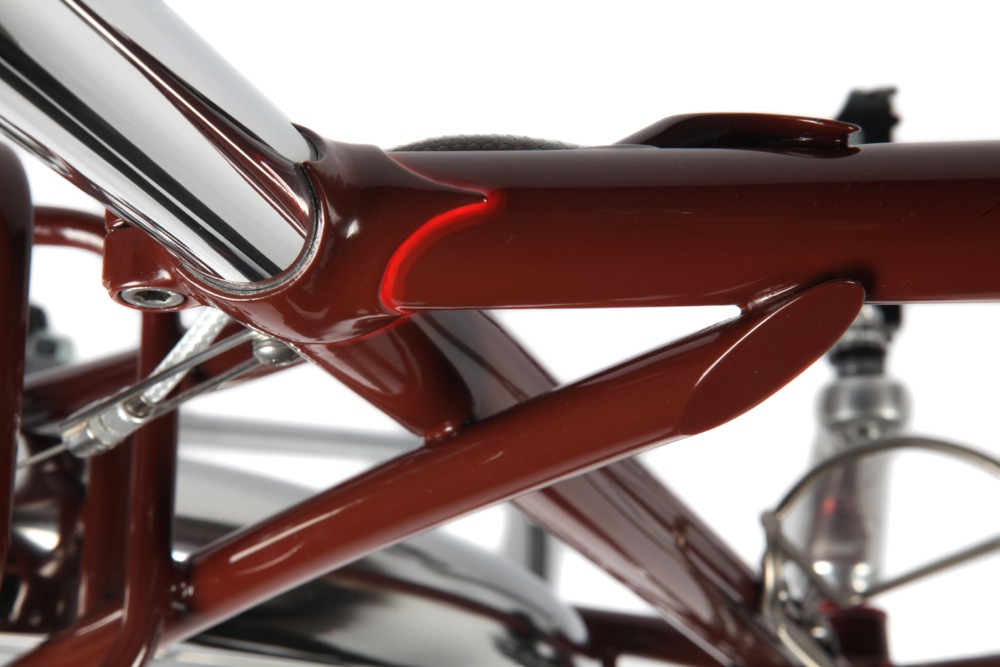
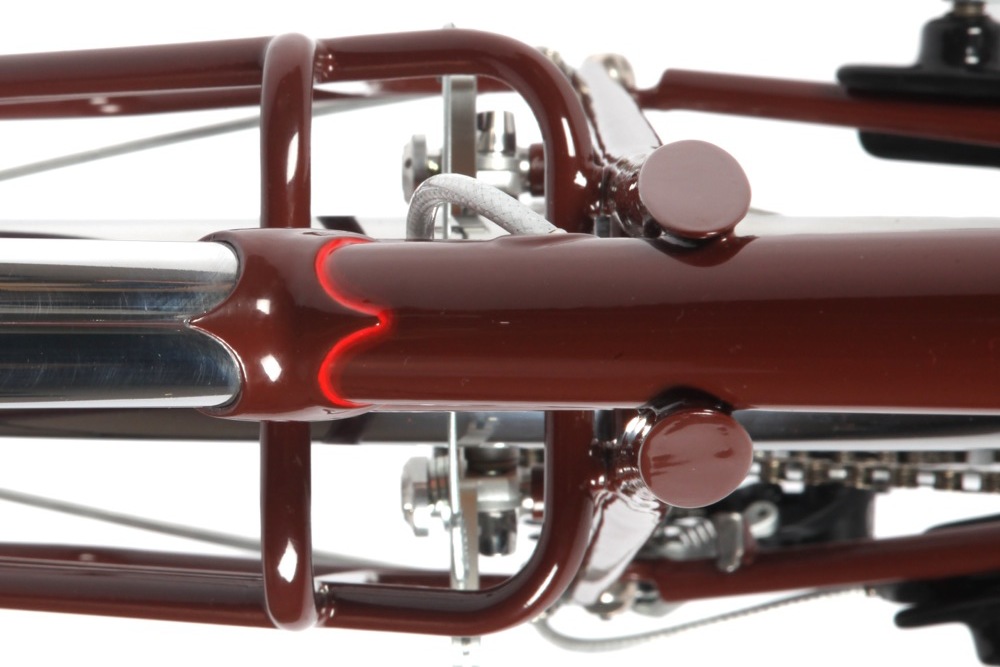
- Dual panel S & S lowrider and integrated platform racks with stainless wear surfaces, joined at the headlight
- Stainless kickstand plate with Pletscher double kickstand
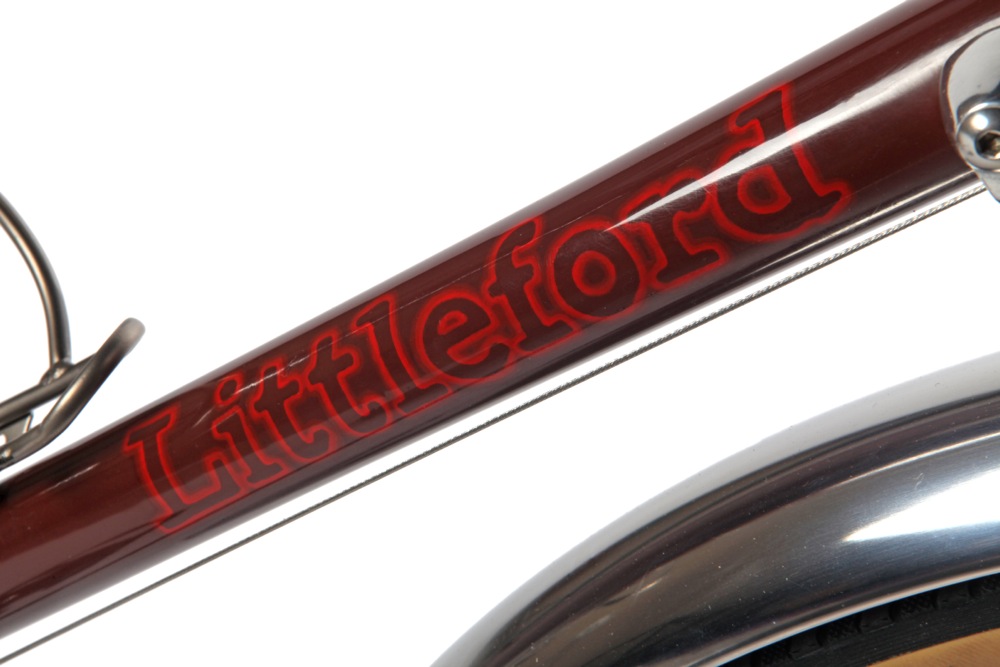
- Brazed stainless steel chain guard, lettering and headbadge
 |
 |
 |
 |
  |
  |
  |
An “All-Roundonneur”
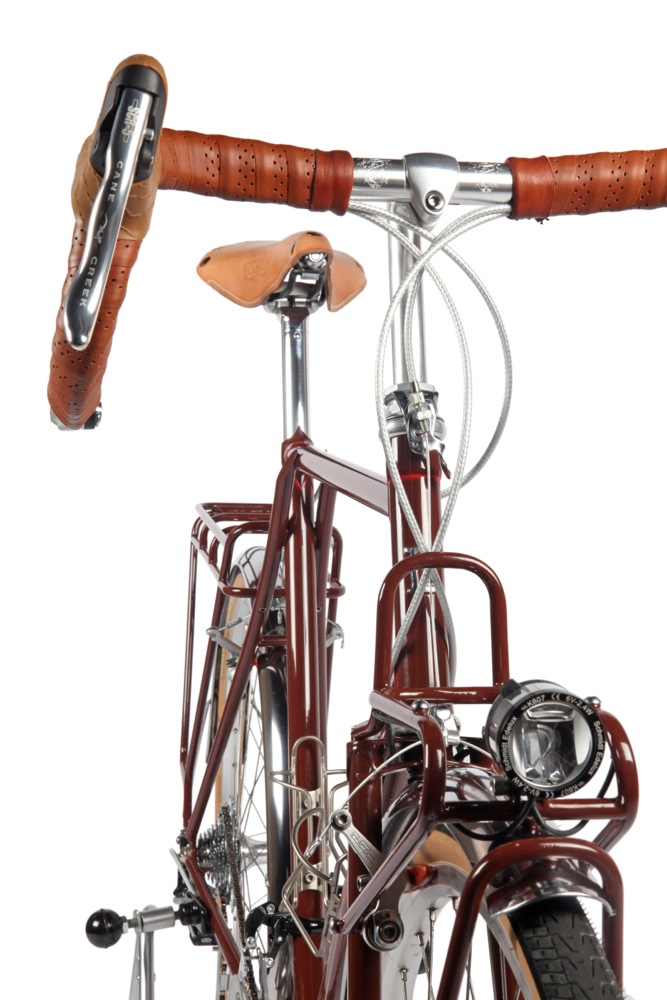
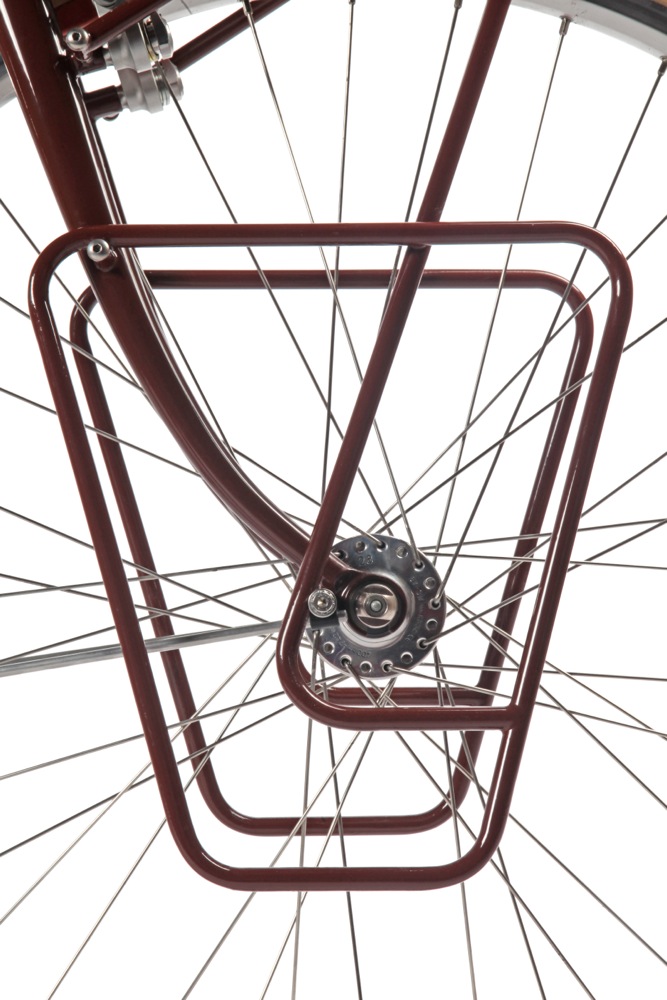
Robert was looking for a lively randonneur that was fully capable of unsupported touring. The Schmidt SL generator hub connects automatically to the internally wired fork with insertion of the wheel. The Edelux 2 headlight, similarly automatic, is completely weatherproof. The magnetic switch can be set to on, off or “Senso”, which controls the lamp according to ambient light levels. The Gilles Berthoud handlebar bag bolts directly through to the platform rack, so decaleur and straps are unnecessary. Classic rear, lowrider and mini platform racks offer ample cargo capacity, and each is easily removable.
 |
 |
 |
 |
  |
  |
 |
Collapsible rando, front and rear
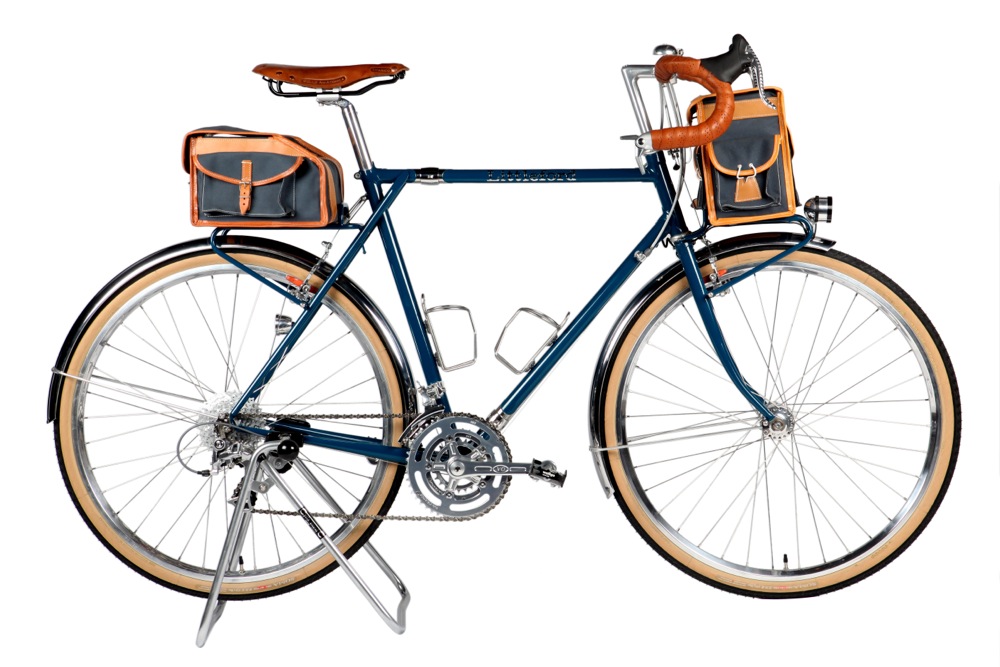
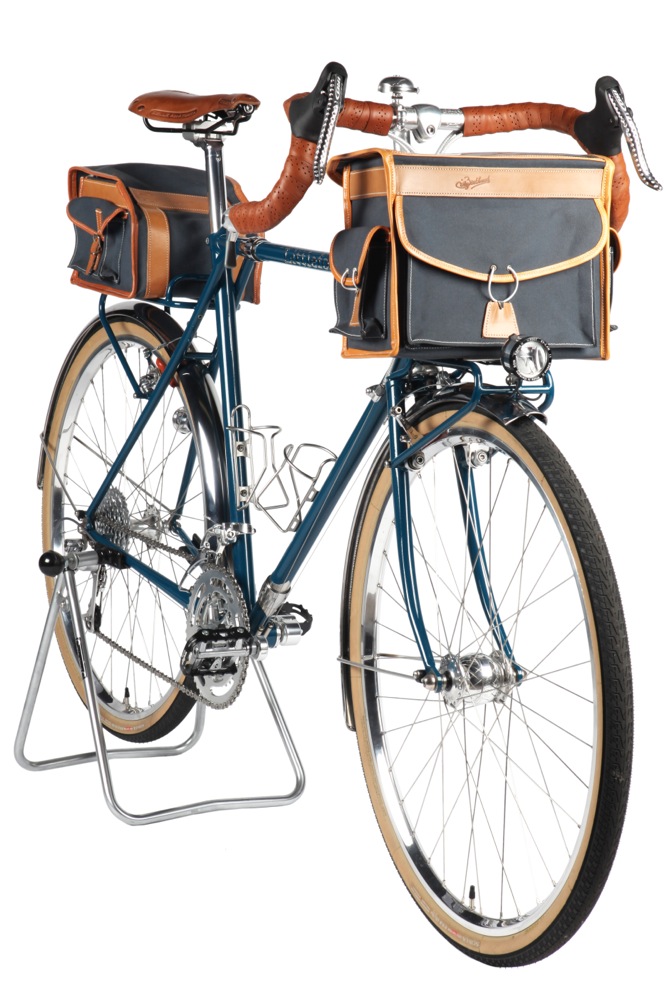
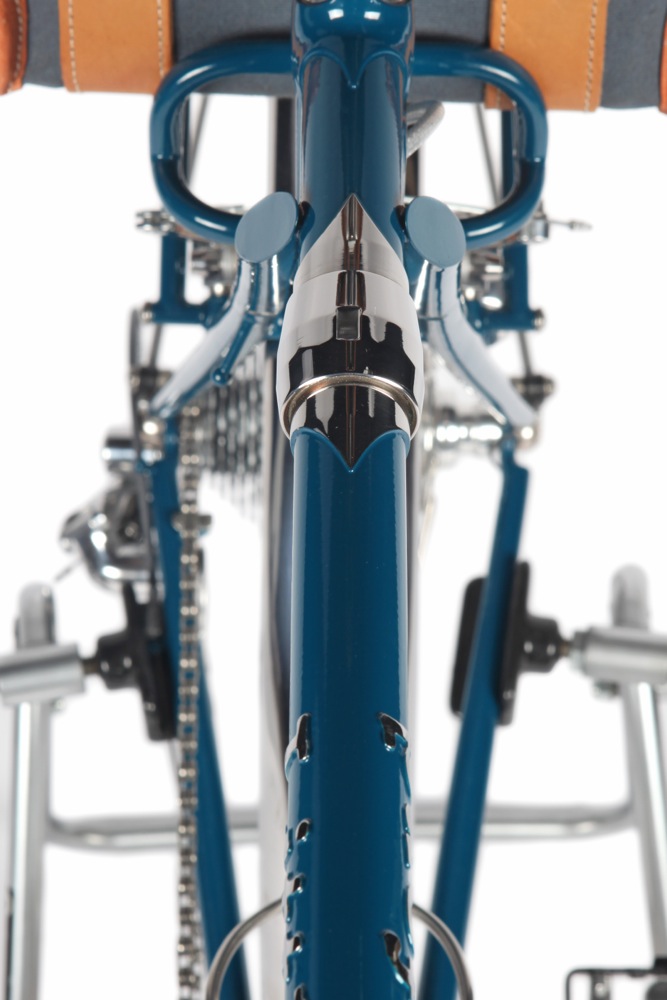
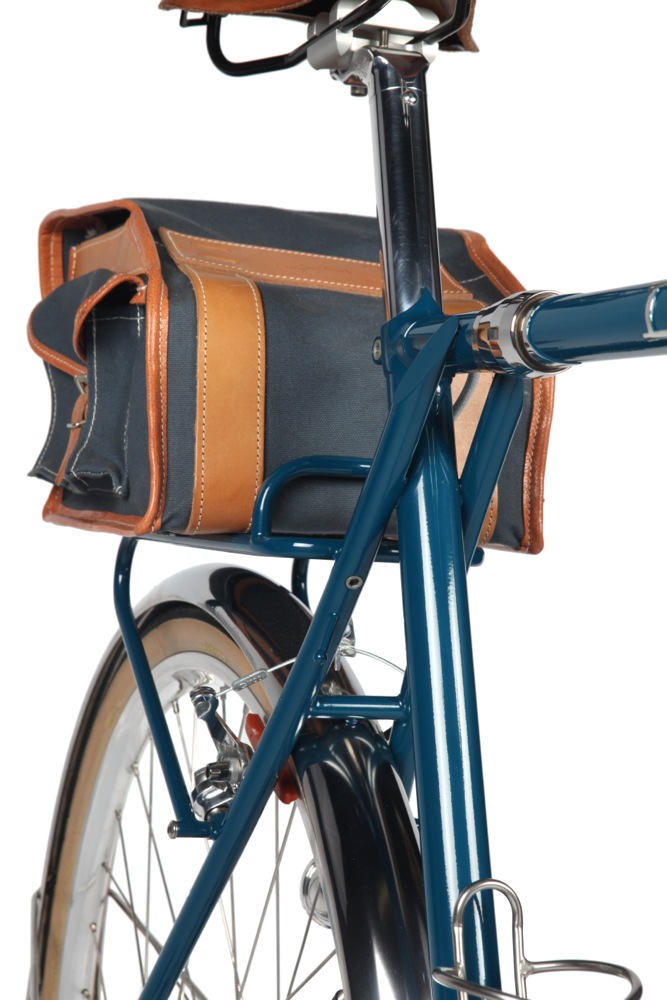
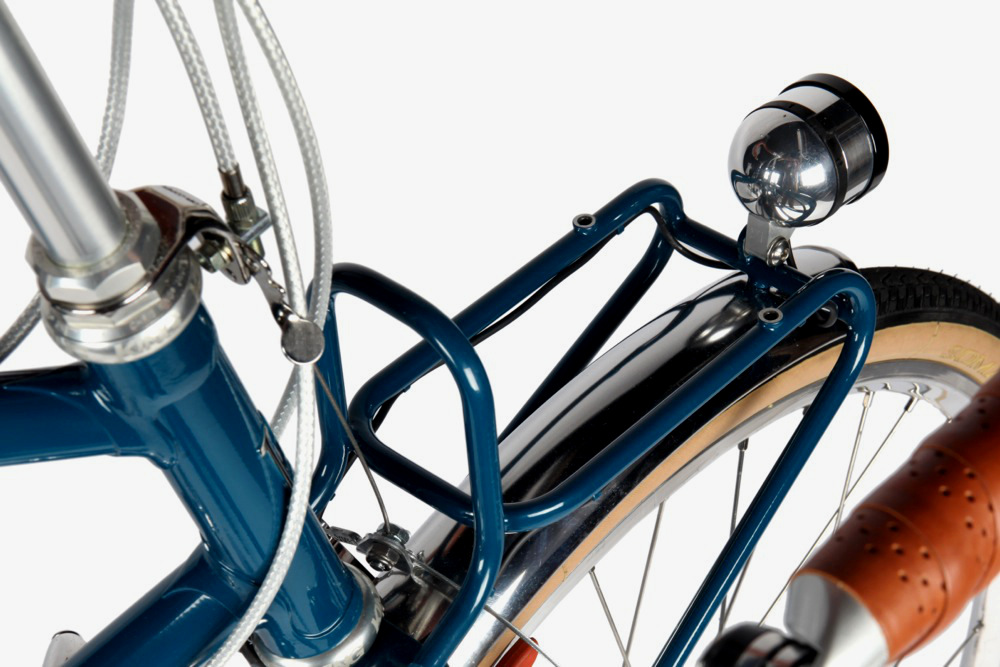
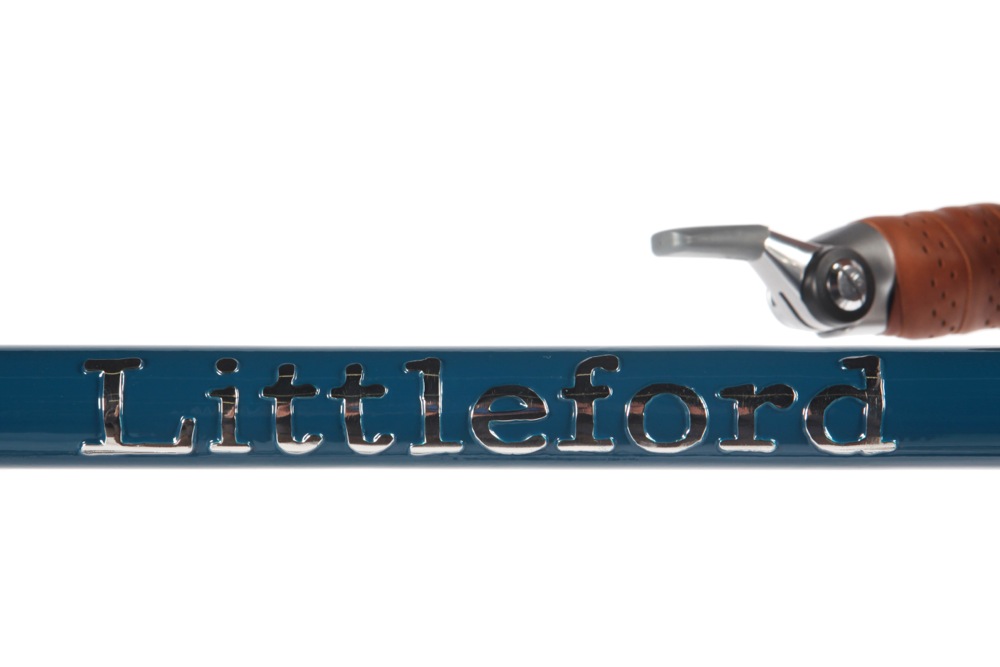
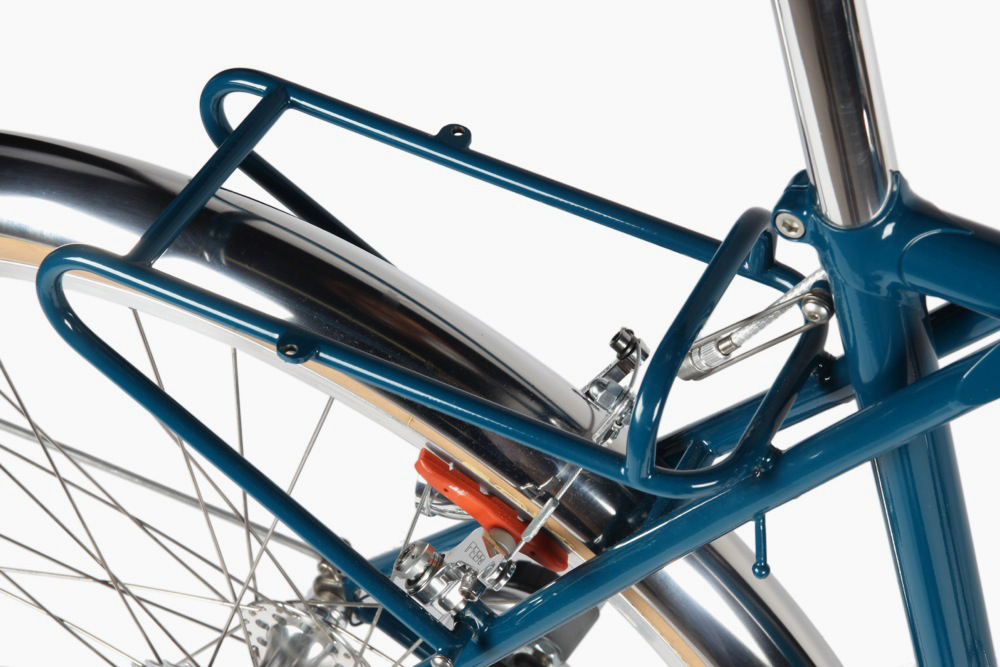
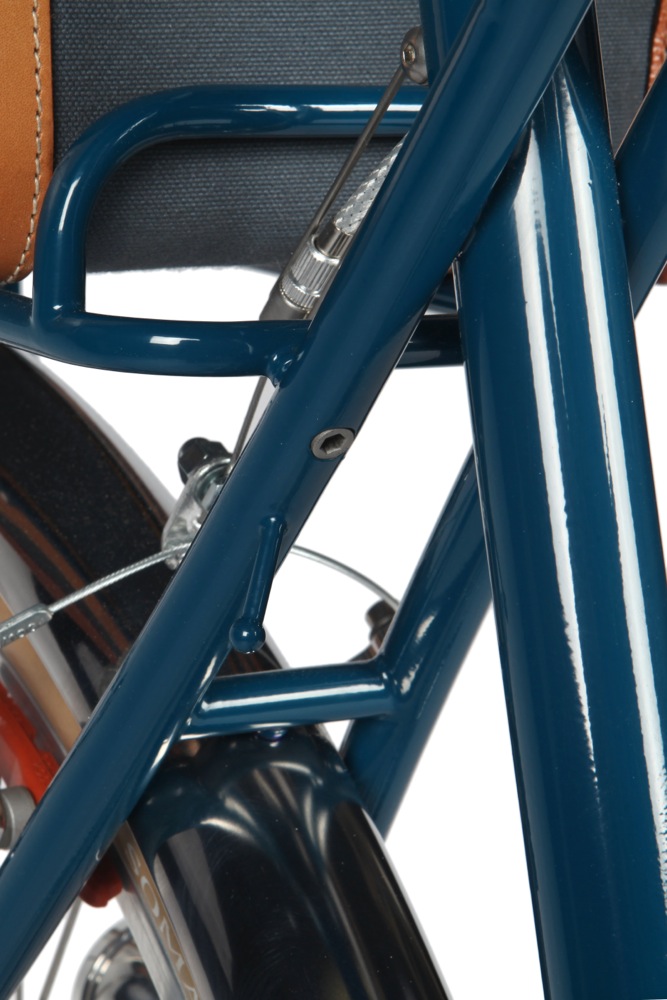
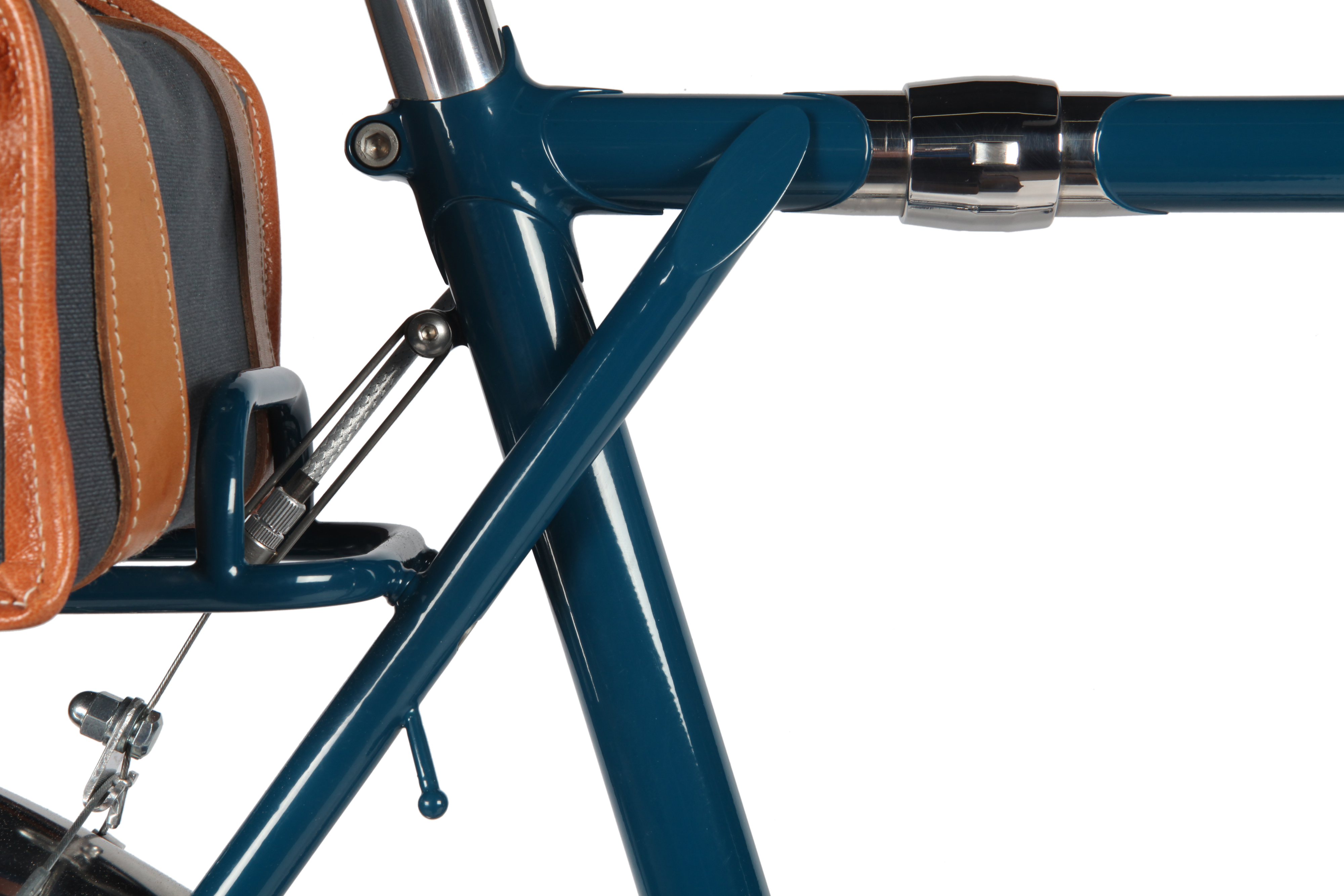
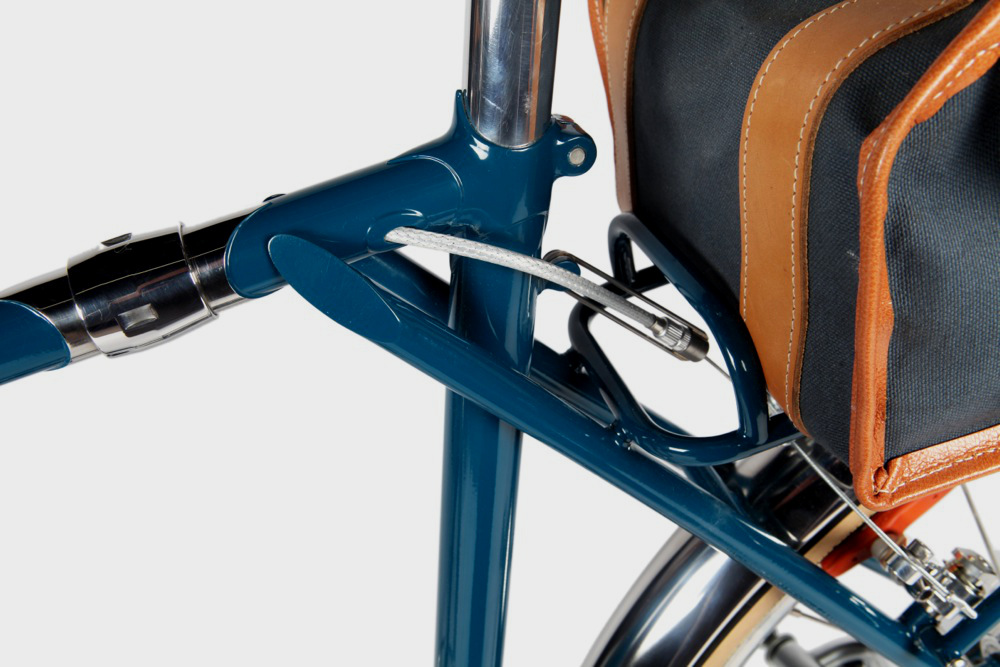
Mike wanted a capable and fully packable randonneur that could handle the Old World cobble and grit with class. Berthoud bags bolt directly into removable front and rear mini racks. S & S couplers allow the bike to pack into a 26″ suitcase, including the racks and fenders. Polished stainless couplers and lettering add some subtle bling. The non-drive seat stay features an integrated, internally wired taillight from Compass, while a small rounded tab under the drive side stay holds an old-school chrome frame pump (not pictured).
 |
 |
 |
 |
 |
 |
 |
 |
 |
 |
The Woody: a classic commuter
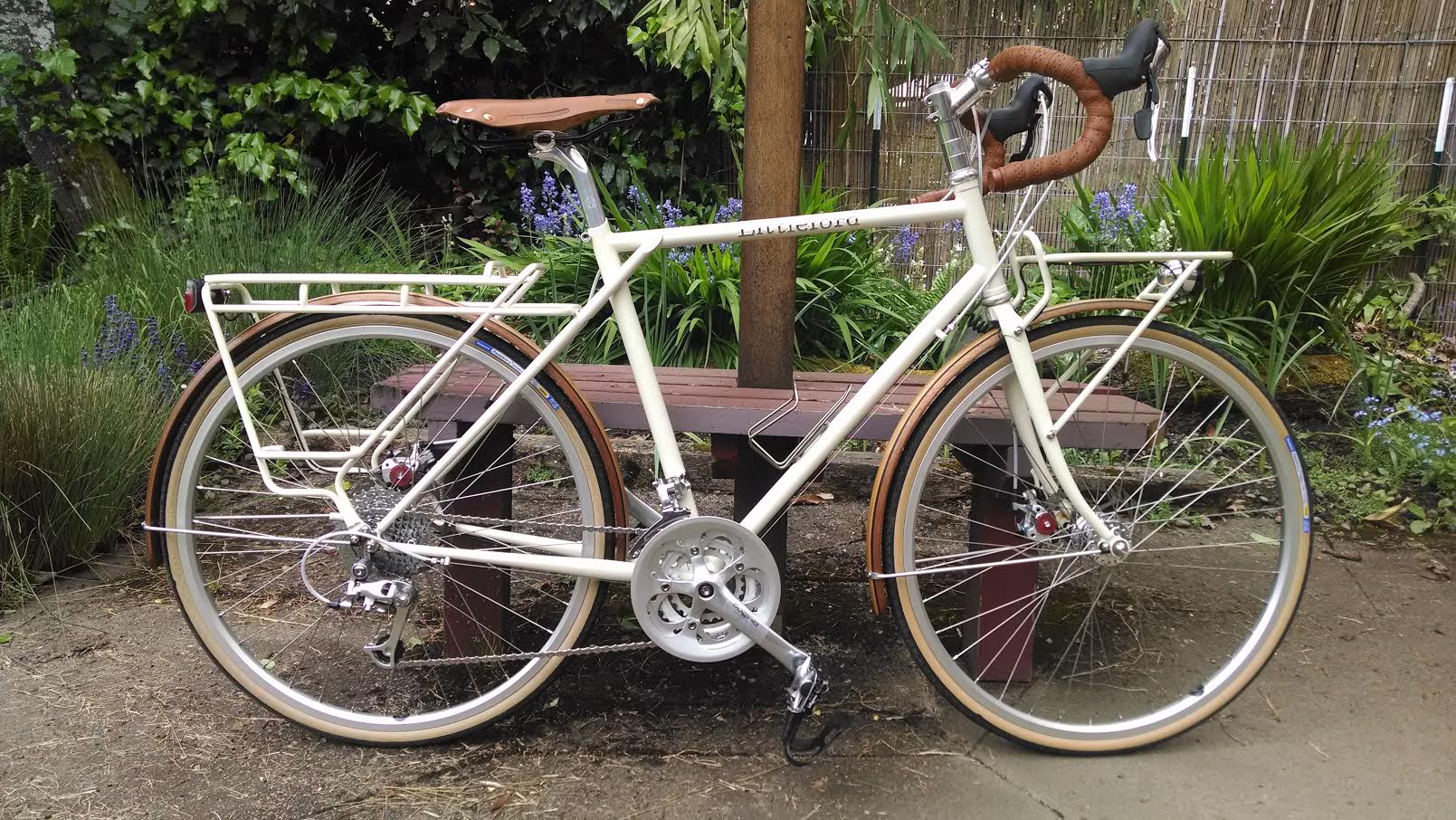
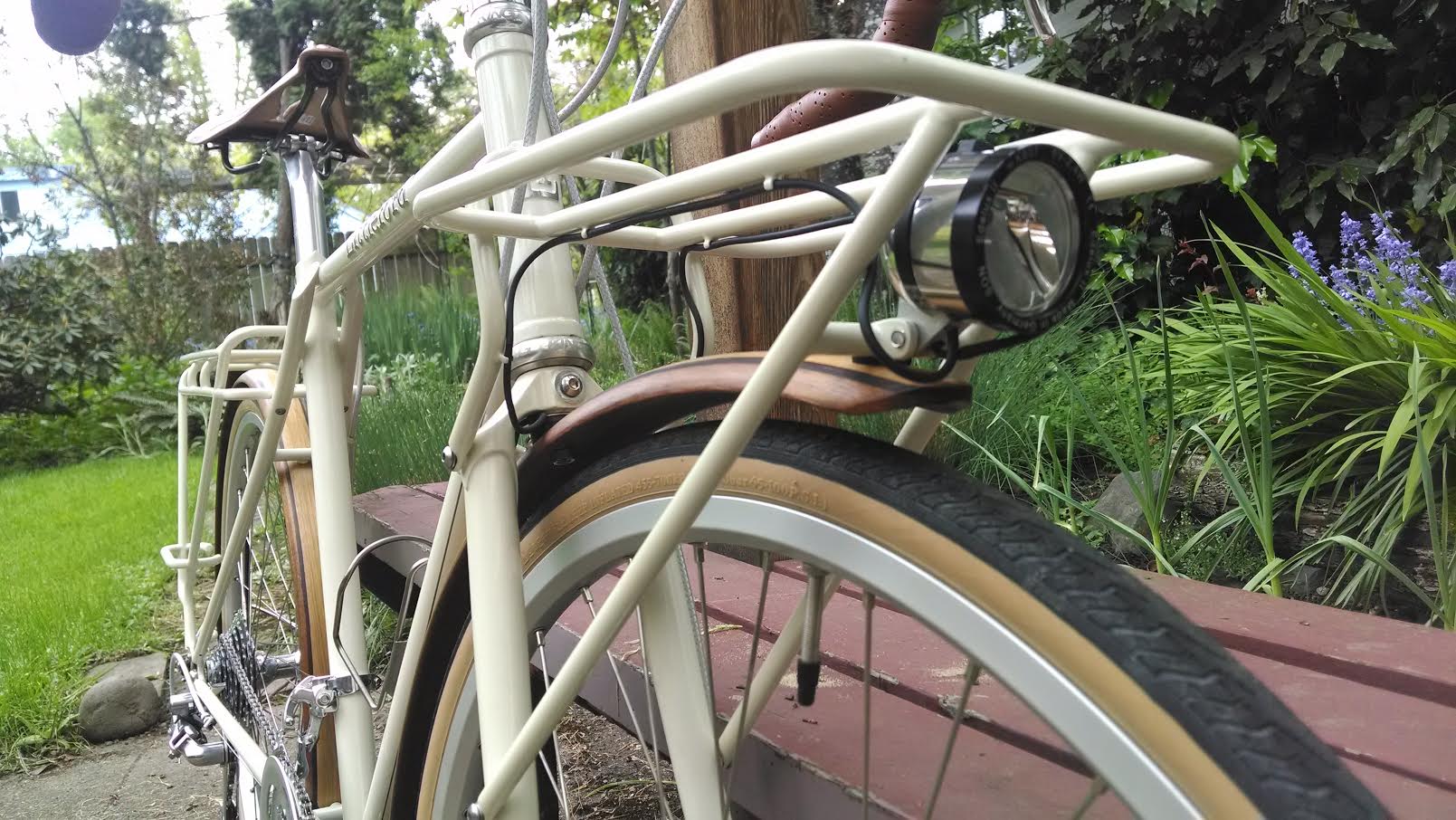
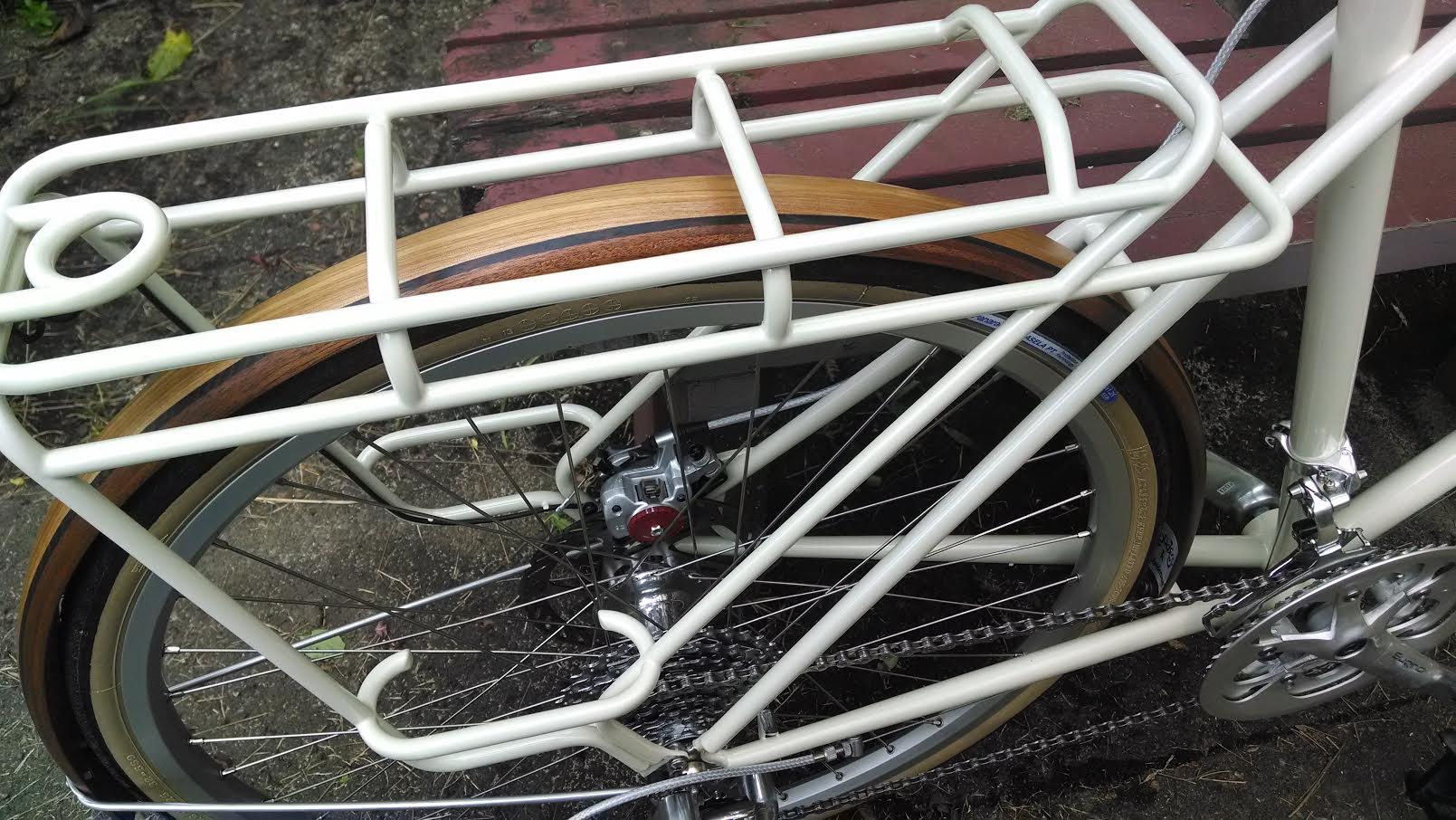
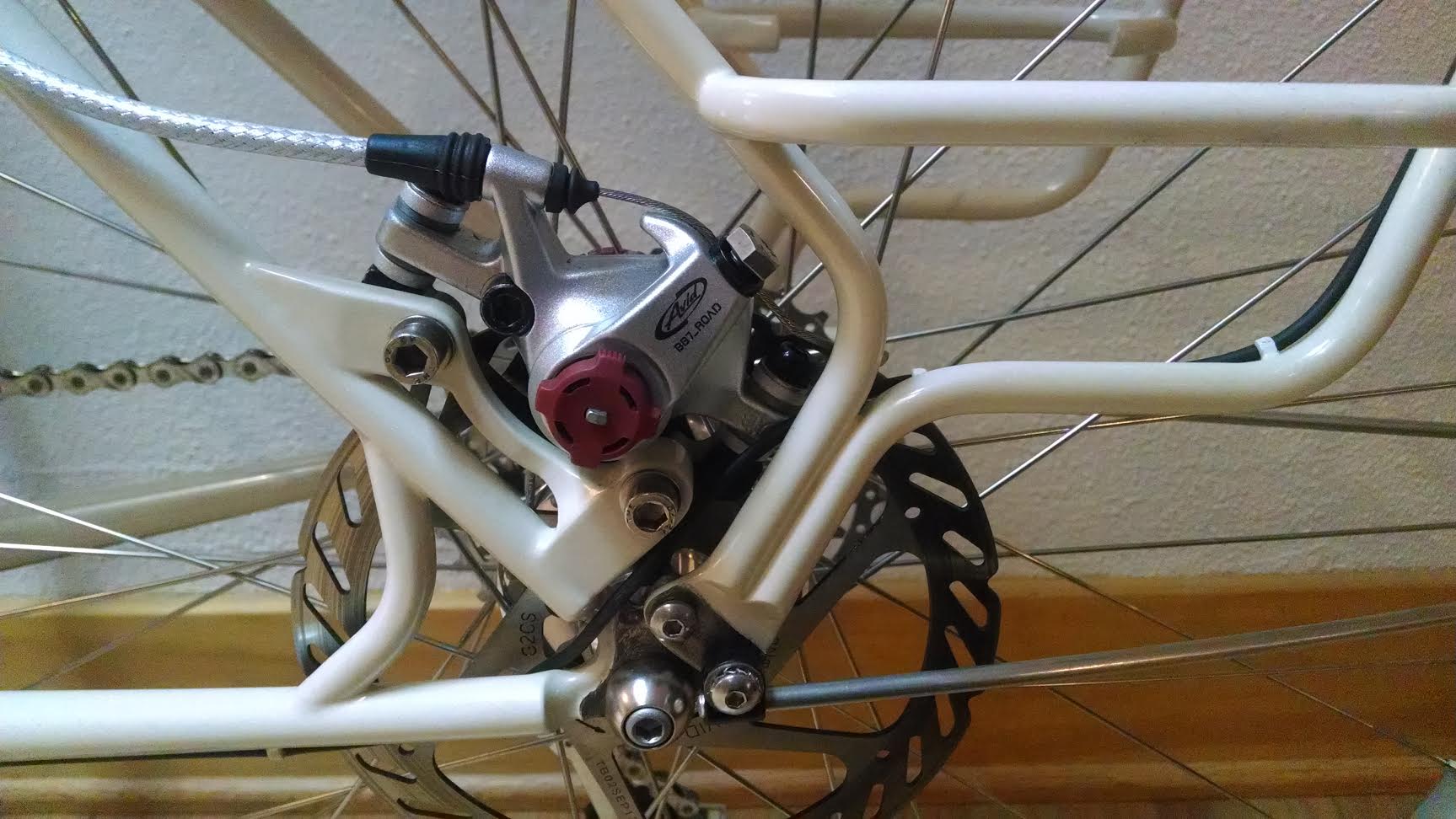
Beth was excited about her first custom bike, an everyday commuter. She knew she wanted generator lighting, a threadless headset, integrated shifters, disc brakes and wooden fenders. She also had a U-lock that needed a home, and a Topeak integrated rack bag and basket that could clip into a companion aluminum rack. I borrrowed the U-lock, Topeak rack, bag and basket for the build. The U-lock nestles nicely in the arms on the drive side of the rear rack. Fenders were handcrafted at Woody’s Fenders, in Bend, OR.
 |
 |
 |
 |
Comfort at length: A tall fellow’s Littleford
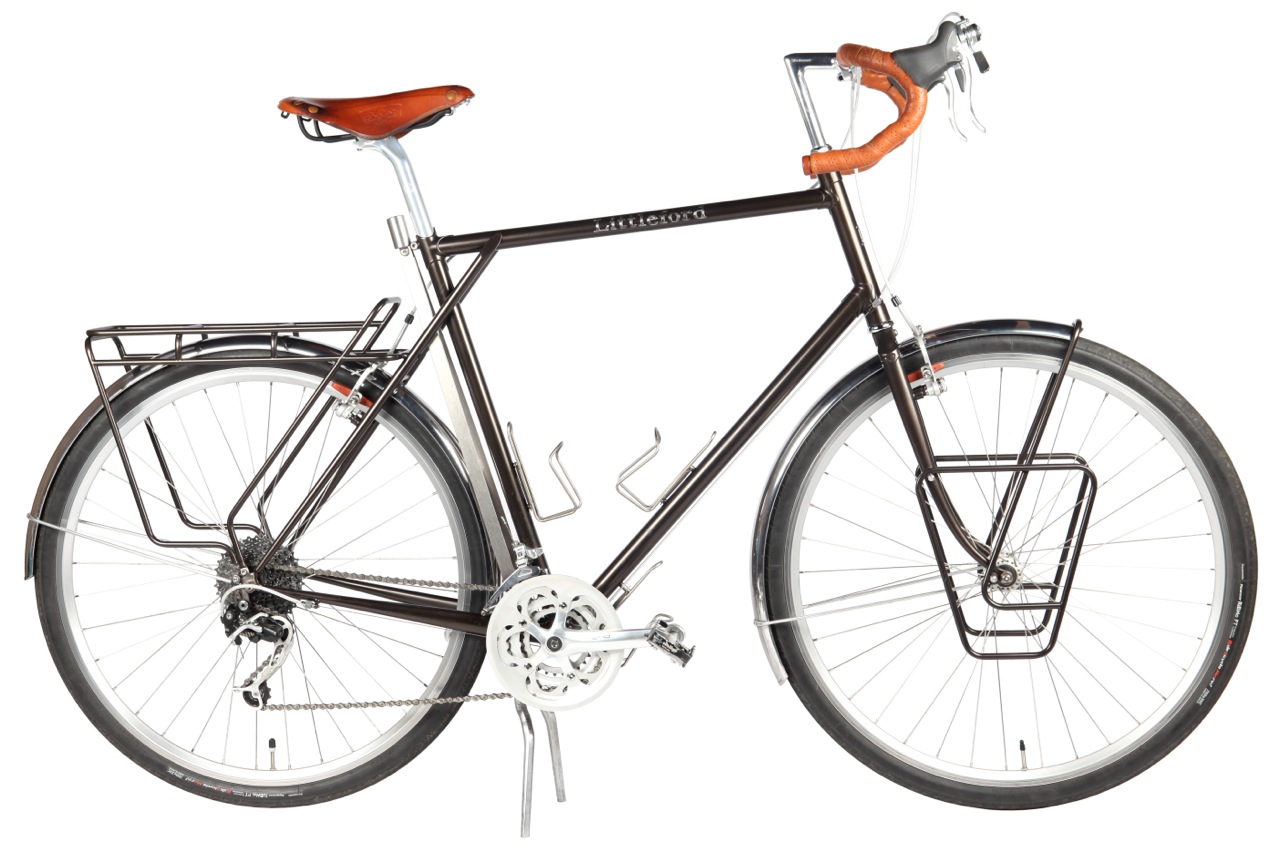
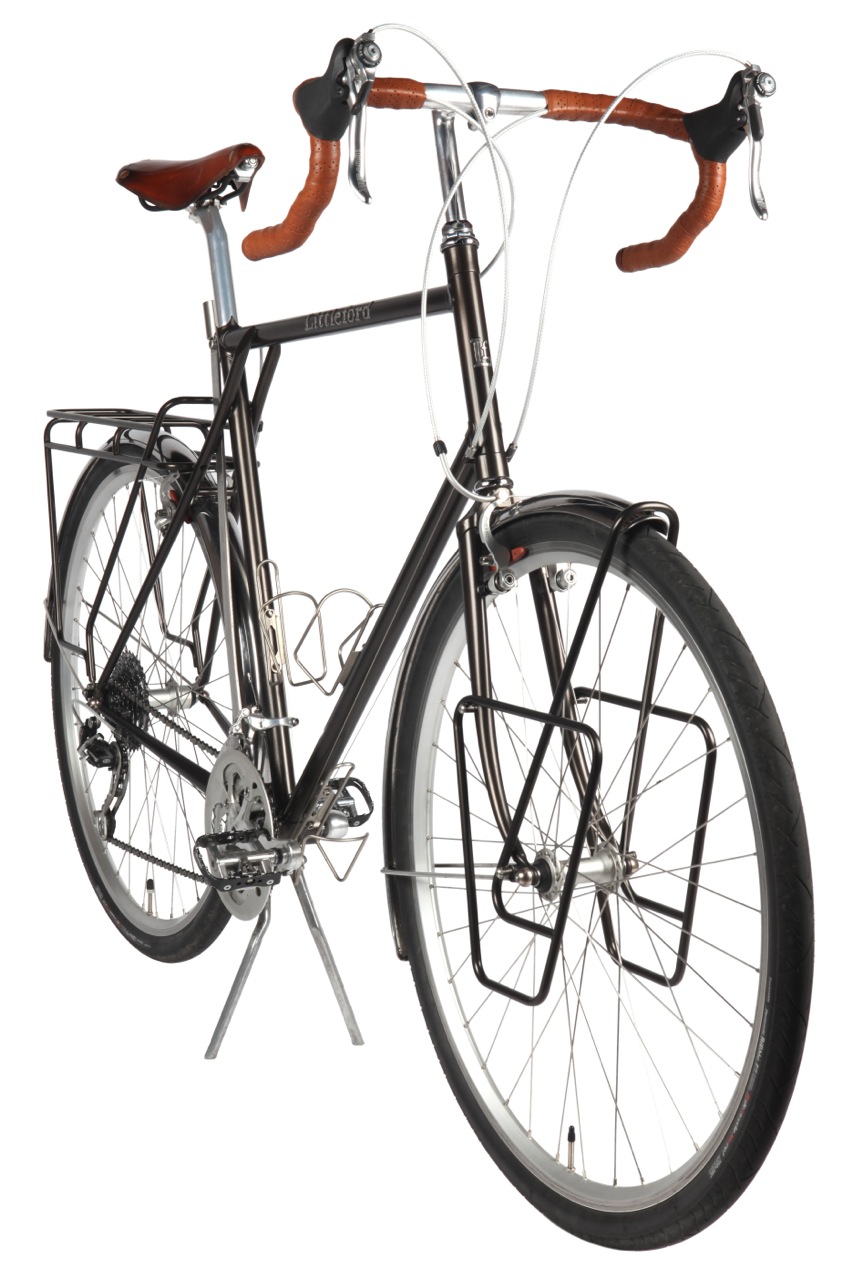
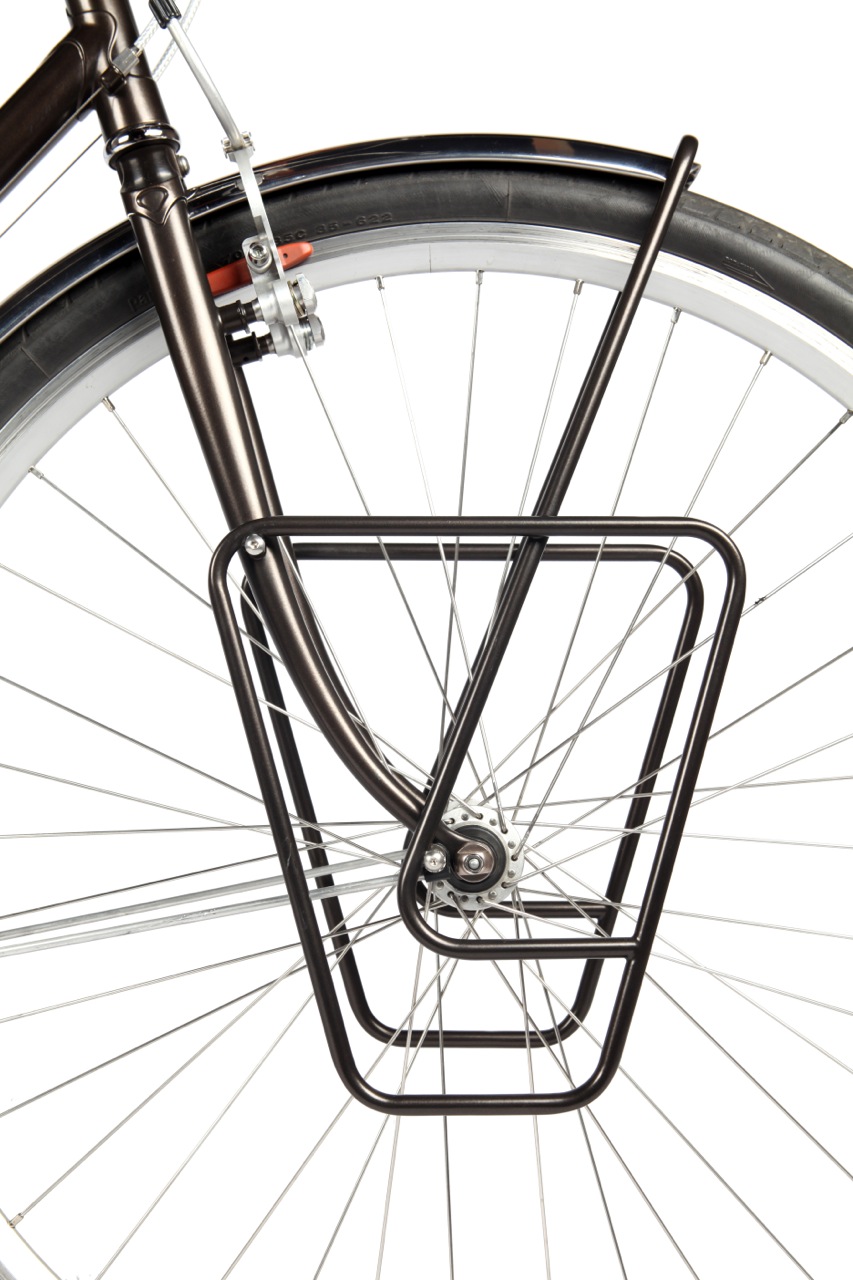
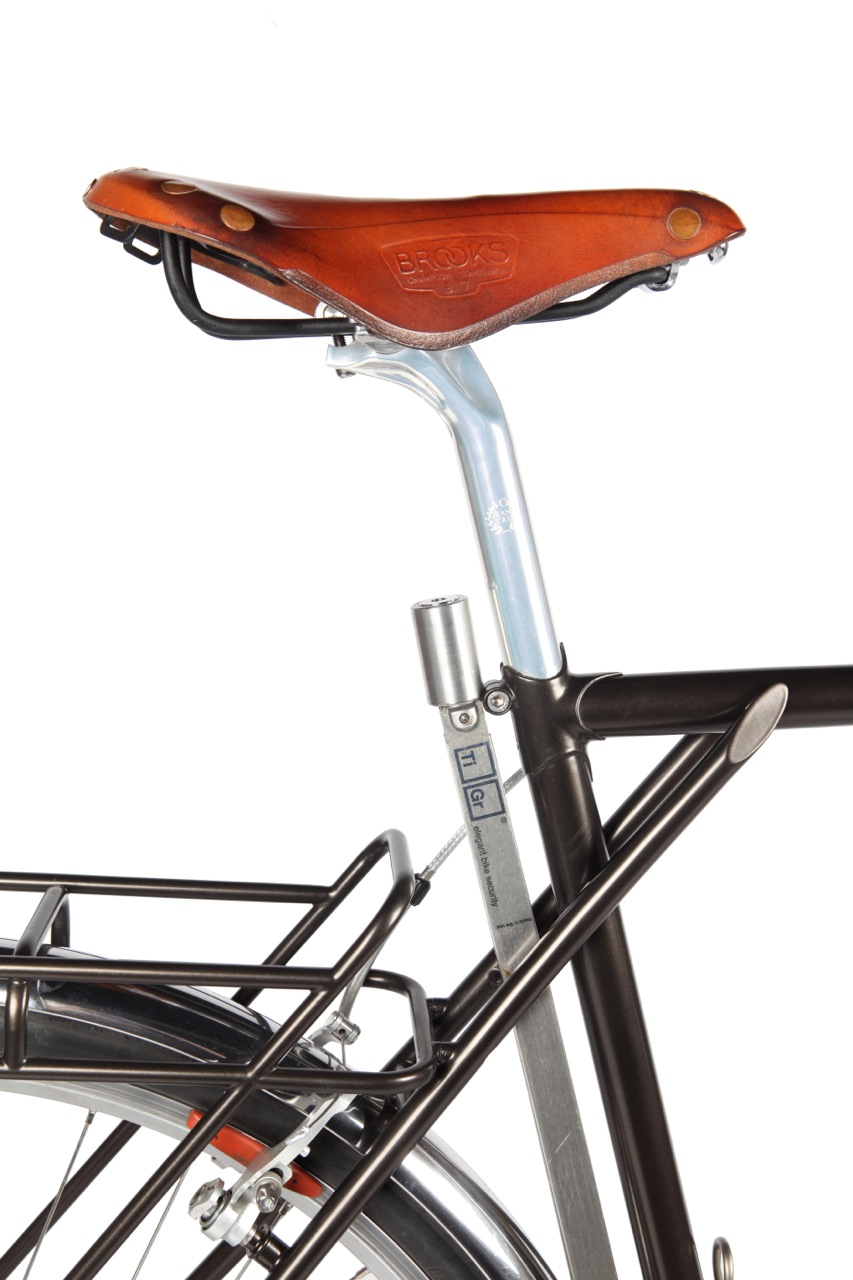
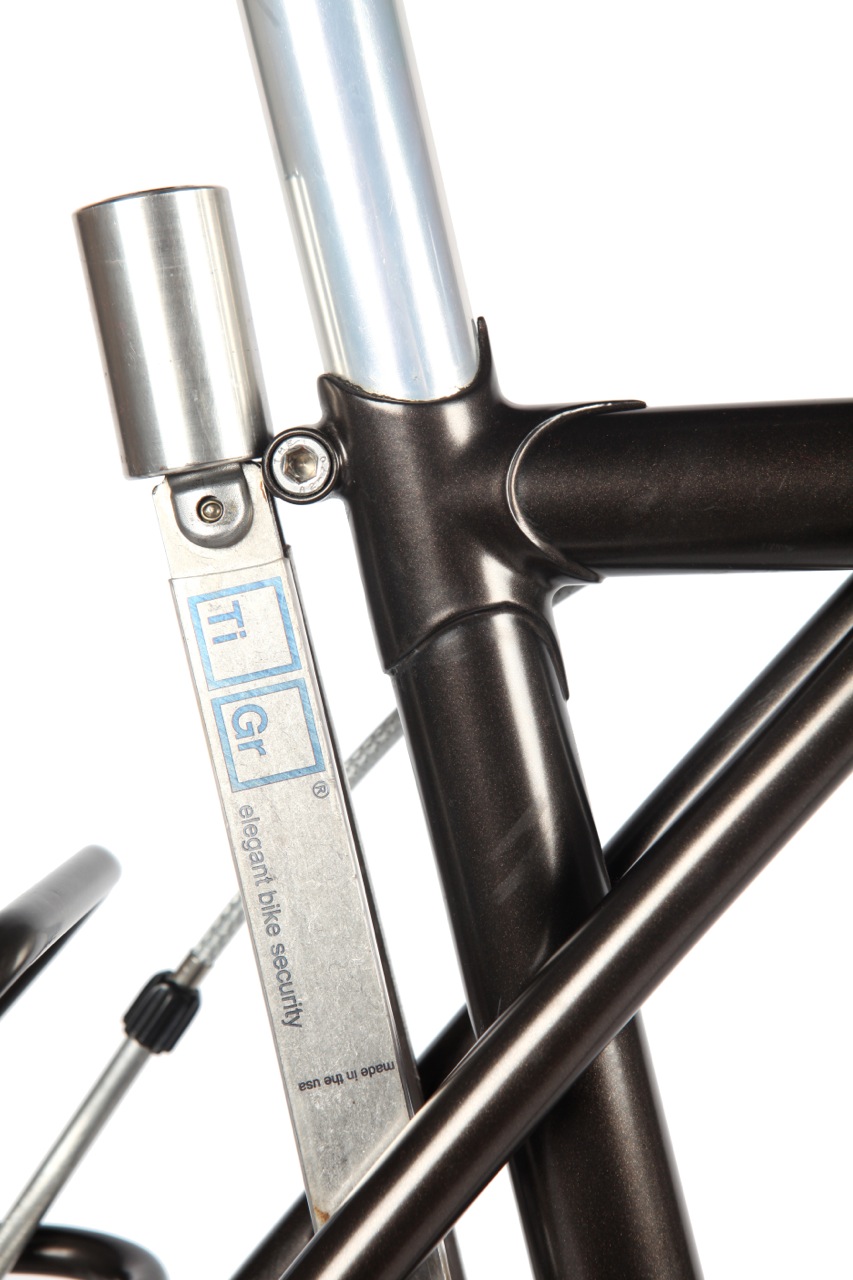
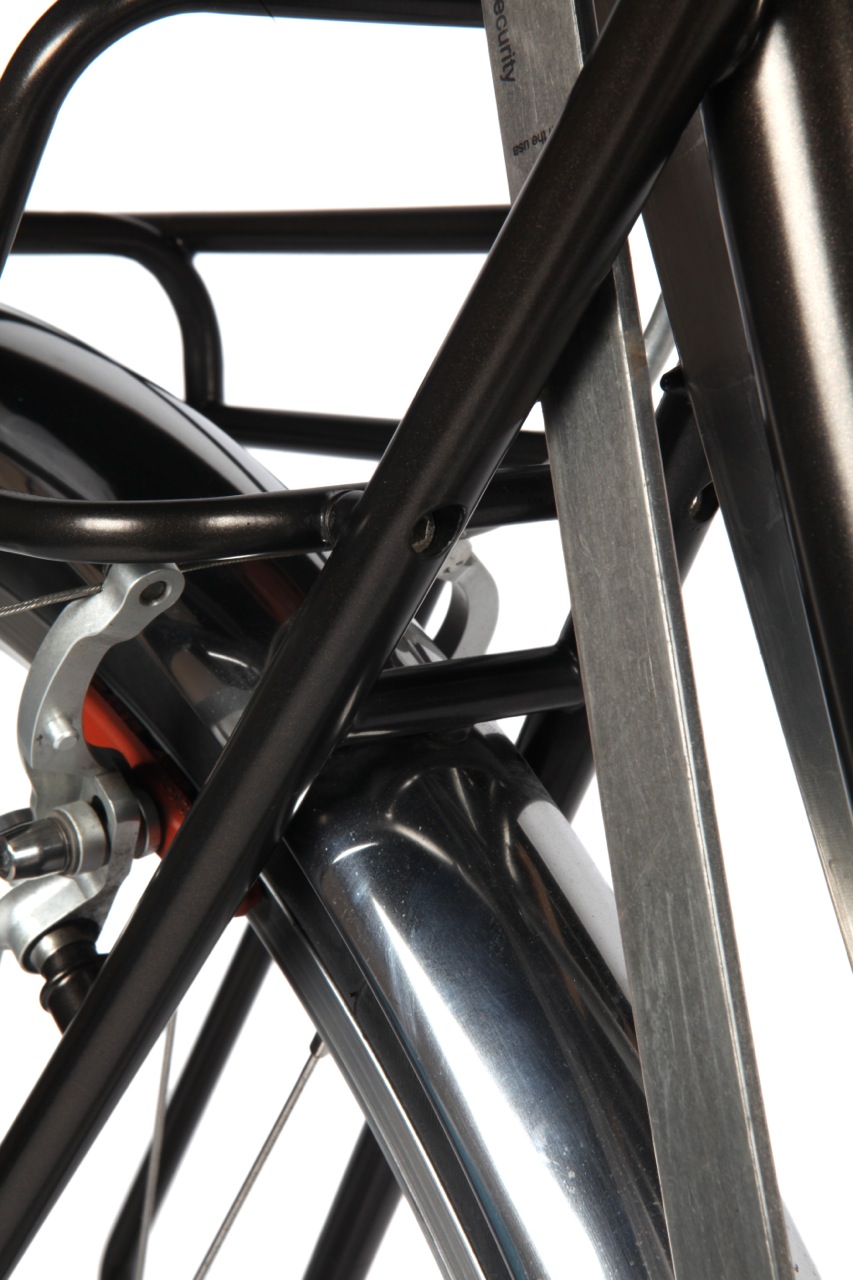
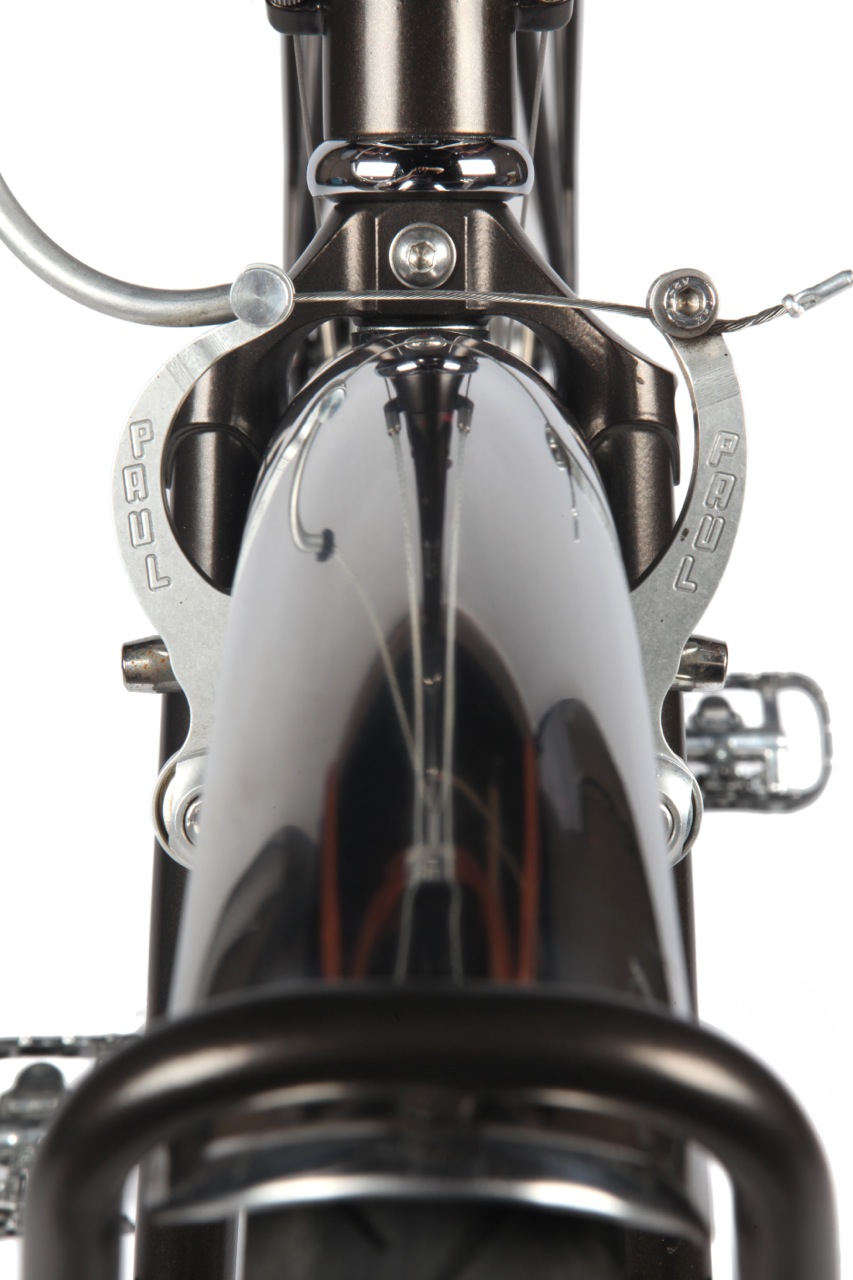
A nice benefit of overlapping seatstays is that they effectively reduce the structural span of the top tube. For tall riders, this allows for more proportional frame sizing without the liability of excessive frame flex. With 38C tires on 700C wheels, this bike is perfectly proportioned and keeps its rider squarely centered in the frame rather than putting him awkwardly high above and behind the center of gravity, as many extra-large production frames do. A 6 degree slope of the top tube further stiffens the frame while still preserving a classic aesthetic. Built for fully loaded touring as well as city commuting, this bike made its way from Oregon to Virginia in 2014 on Adventure Cycling’s TransAmerica trail. The comfortable symmetry of the frame belies its large stature. Effective seat tube length: 68cm, effective top tube length: 61cm. Cranks 175mm, wheels 700C x 38mm. The seat tube was long enough to provide a neat nesting place for a titanium bow lock.
 |
 |
 |
 |
 |
 |
 |
The Midnight Special: Town & Country Express
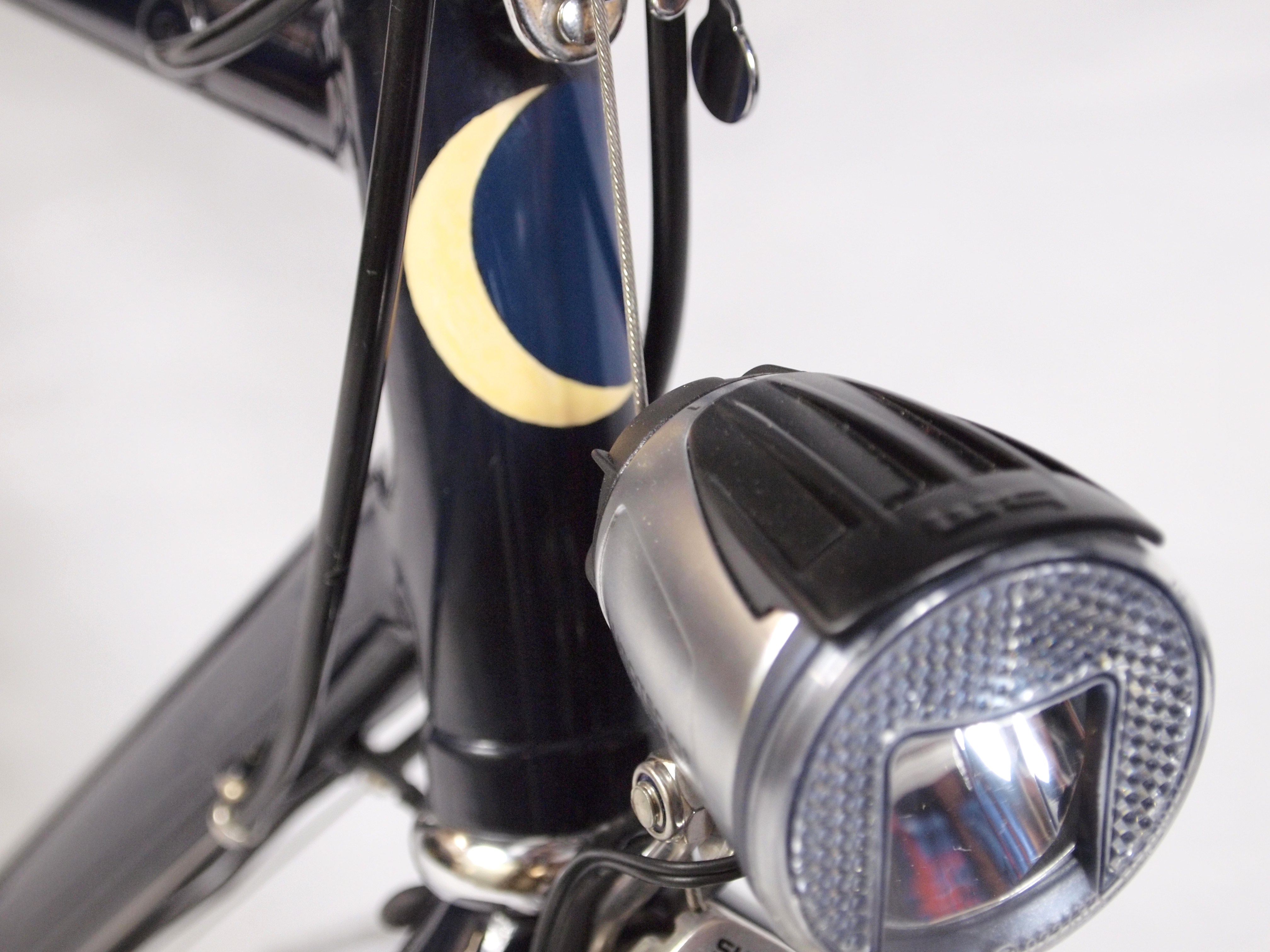
A good urban bike isn’t always fit for touring, but any good touring bike is a perfect fit for the city life. Groceries, laundry, even potting soil and chicken feed packs up and hauls just as easily as do toiletries and camping gear. But there is one requirement in the city that isn’t so crucial on a rural tour; lighting. On tour, dedicated bike lights are rarely needed. The vast distances are typically covered by day, and that headlamp that lights up the tent at night can light up the road well enough when it’s needed. In town though, lights are a necessity. Batteries are expensive, and then once they’re dead they turn into toxic waste. What a pain! Generator lighting is a small and worthwhile investment for the urban commuter… no batteries = no dead batteries = no toxic waste. Best of all, modern lights and generator systems are fully automatic. Not only does one not need to worry about batteries, he doesn’t need to worry about anything. The lights come on when the sun goes down, and five minutes after the bike stops, they go out. That’s one less thing to think about.
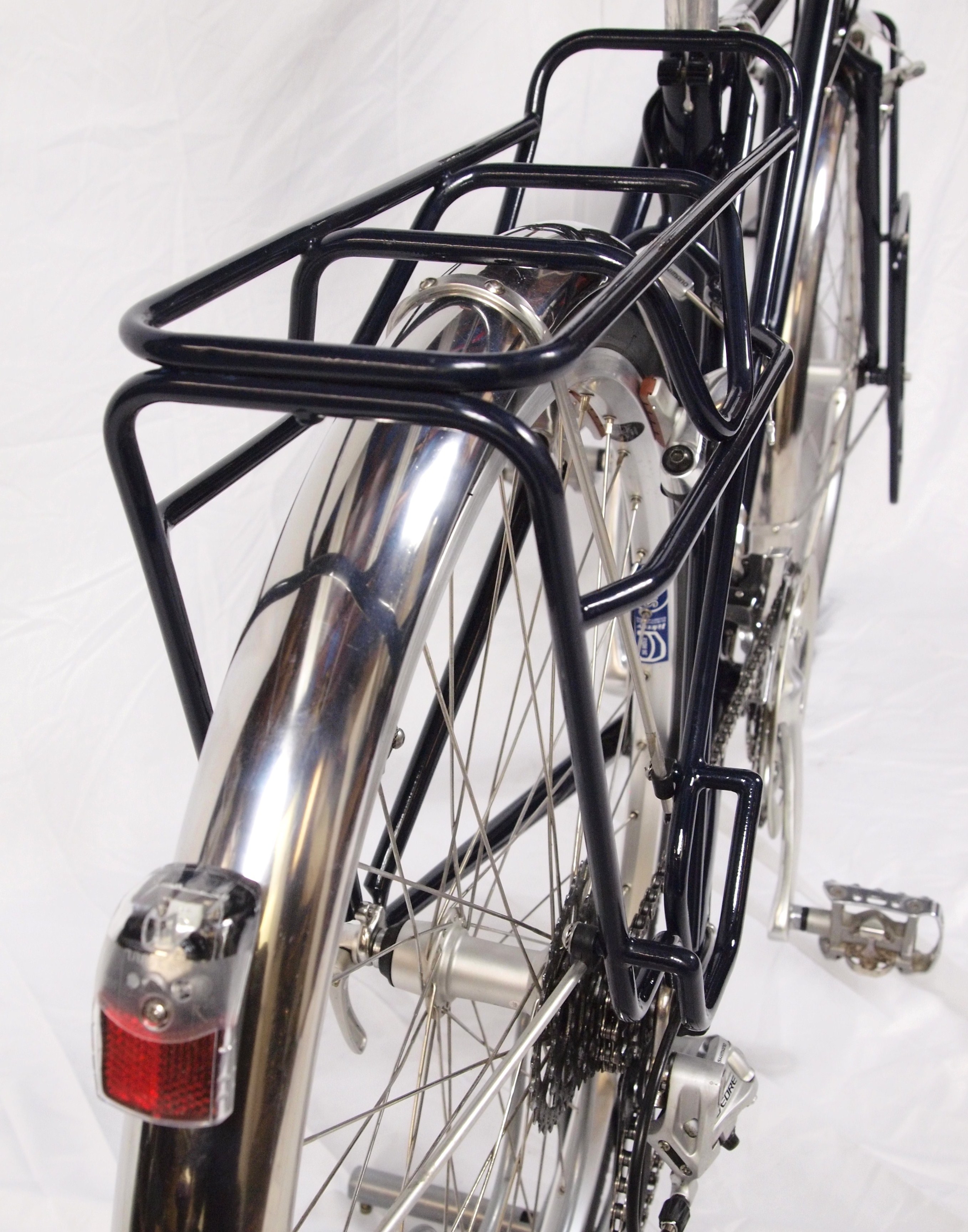
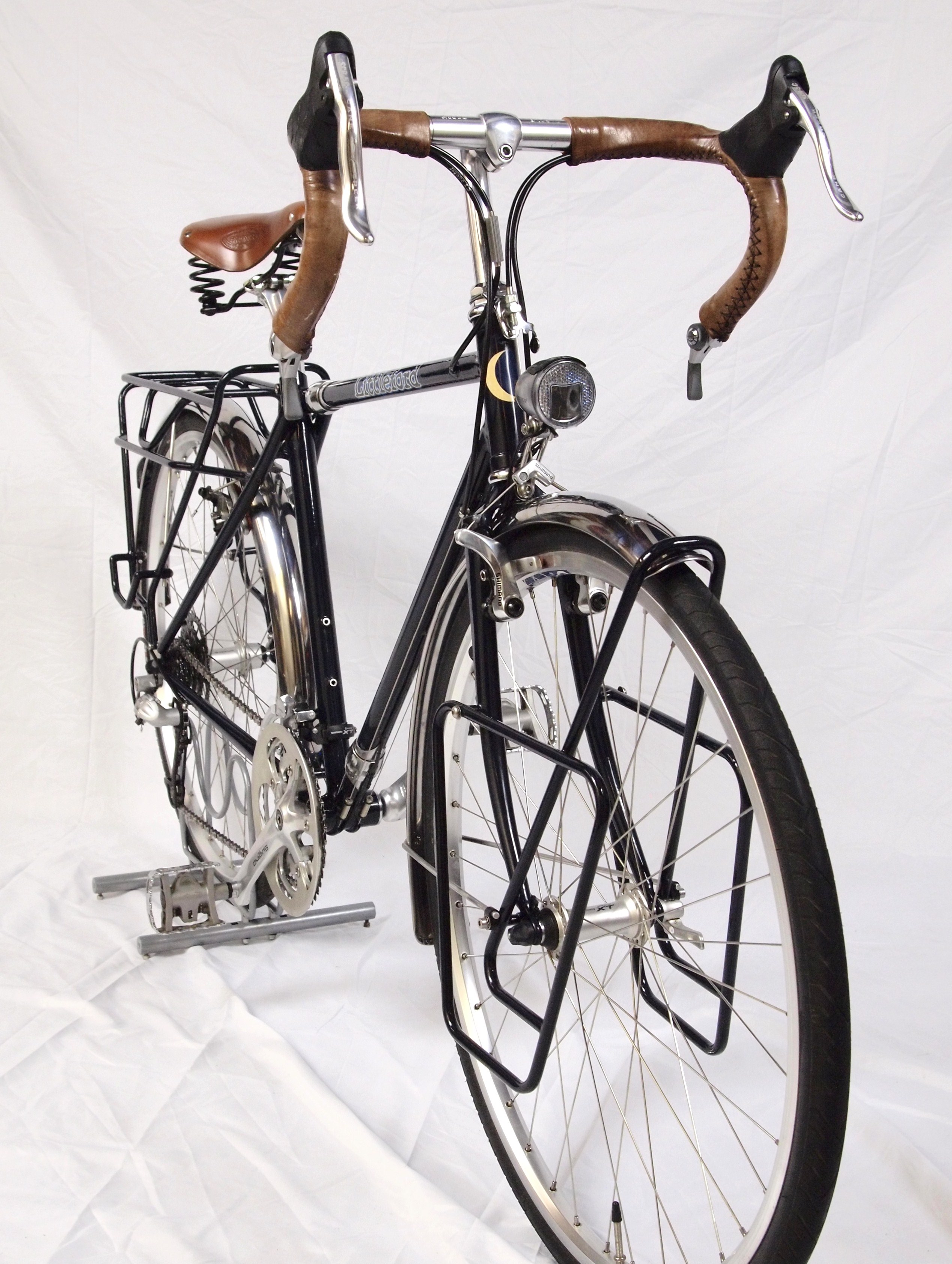
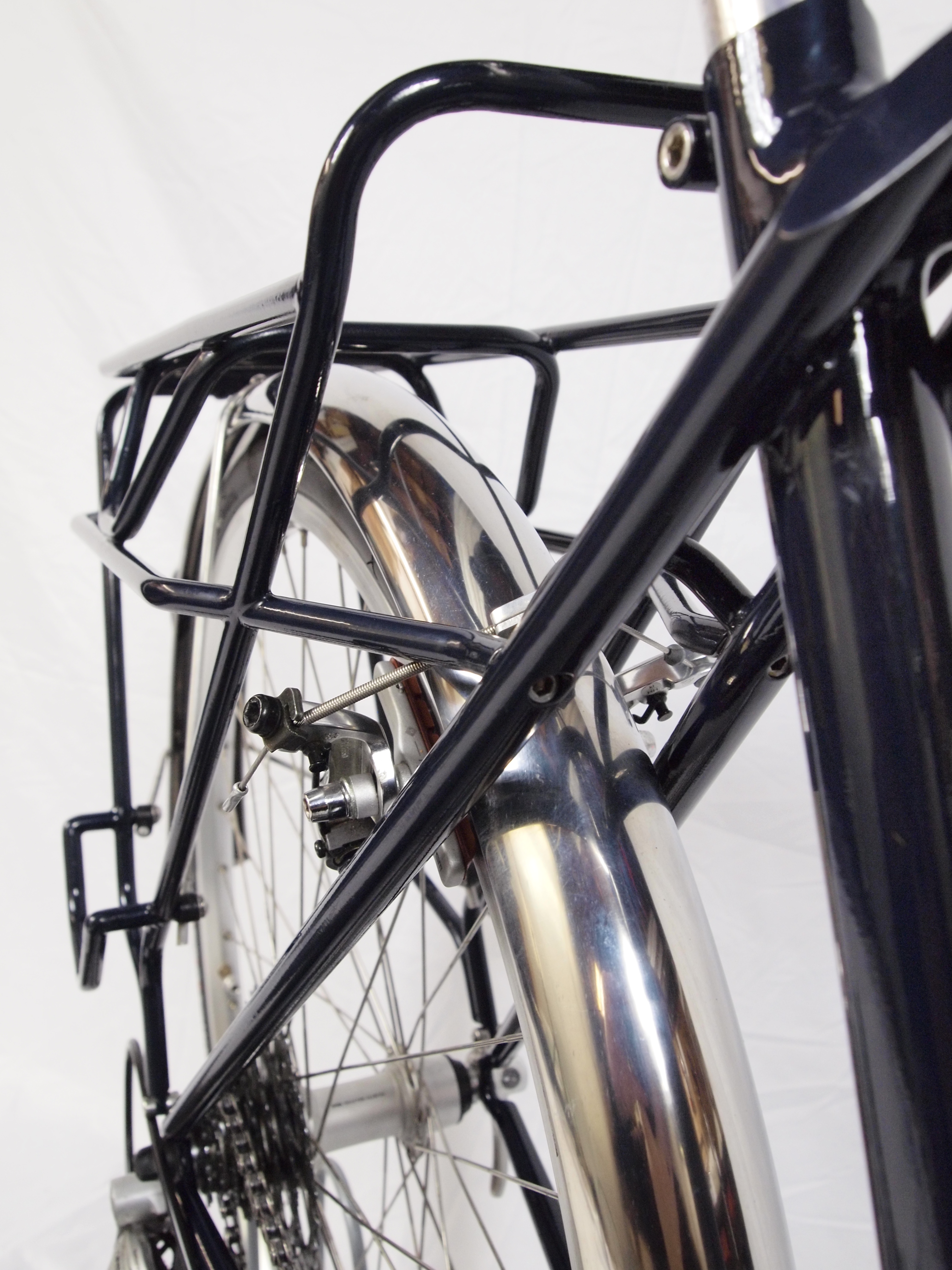
This little 26 inch tourer is equipped with the Lumatec IQ Cyo headlamp and Schmidt SON hub- which combine to deliver a super bright beam from the energy it takes to climb ten feet over a mile’s distance. In addition to the usual Littleford features of integrated racks and overlapping seat stays, this bike also features extra low rear pannier rails for maximum stability and a deep, deep midnight blue paint job with a hand-painted moon.
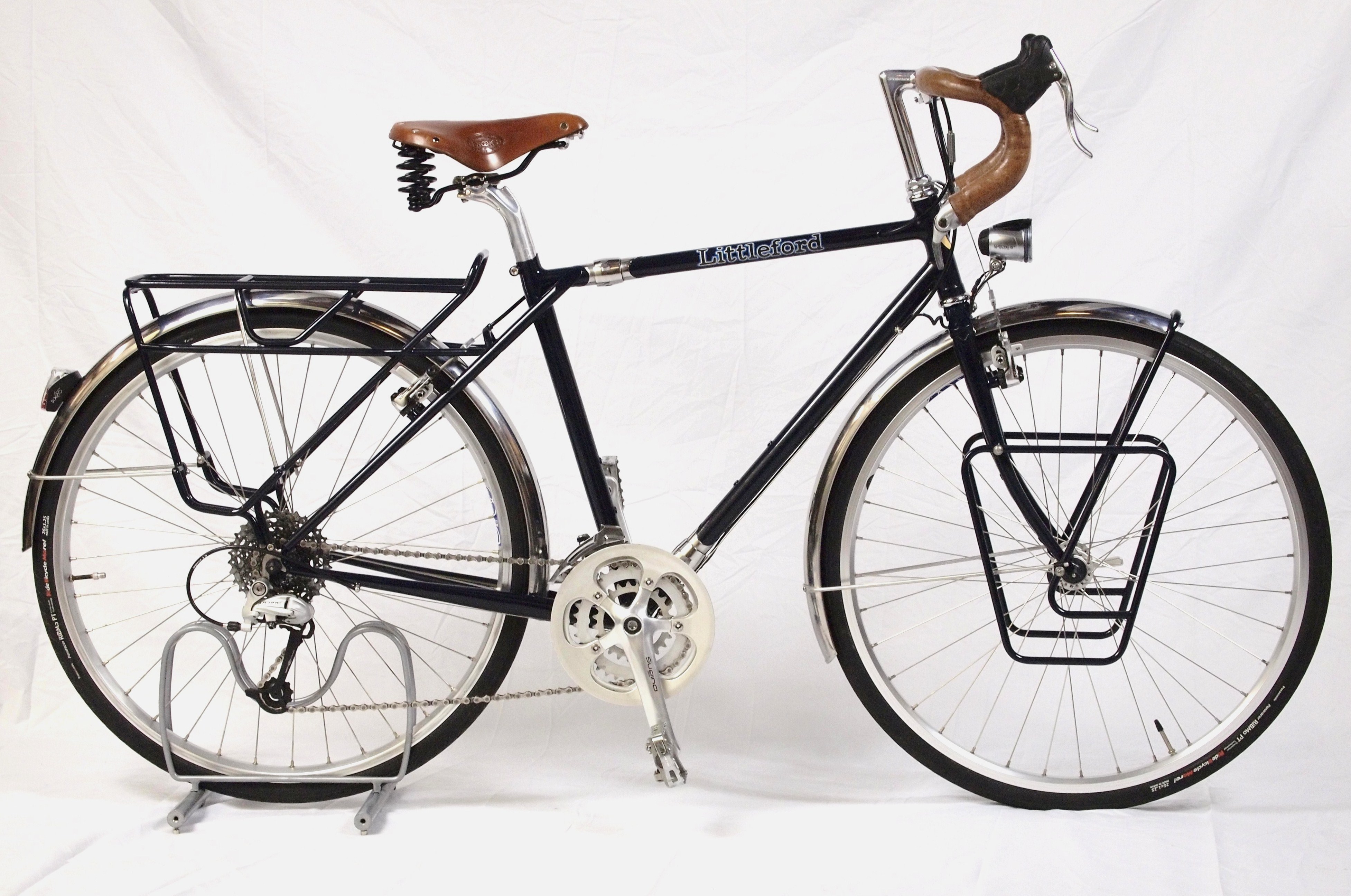 26 inch wheels work much better than 700C on smaller frames. This not only keeps things proportionate but also provides the wheel clearances necessary for good front end touring geometry.
|
  |
  |
Going Dutch: The Littleford Mixte
Dutch bikes have charm. They’re comfortable. They tend to be heavy, but Holland is flat… so who minds? South Carolina isn’t quite so flat- so this mixte weighs in at a respectable 28 pounds, and is equipped with a Nuvinci Continuously Variable Transmission- which takes the individual gears out of the drive train and replaces them with a smooth and buttery continuum of ratios. The frame is equipped with removable front and rear racks and a similarly detachable front basket. Gearing and rear brake routing are both fully internal. Avid BB7 mechanical disc brakes, while not typical of a traditional design, were chosen for their combination of wet weather stopping power, simplicity of design, and ease of maintenance.
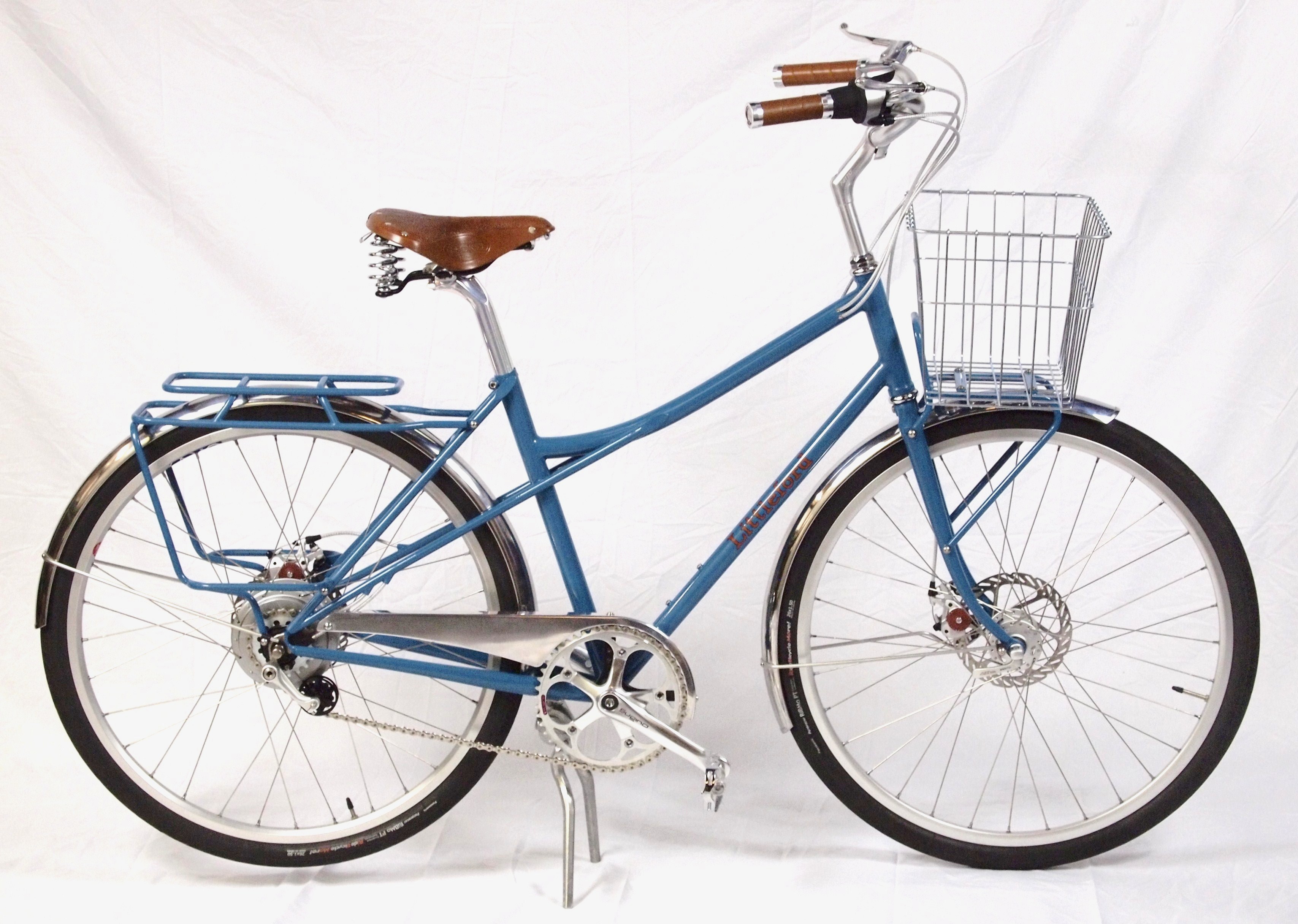 The hub provides seamless and intuitive shifting without any skips or jumps, and is virtually maintenance free. The heft of the five pound hub is partly offset by the weight savings in not having chainrings, cassettes or derailleurs. The large Wald basket comes with a removable, insulated zip-up bag. All three are made in America. Hooray! 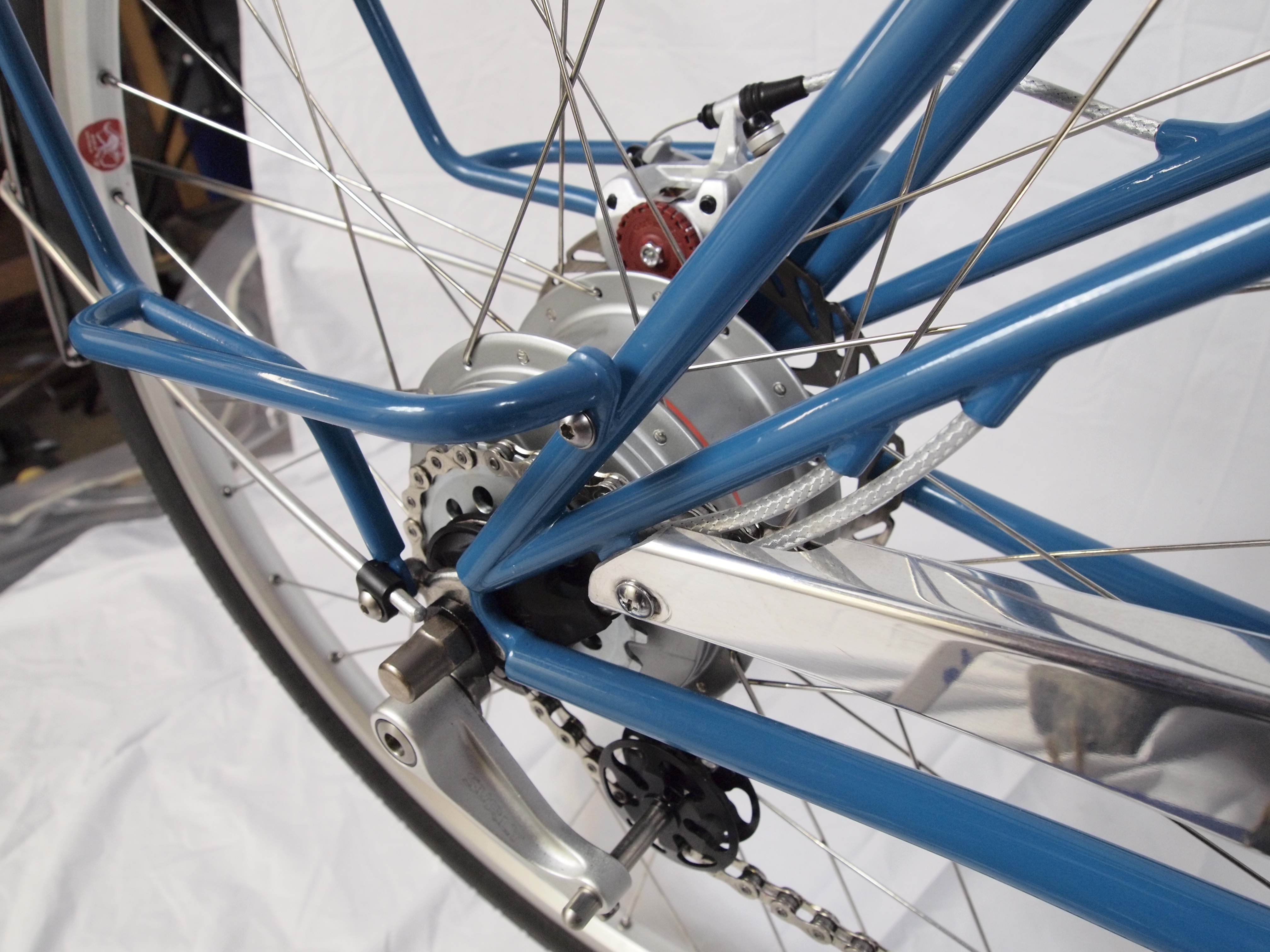 The lower rack rails allow panniers to sit low over the wheel, increasing stability without interfering with the disc brake caliper. |
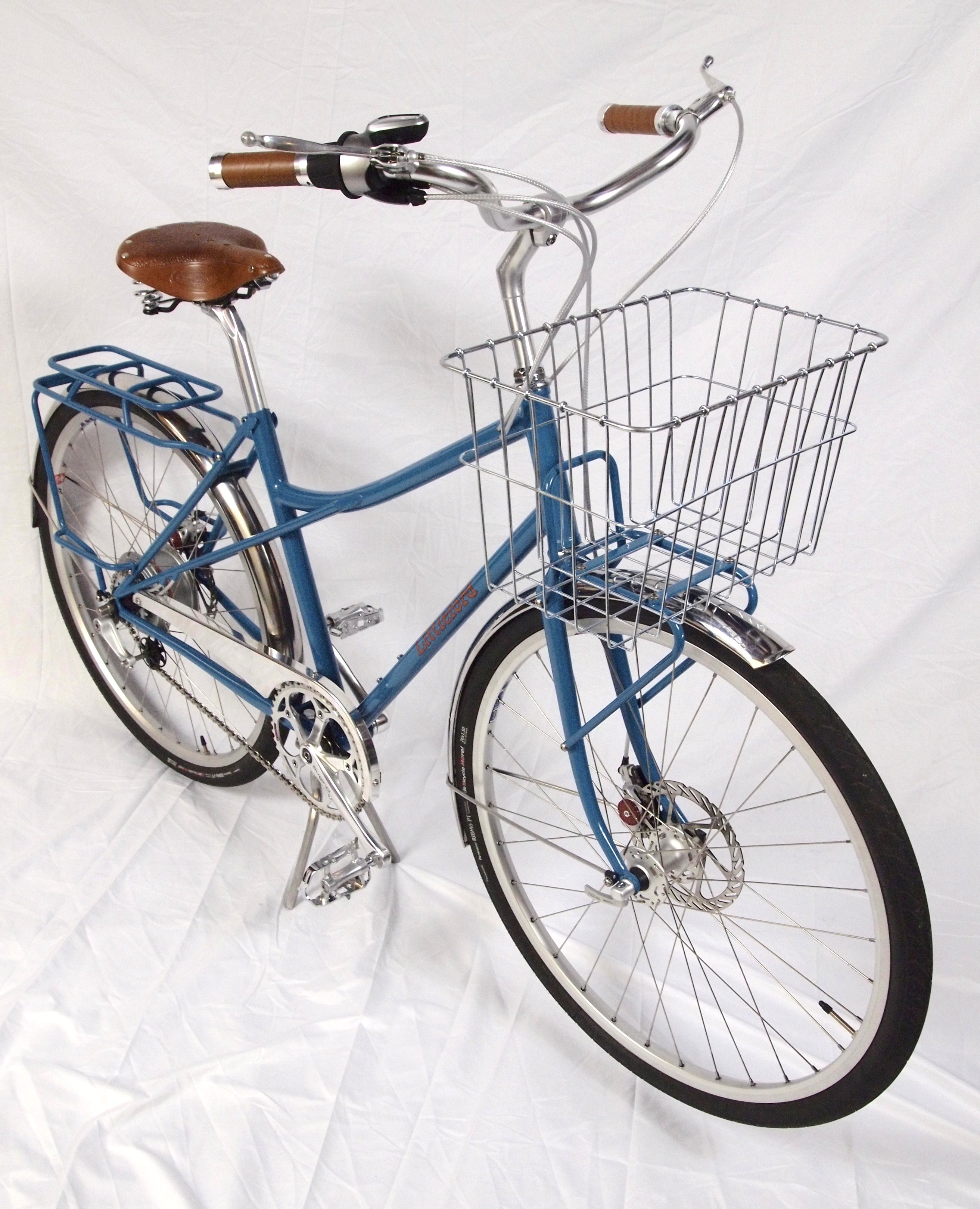
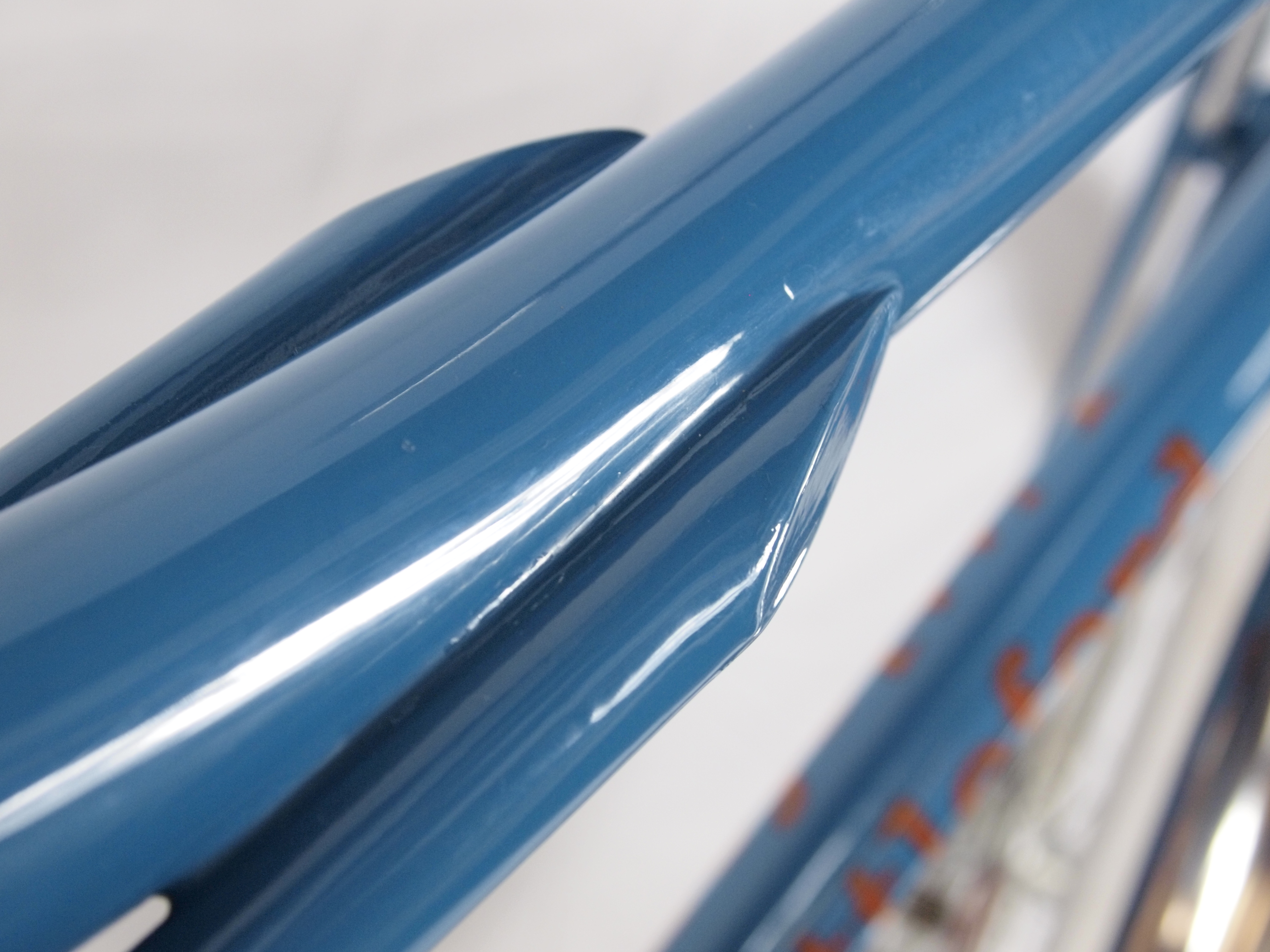 Overlapping seat stays increase rigidity, and provide a convenient route for the internal gear cables and rear brake cable- which travels inside the non-drive seat stay and exits just above the rear brake. |
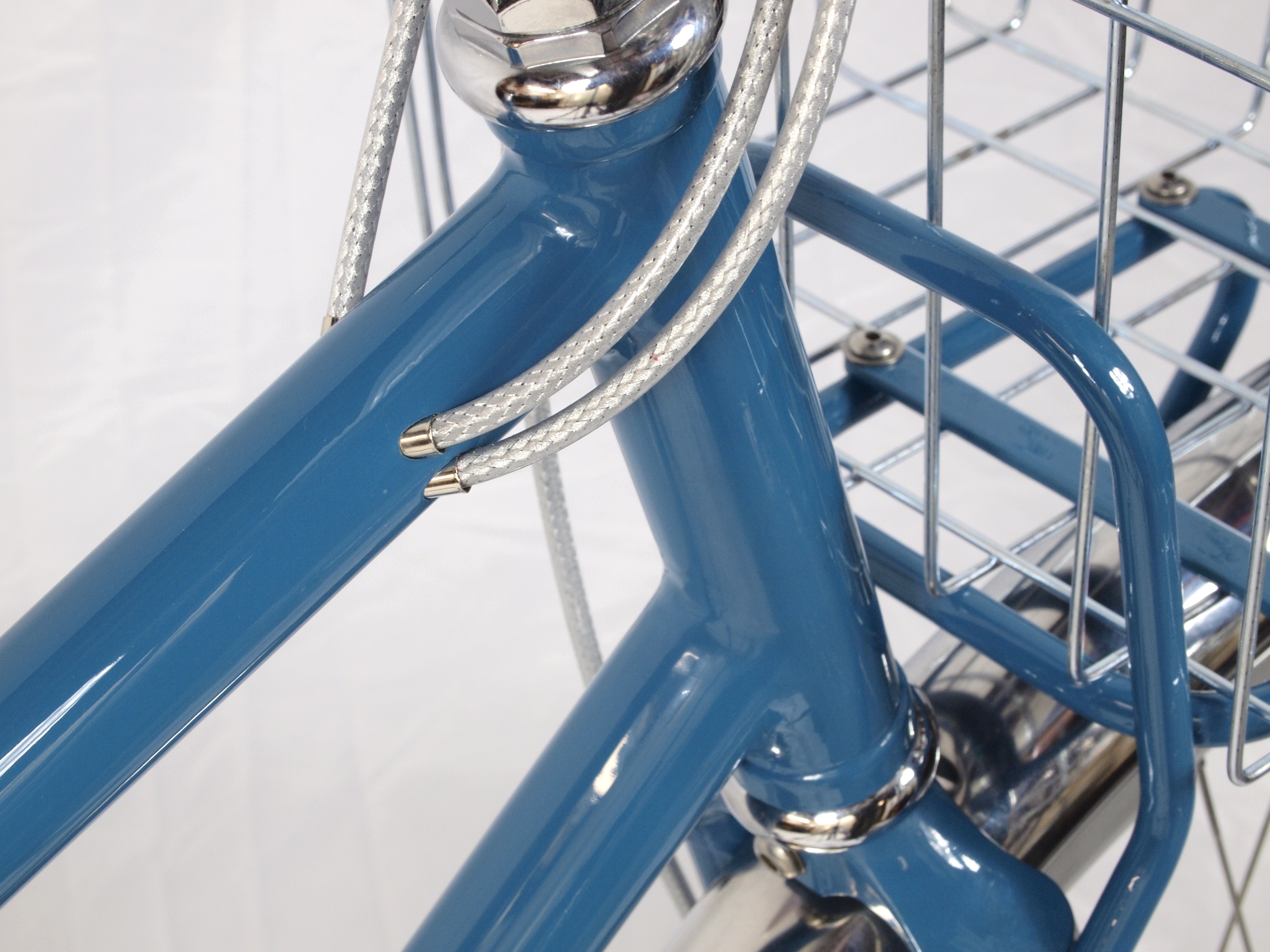 The Nuvinci uses two gear cables, one for each control direction. Brass cable housings run inside the top tube, into the seat stays, and all the way down to the exit ports just in front of the hub. 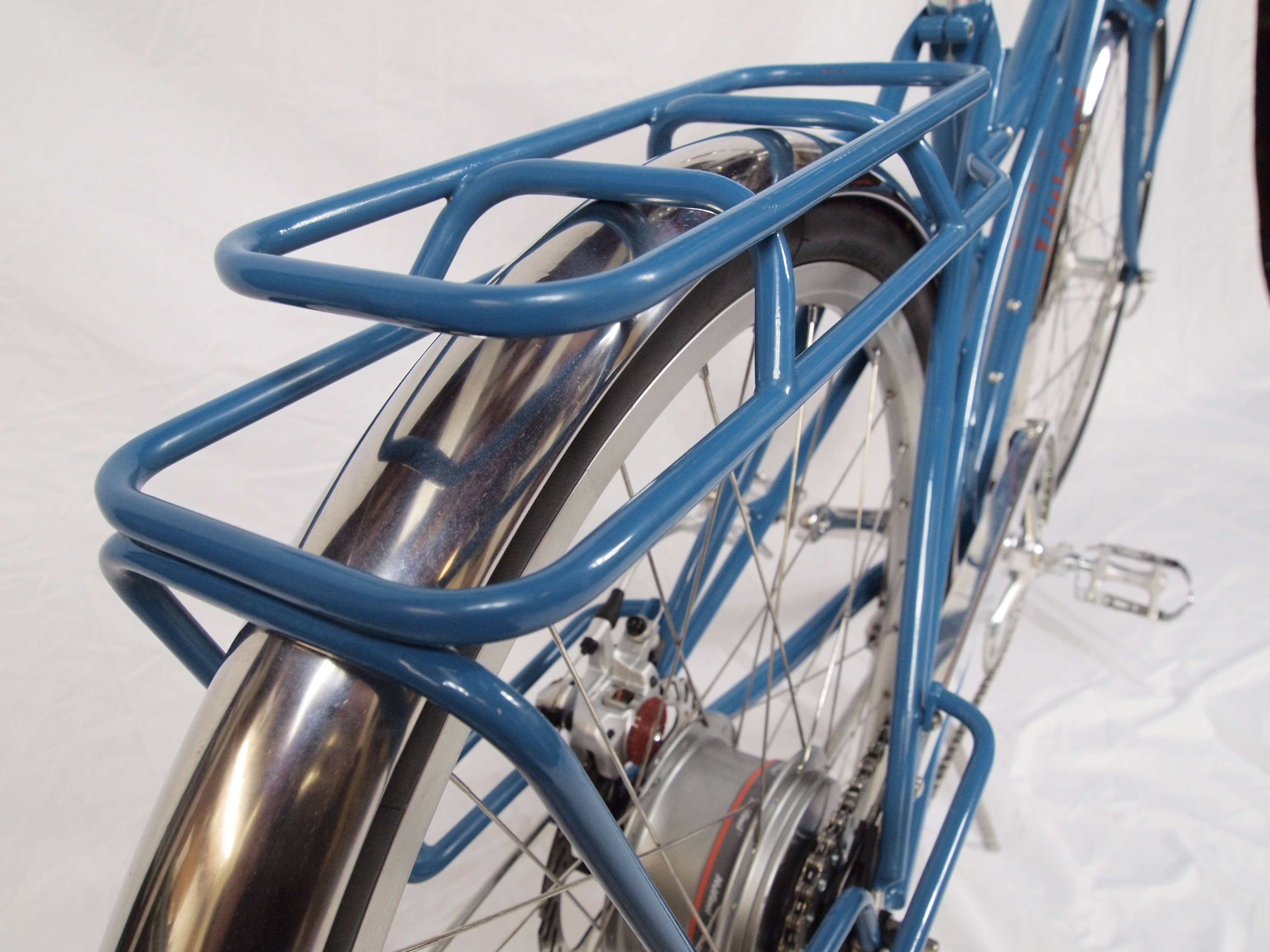 The minimalist rear rack uses the second set of seat stays as rack struts, which saves some weight. The fender attaches directly to the rear cross member of the rack platform. |
Jon’s daily driver 3.0
My daily ride was due for revision. It was high time I brought it up to speed with some more current Littleford features. I rebuilt the rear rack, updated the horizontal rack struts to mount through the seat stays, and made all of the attachment points on the frame and racks stainless steel. I also built an integrated front low-rider rack (not shown) for heavy touring and installed eyelets on the outsides of the fork crown to accommodate a future randonneuring style platform rack. Later I added a detachable wooden trunk for around town use. This is my shop delivery vehicle and full-on touring bike as well as my daily driver. It receives no special treatment, and in fact probably takes a little extra abuse for being the boss’s kid, but even with the nicks, scrapes and scratches of a full time job it’s still a rugged looker today.
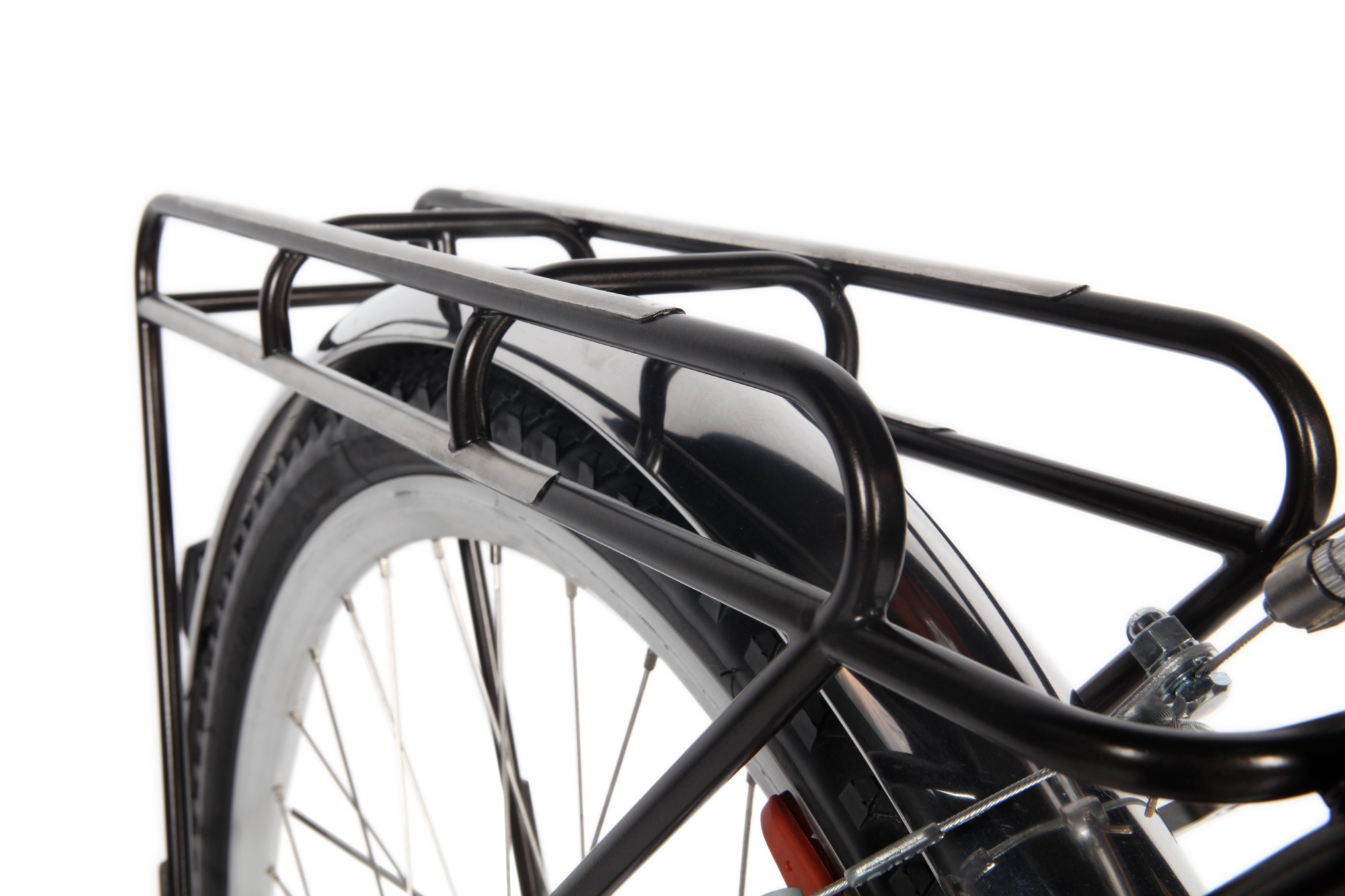
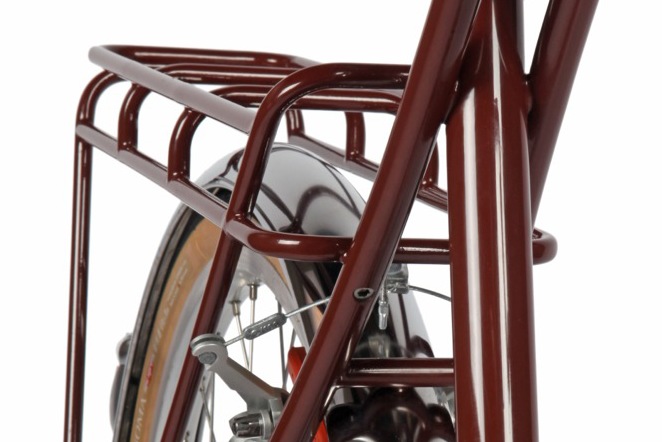
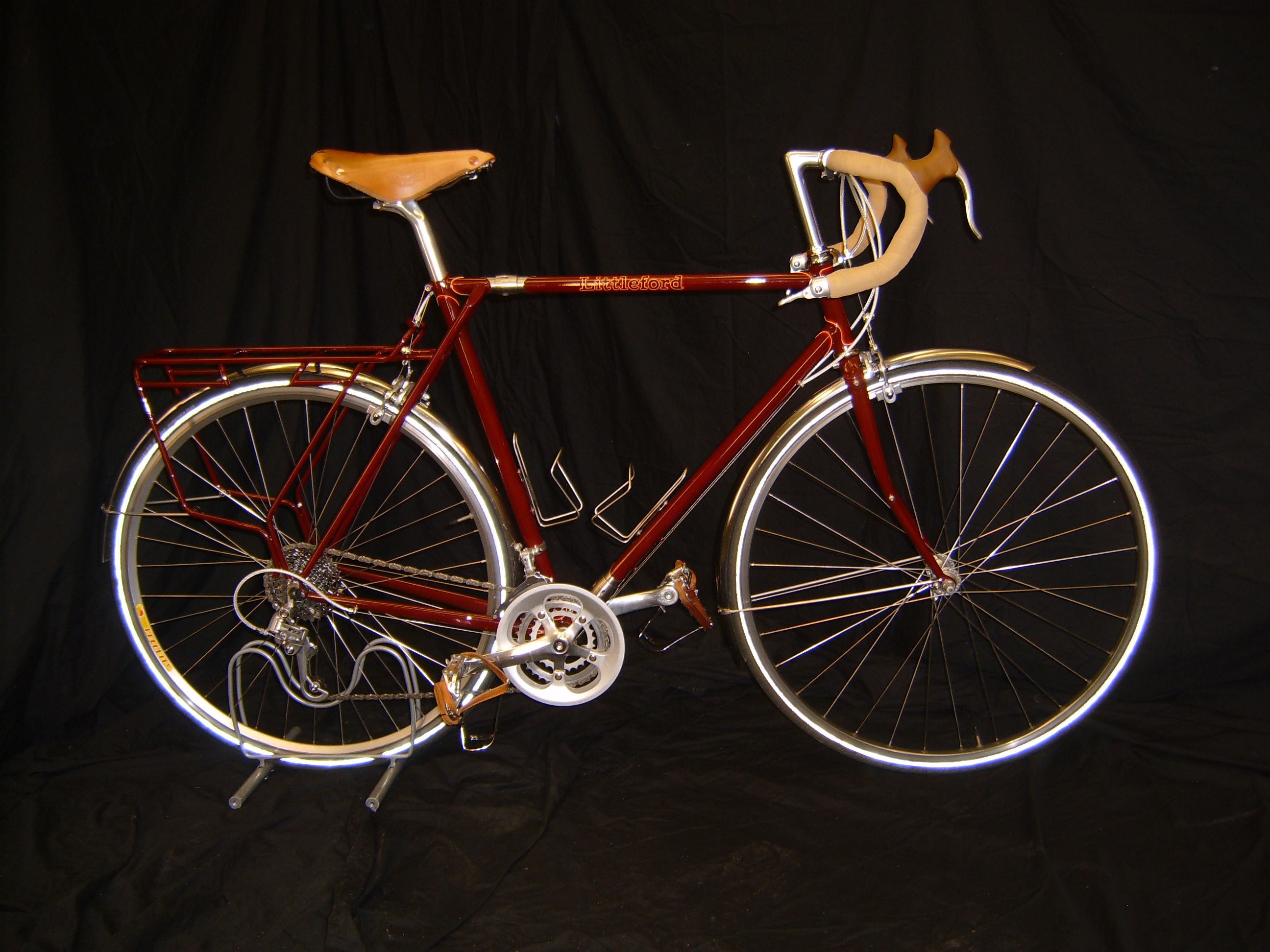 I chose a deep red color to highlight natural leather tone of the Brooks B-17 Select saddle. 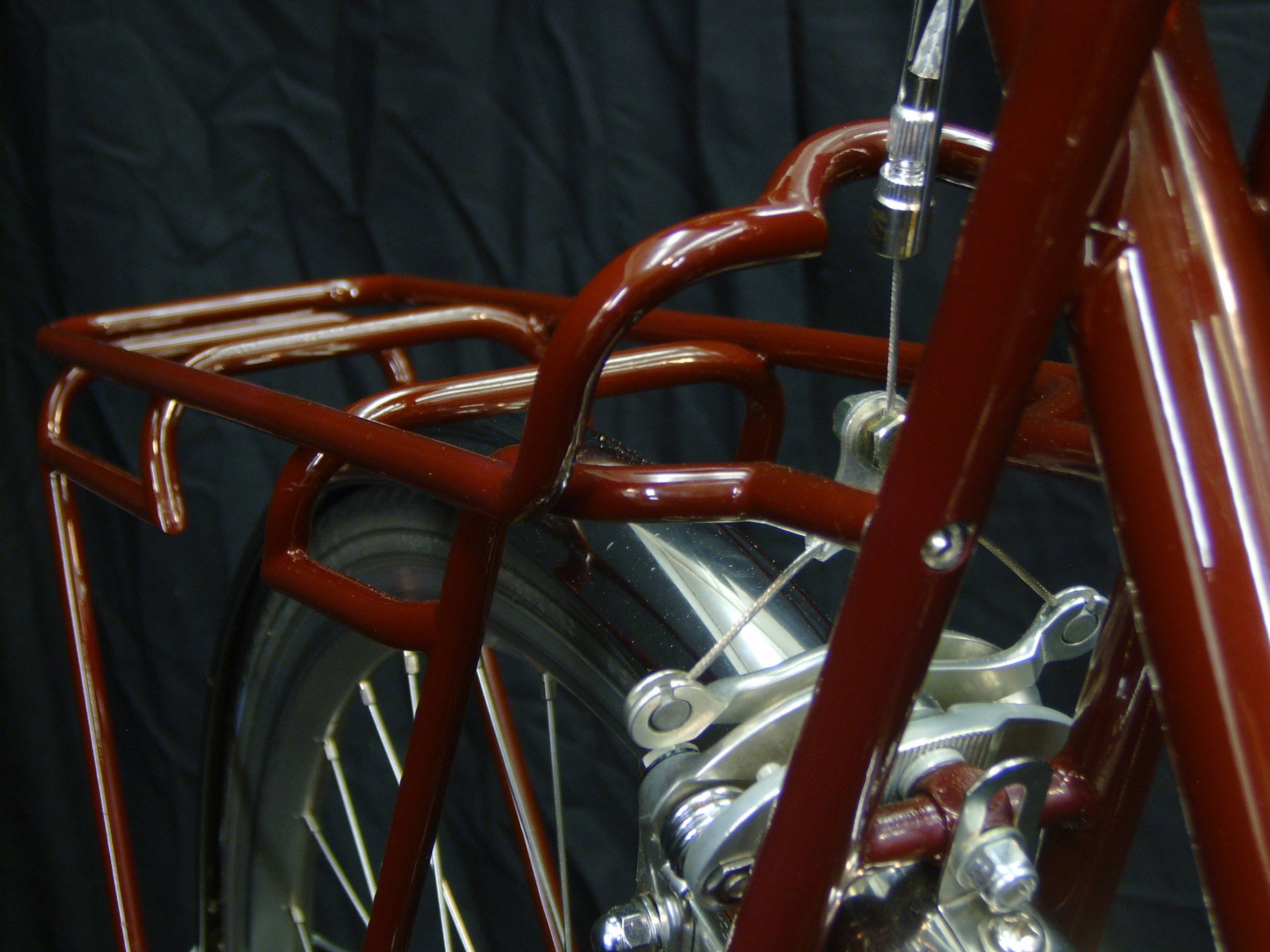 The rear rack was rebuilt using the now standard integrated flush mount, along with a modified front rail to better accommodate and protect the centerpull cable stop. |
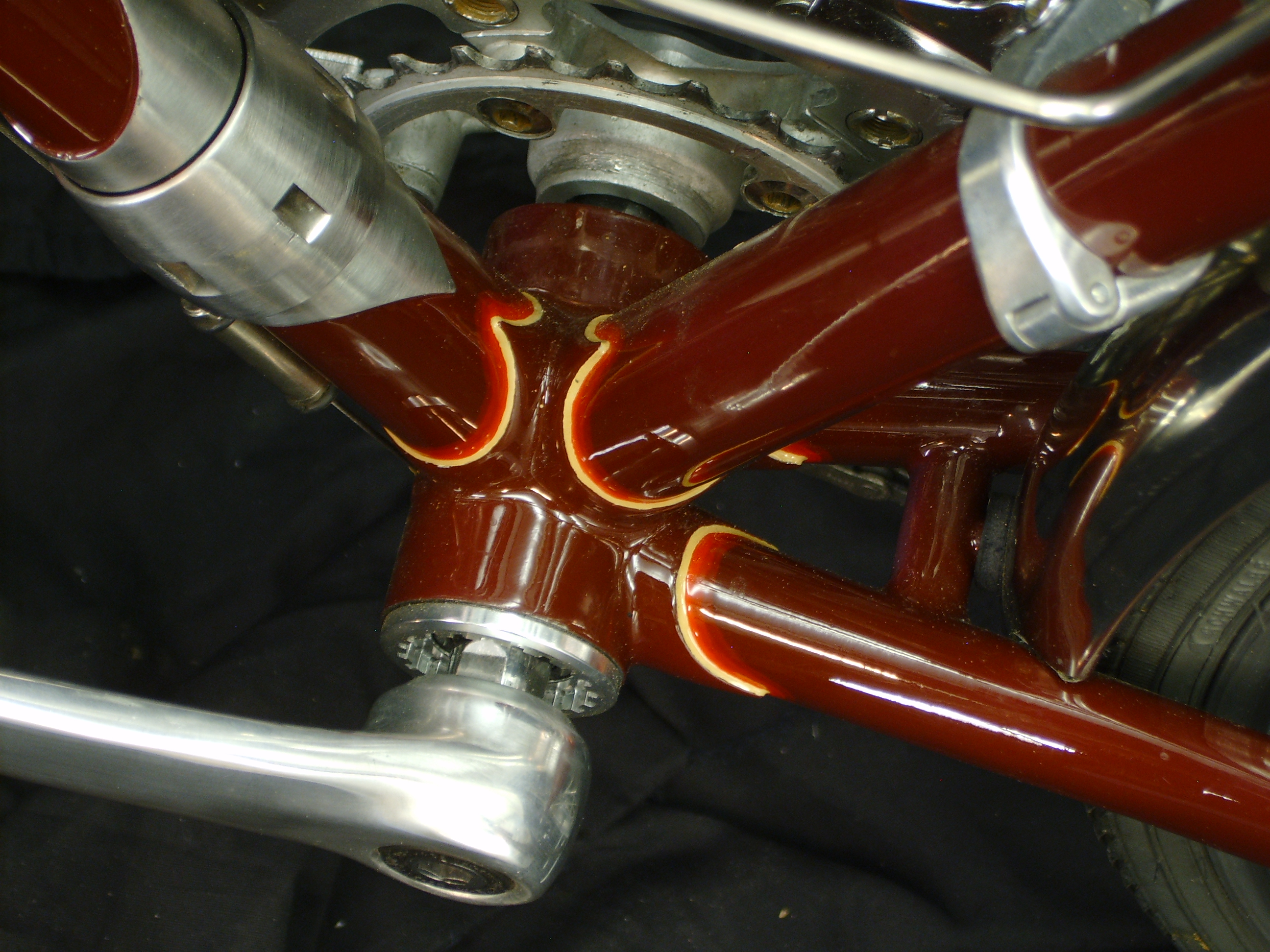
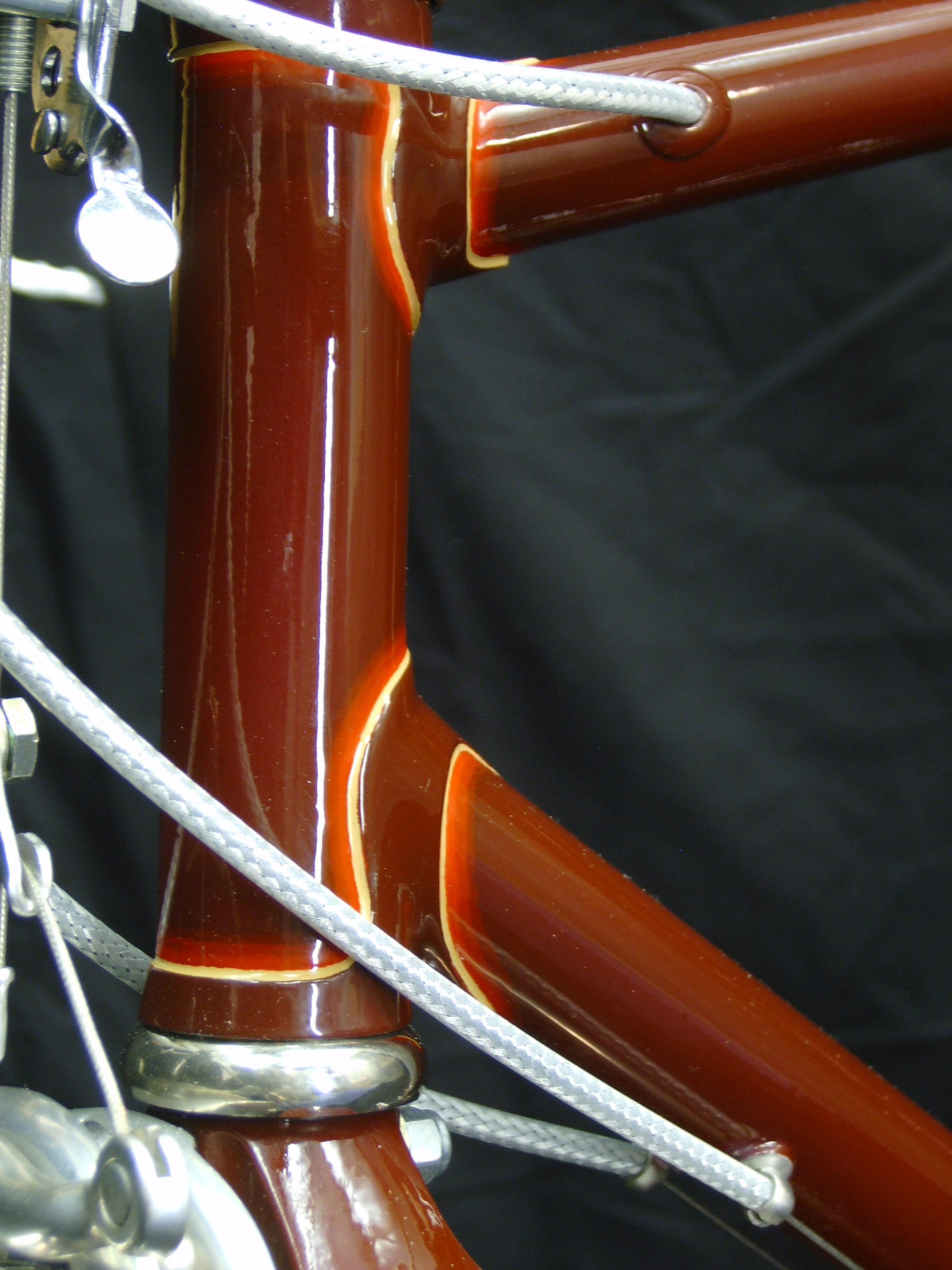 The lugs feature a four toned color theme. This time fading the deep red fades to a bright flame before it meets a highlight of neutral tan. The combination gives the shorelines a warm glow.
|
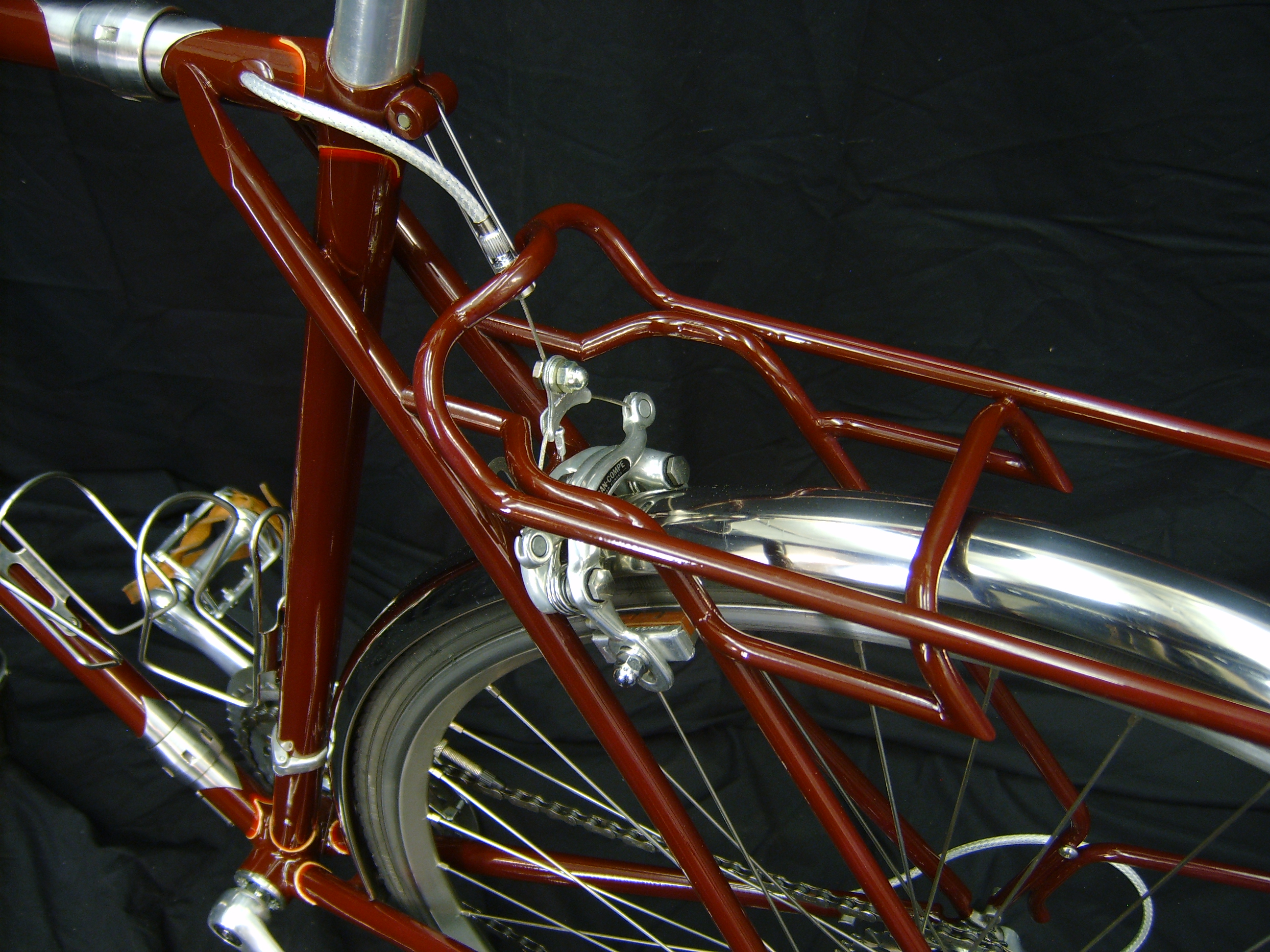
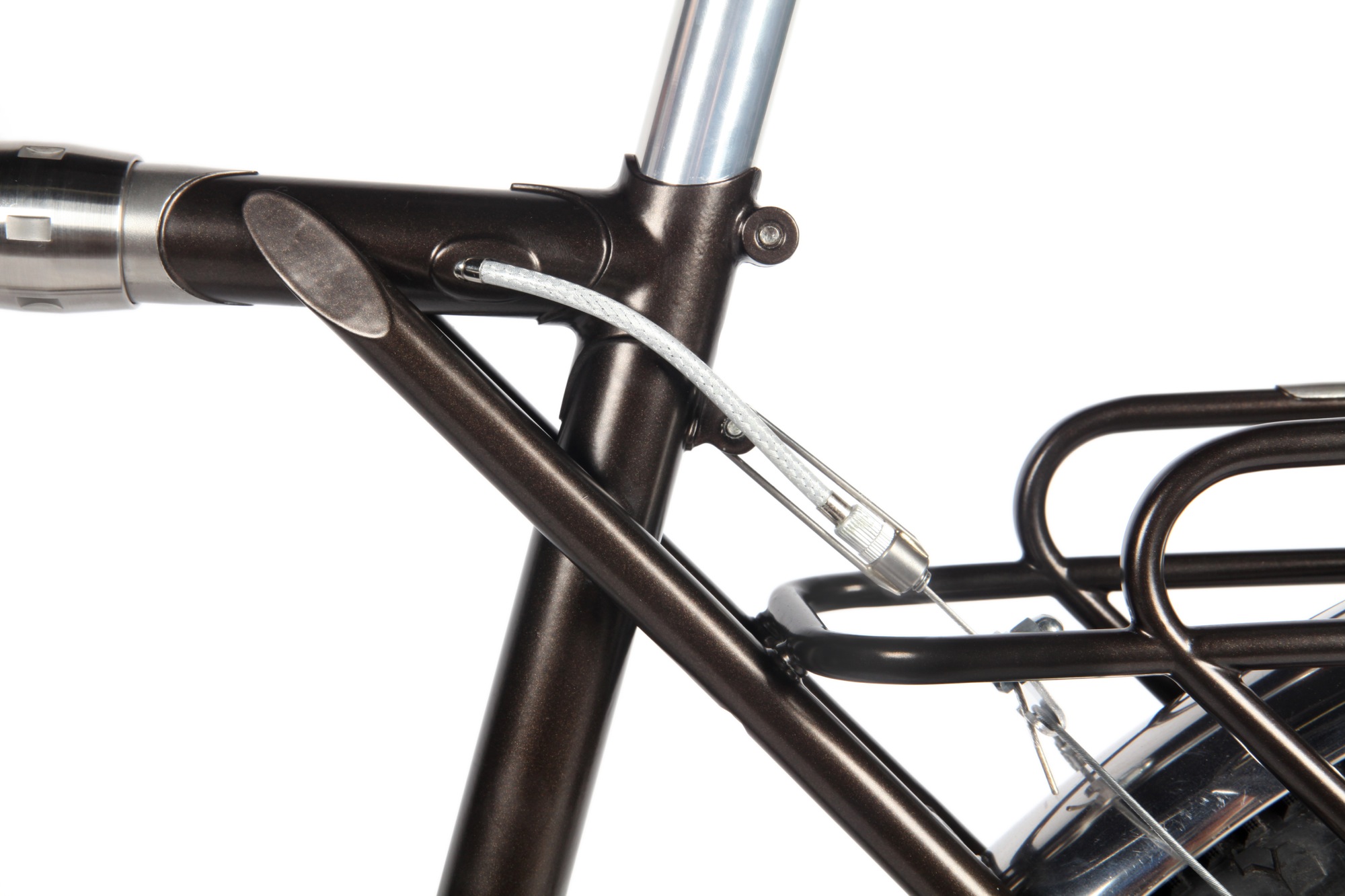
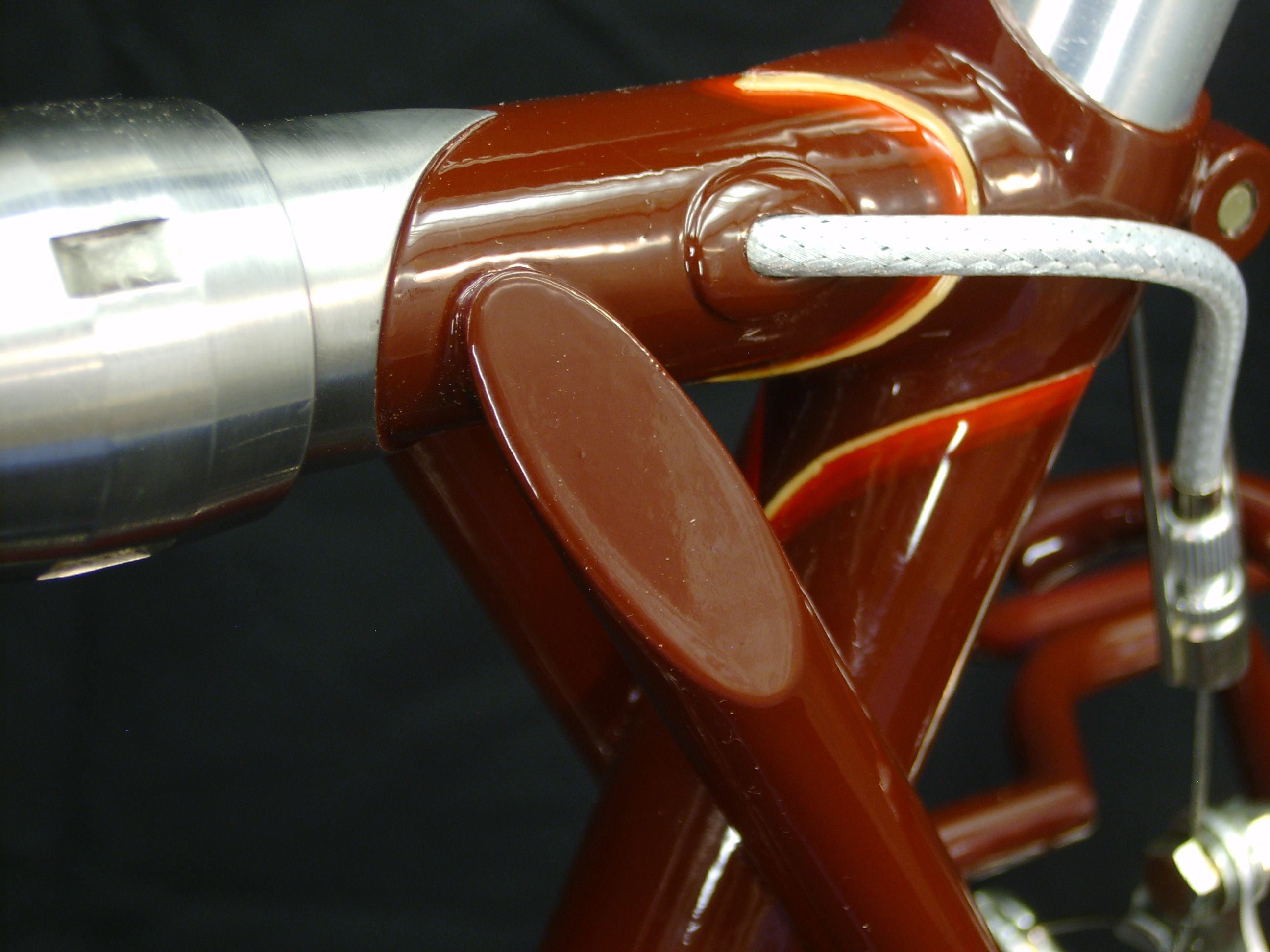 The S&S couplings allow easy transport by suitcase when the bike is collapsed. The rear brake cable is pulled through the split housing inside the top tube, while the bare derailleur cables have their own couplers to disconnect just above the bottom bracket. |
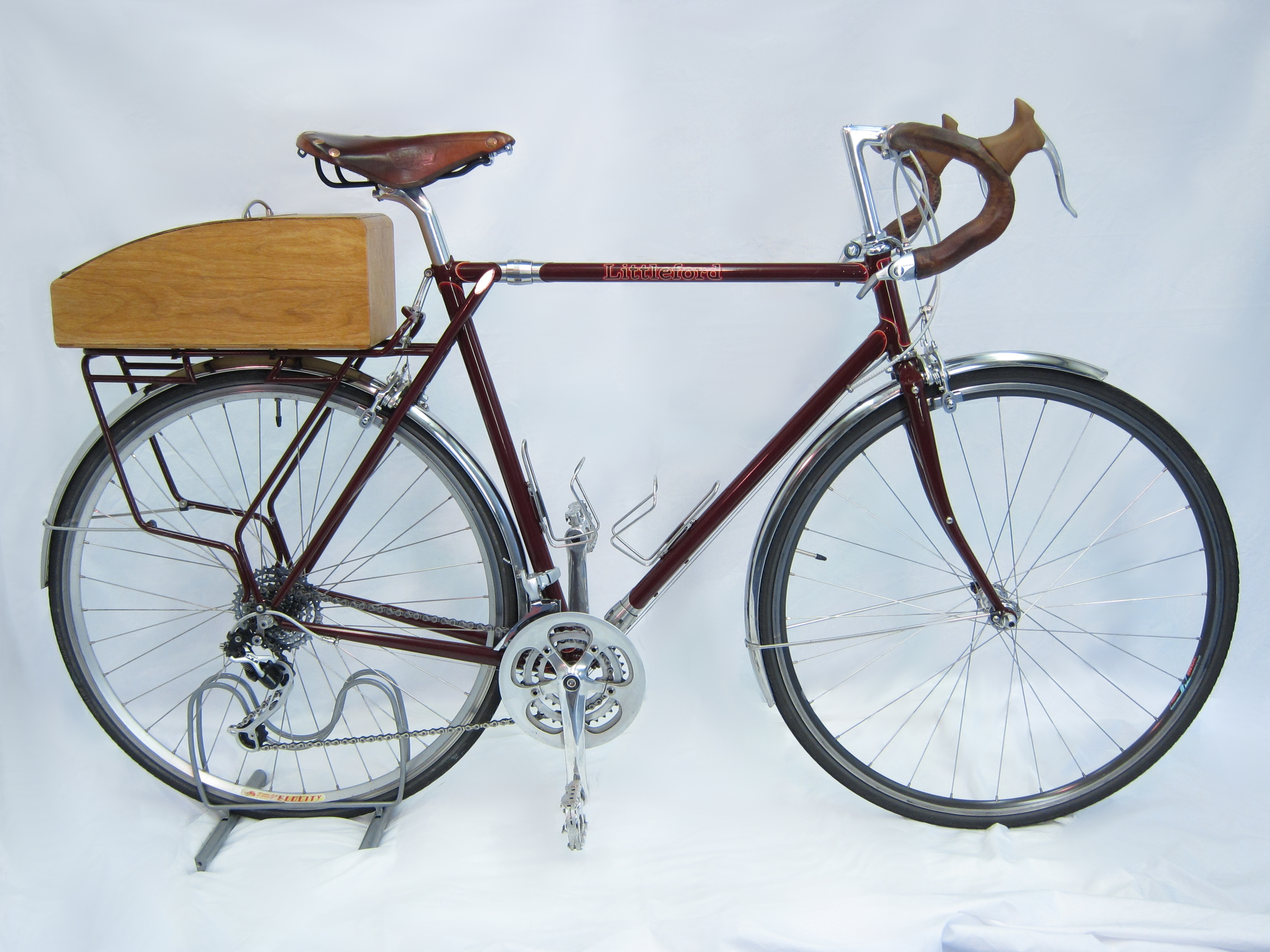 For around town I thought it would be nice to have a trunk, so I wouldn’t need to haul a pannier around to carry my tools, u-lock, tire pump, raingear and/or an occasional bottle of scotch. |
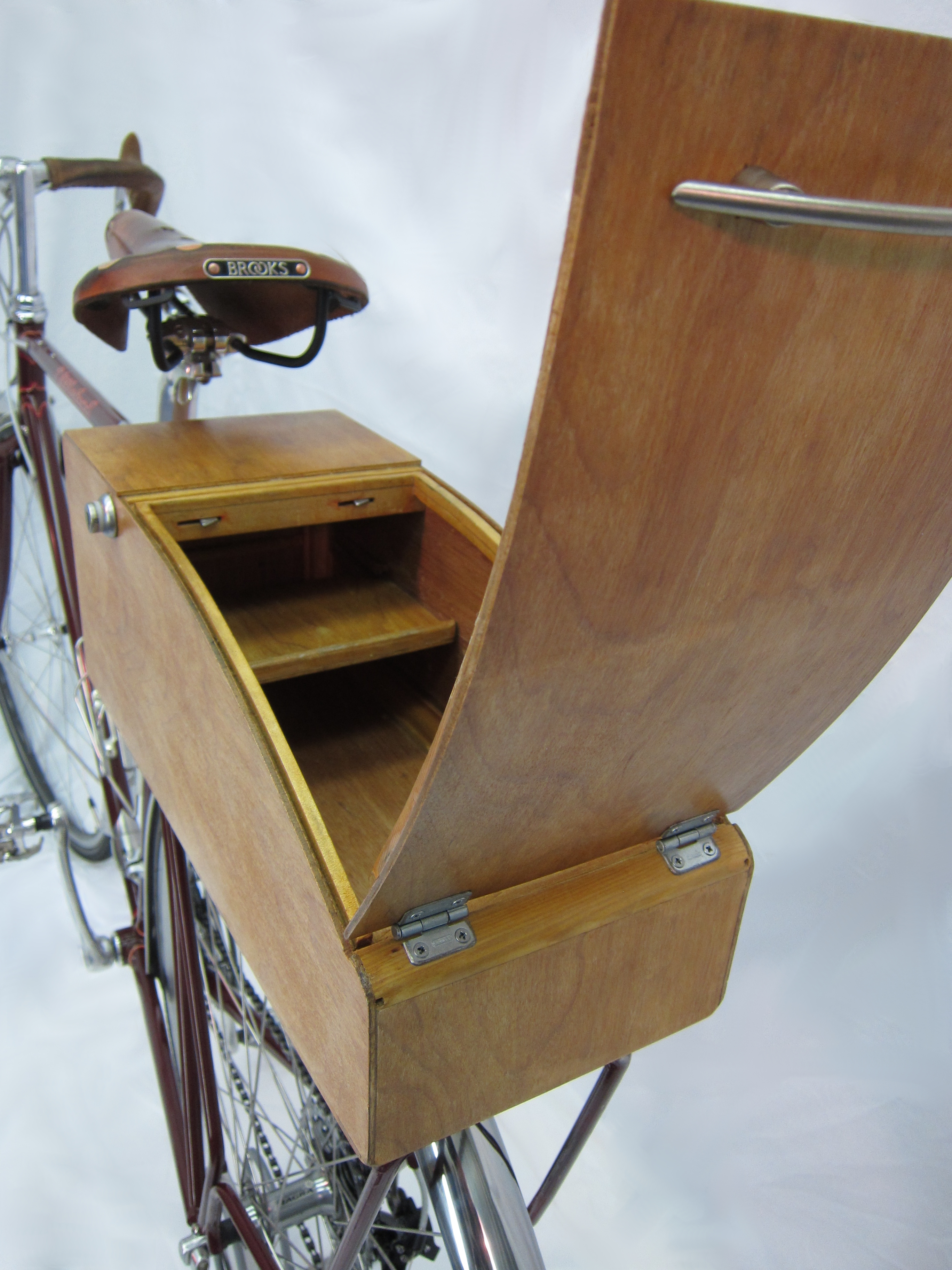 Inspired by a teardrop trailer, the rounded-top box is constructed of corner molding and 1/8″ birch plywood. It features a removable tool shelf and weighs about two pounds. |
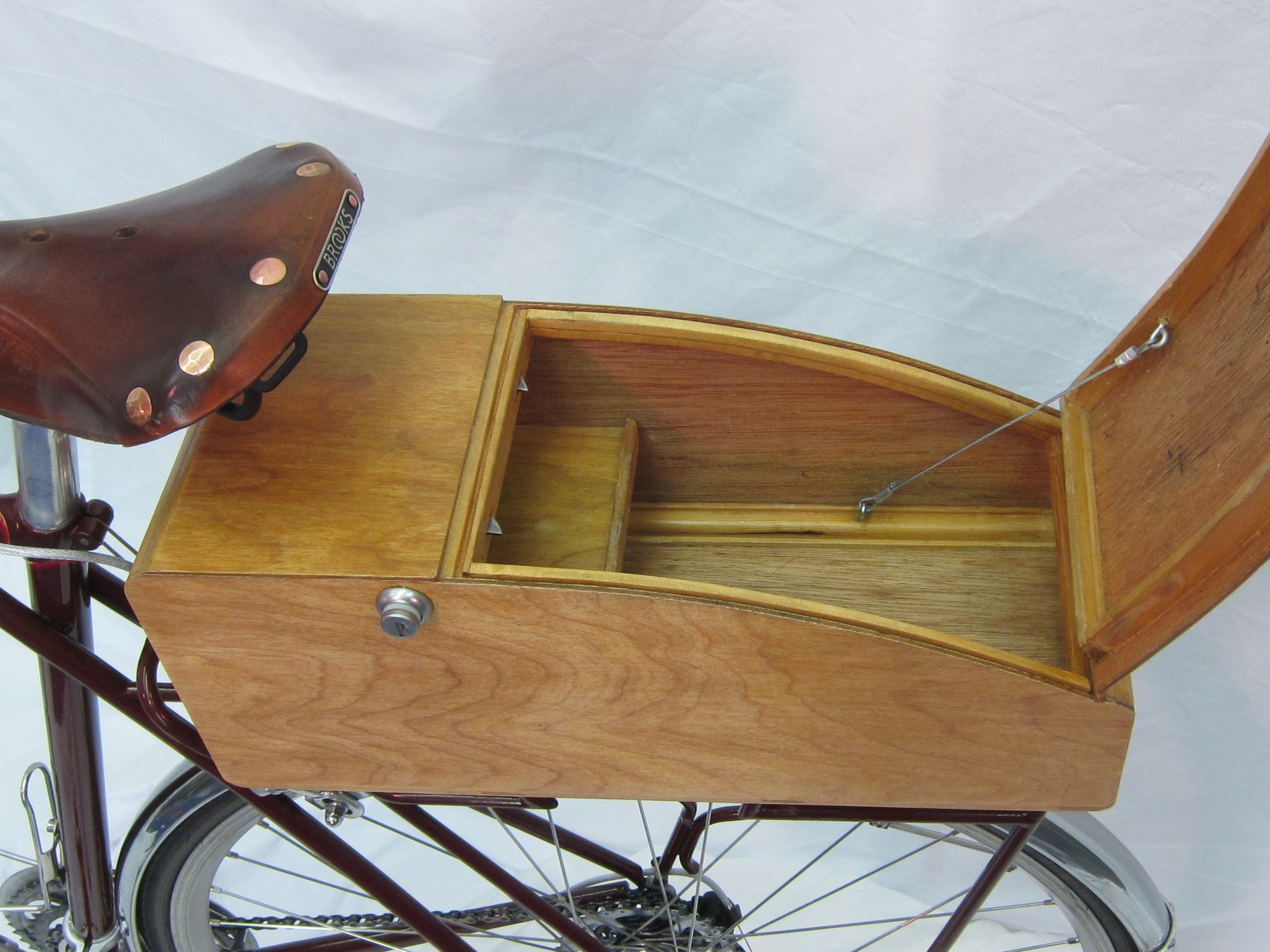 The locking mechanism is a weatherproof push latch from a truck bed tool box, with fabricated actuation. Details of the construction process can be found here, in the shop journal. |
Oregon Manifest 2011
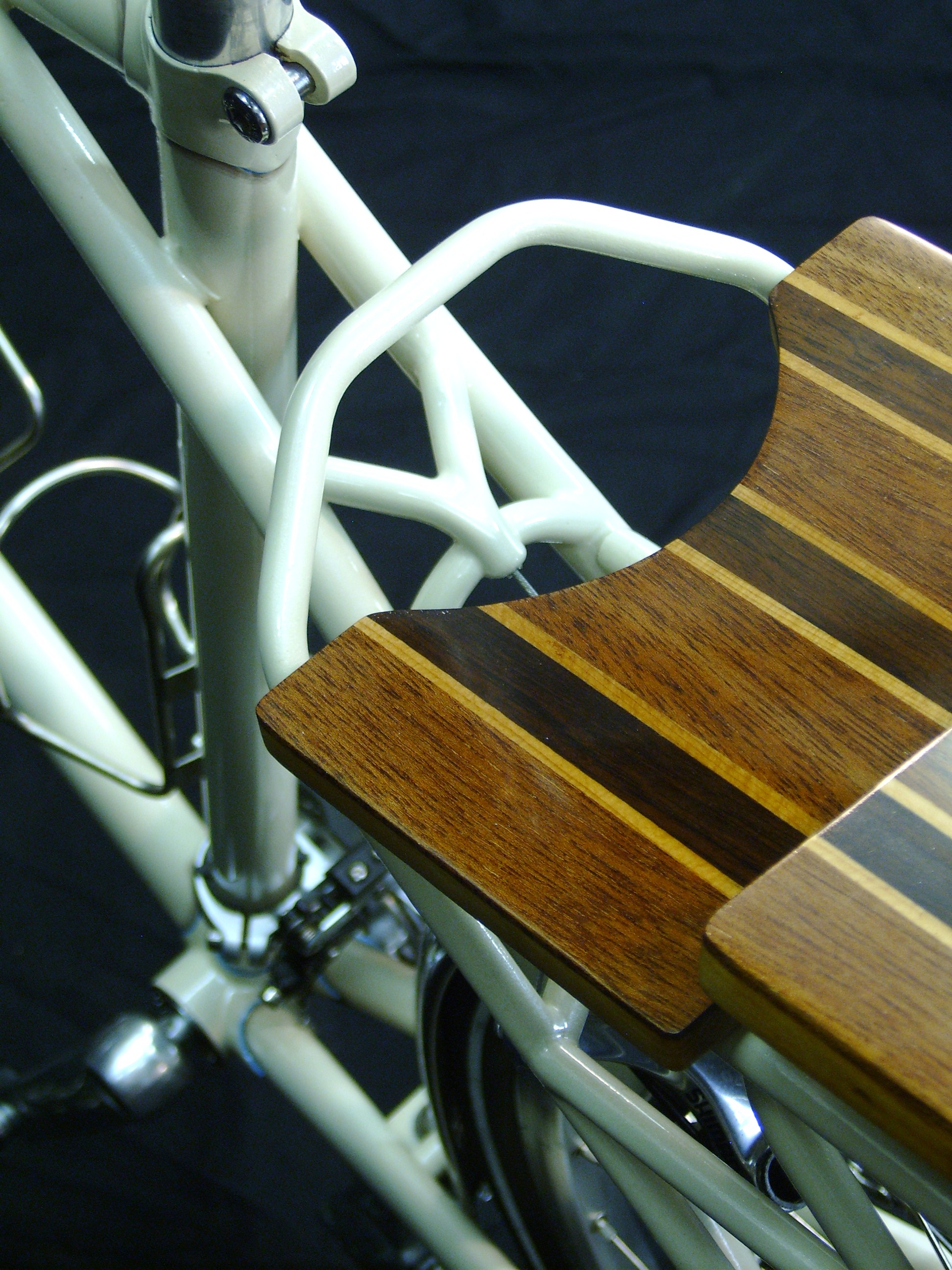
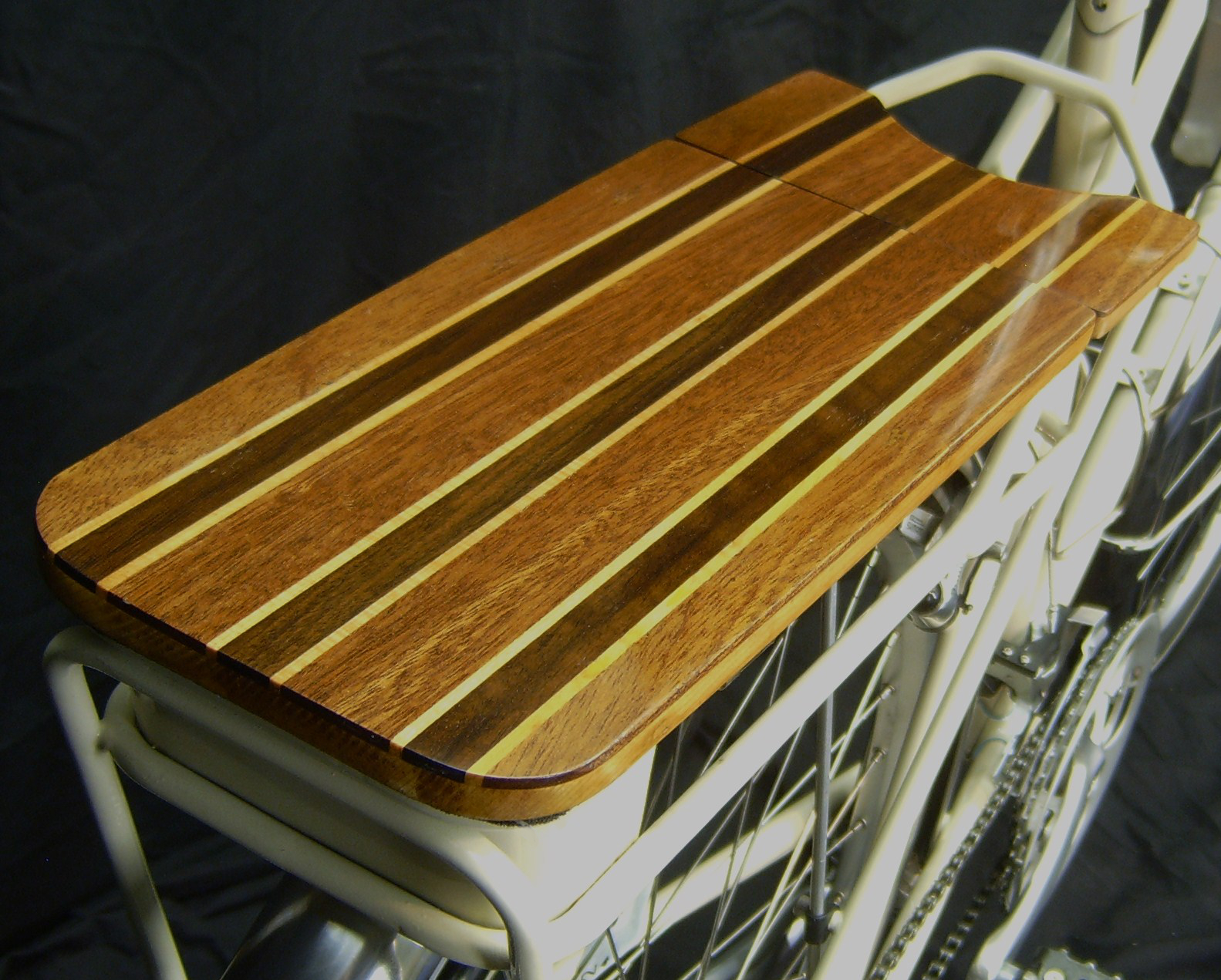
In addition to the contest requirements (a security mechanism, fenders, front and rear lighting, reasonable cargo capacity, and the ability to free-stand under load) the Team Littleford entry also featured some proprietary touches. As on all Littlefords, both front and rear racks are detachable. The front rack sports a platform plus center-pivoting rails for custom Philosophy panniers. When unlatched the bags automatically swing outward for easy access. The wooden rack platforms were salvaged from a thrift store find; a 1970’s waterski board. A hidden latch (below the left rail of the rear rack) opens the hinged rear platform to access a discreet u-lock holster and glove box underneath.
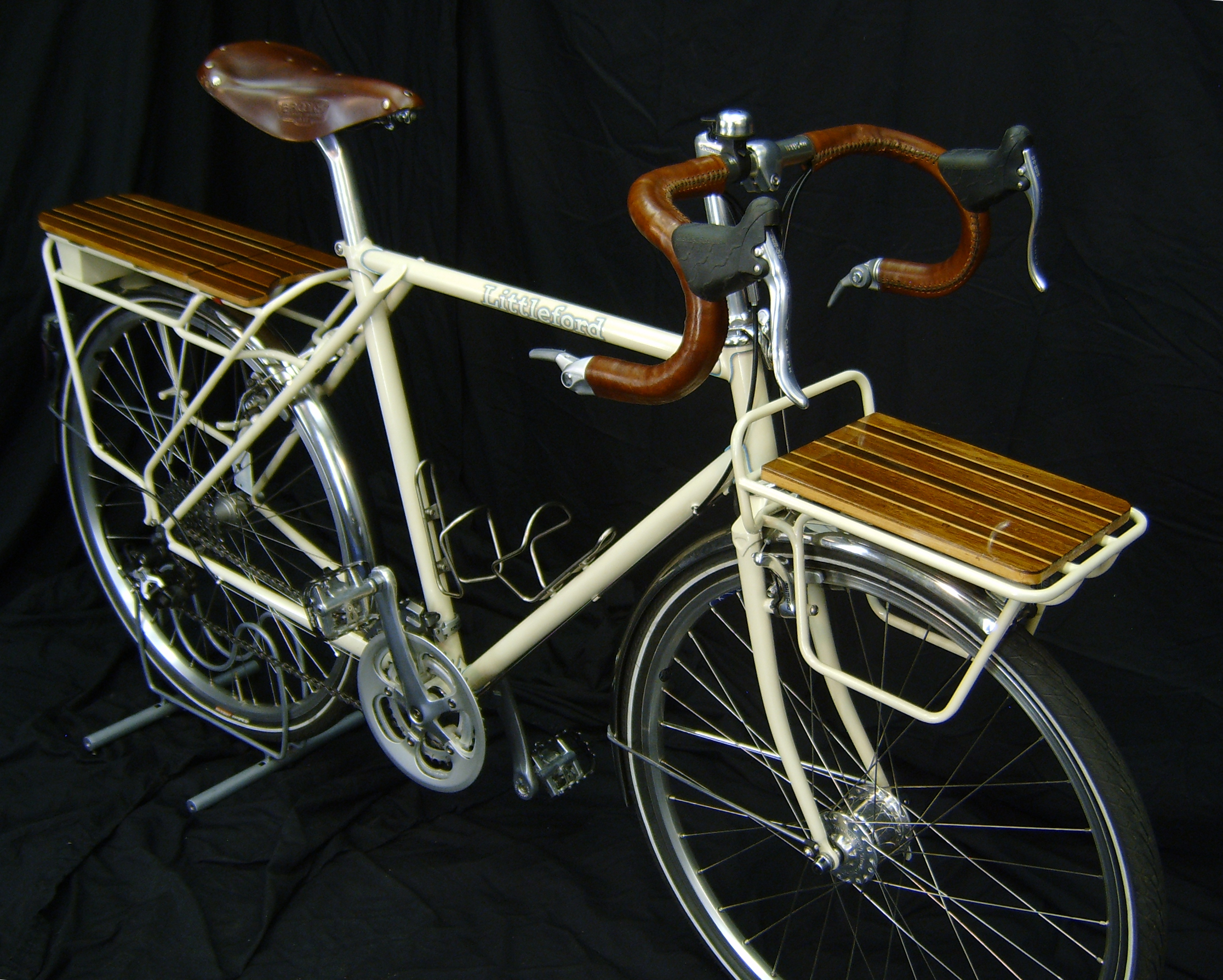 Littleford bicycles teamed up with Philosophy Bags and customer/designer Aaron Kaffen for the ultimate utilitarian mission; Oregon Manifest . Other bike shows and events have traditional been all about visual appeal, often at the expense of utility. This bike was our collective take on what’s been missing from that paradigm. 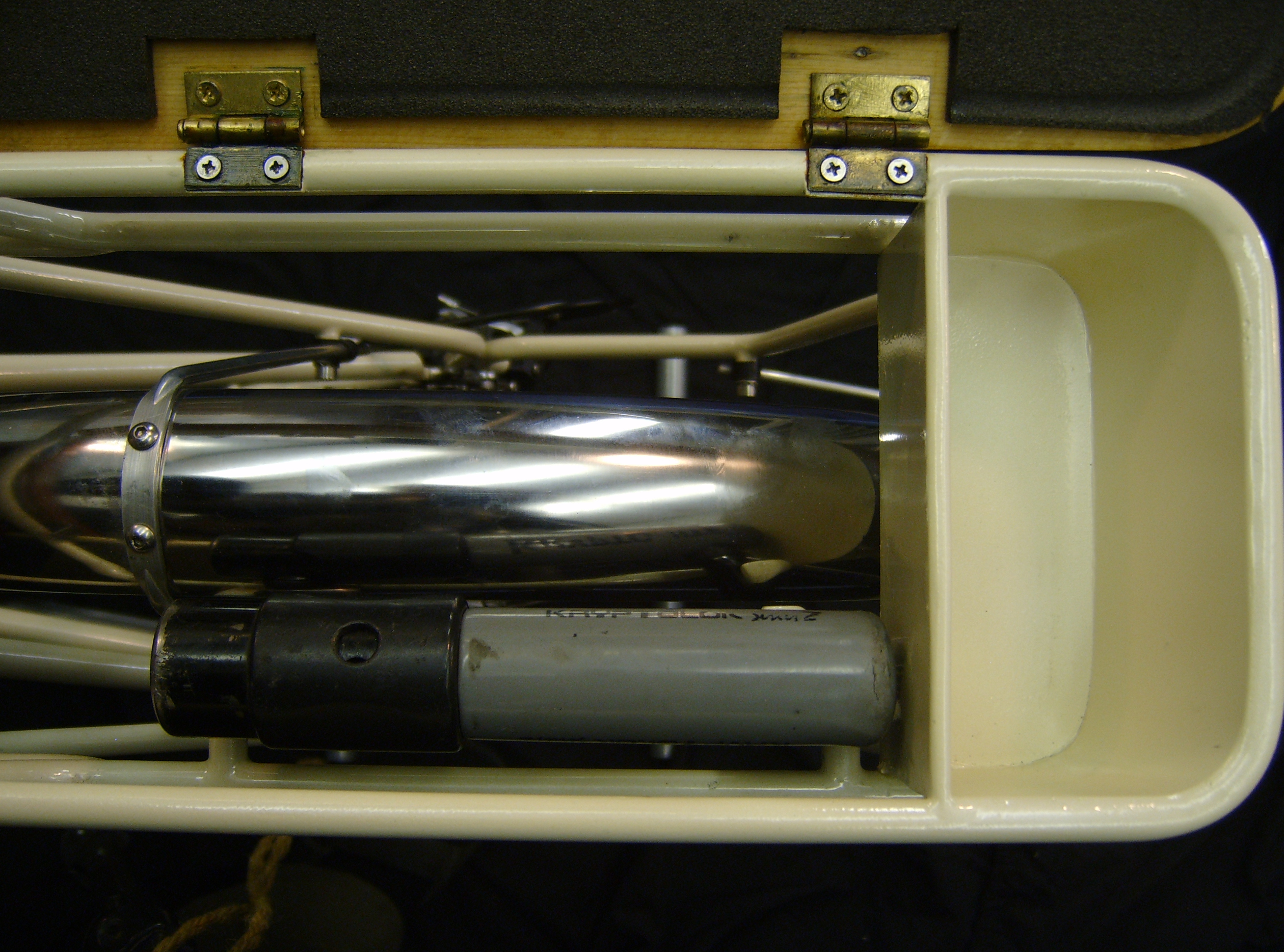 The opened lid reveals a self-securing u-lock holder and a handy glove compartment. |
|
 The front rack features a matching platform that, along with the pannier rails, covers and protects the headlight |
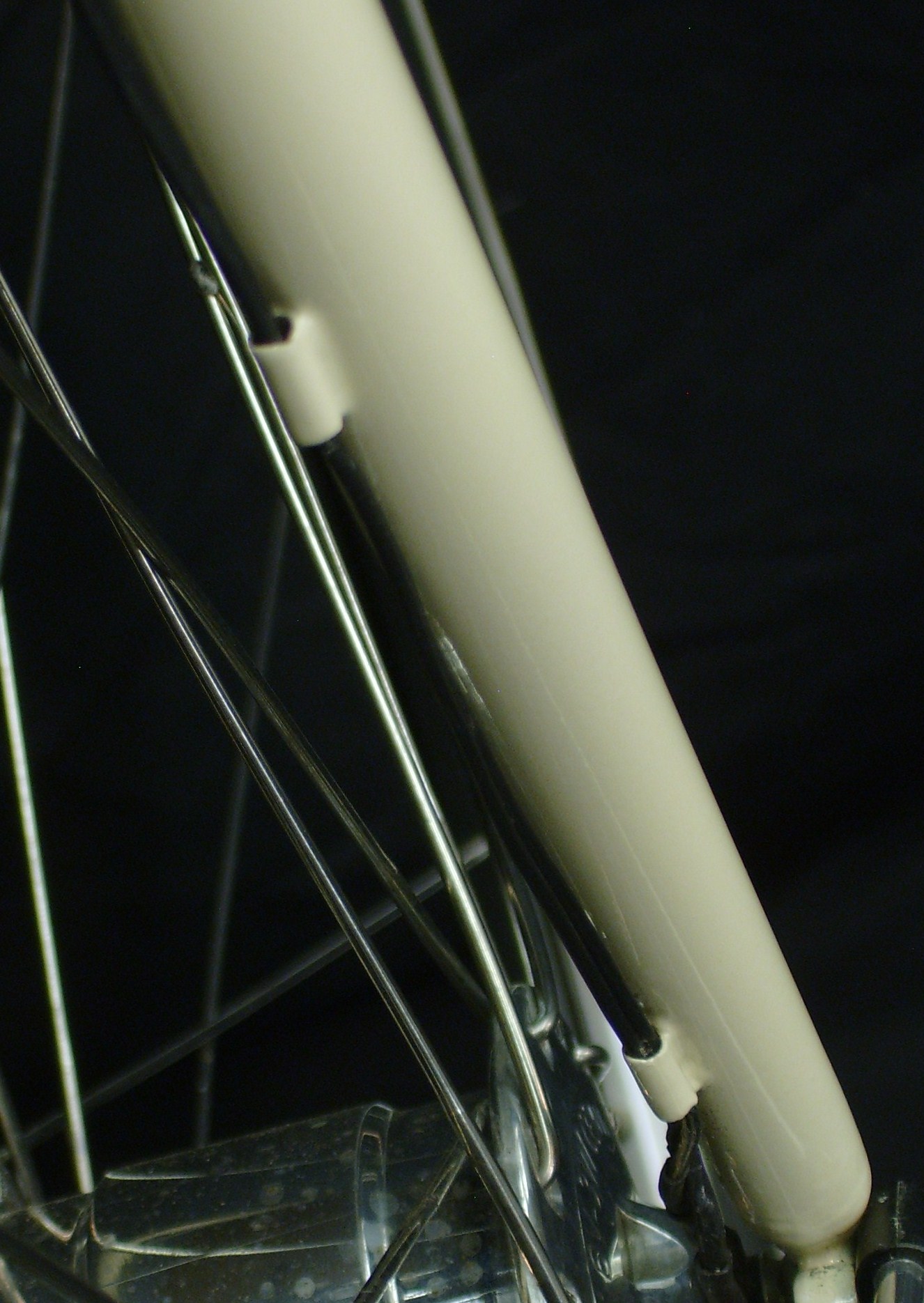 Wiring is routed through guides on the frame and fork, and inside the outer lip of the fenders. |
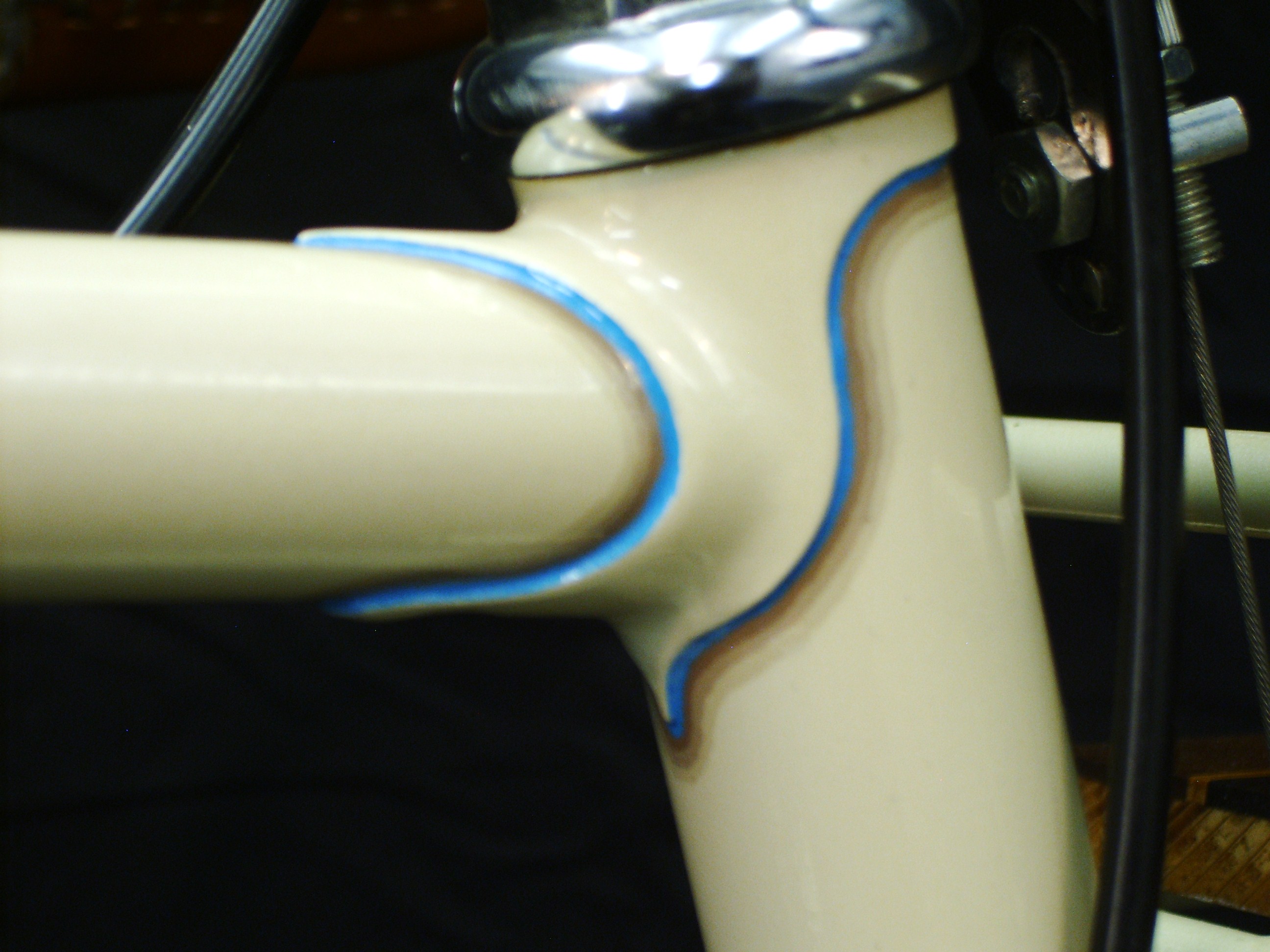 The lugs are highlighted with a liner brush; Three subtle shades of brown and one blue. |
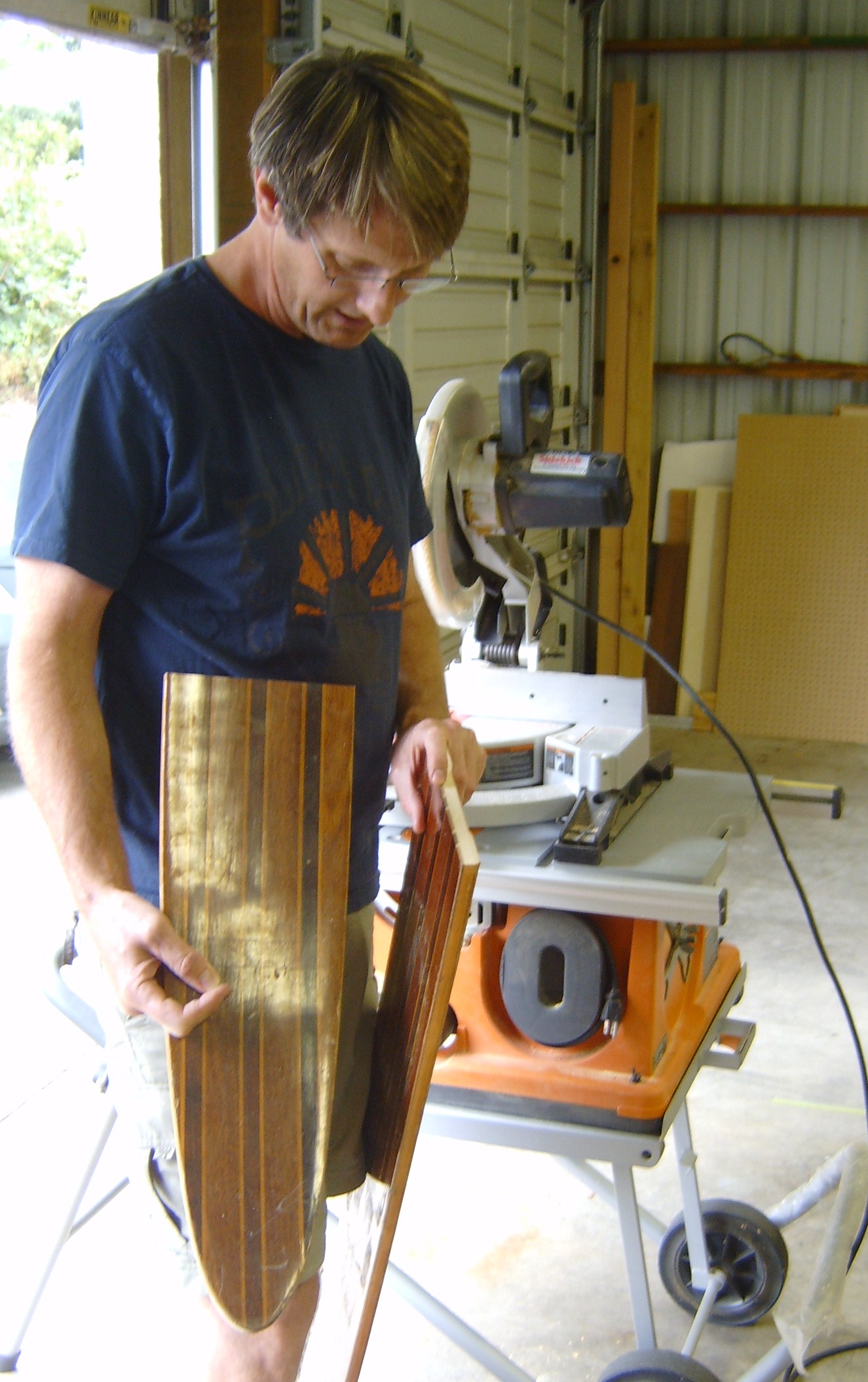 We cut and planed the basic shapes of the boards at Troy’s workshop in Camas, WA. |
Cheryll’s Custom De Luxe
While I’m happy to help develop even the foggiest vision of a customer’s dream bike, sometimes that vision arrives more or less intact. Cheryll knew just what she wanted. She mailed me the bright green and fuchsia color samples, and I determined her frame geometry from her measurements, insight and photos; two of her riding different bikes and one side view of a stationary bike that she had found particularly comfortable. (It allowed for a more upright posture than any road bike she could find.) The end result was just what she was looking for… crafted and delivered from 2000 miles away.
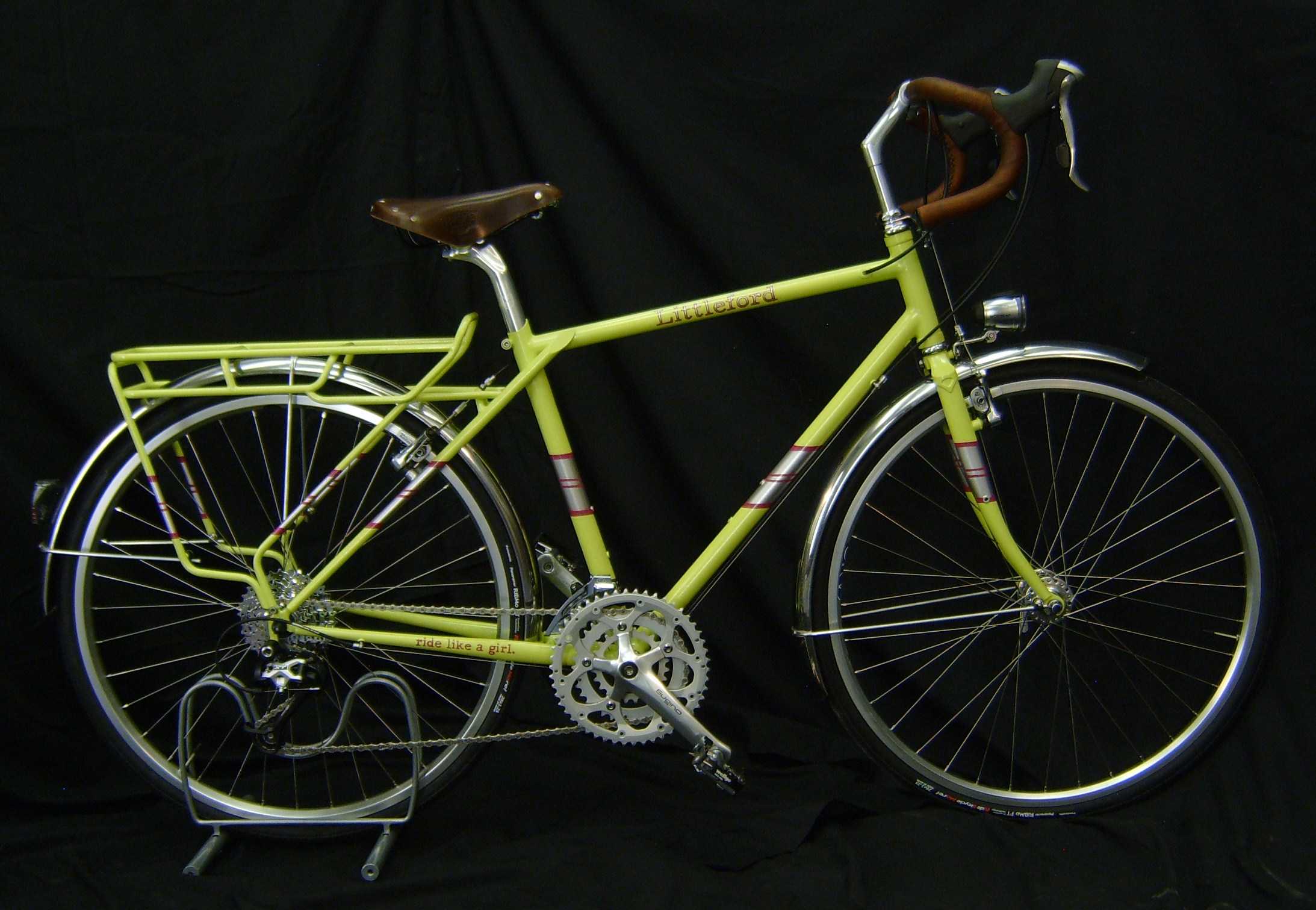 Equipped with a now standard detachable integrated rack, the frame utilizes a subtle combination of a sloping top tube, extended head tube and tall Nitto stem to bring the bars WAY UP without sacrificing any good looks. 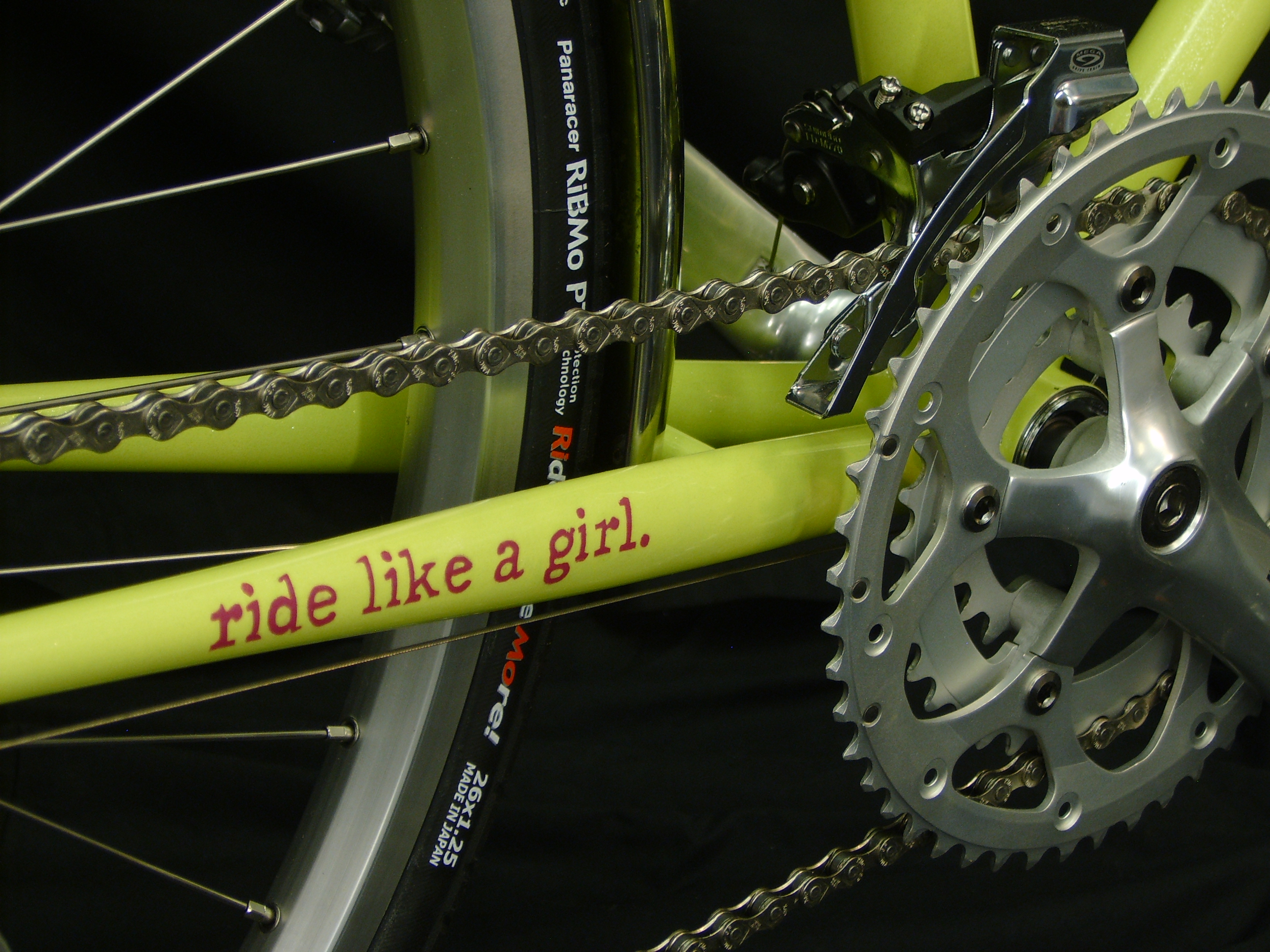 The chainstay lettering and graphics are hand painted under a shimmery hotrod sparkle mid coat. |
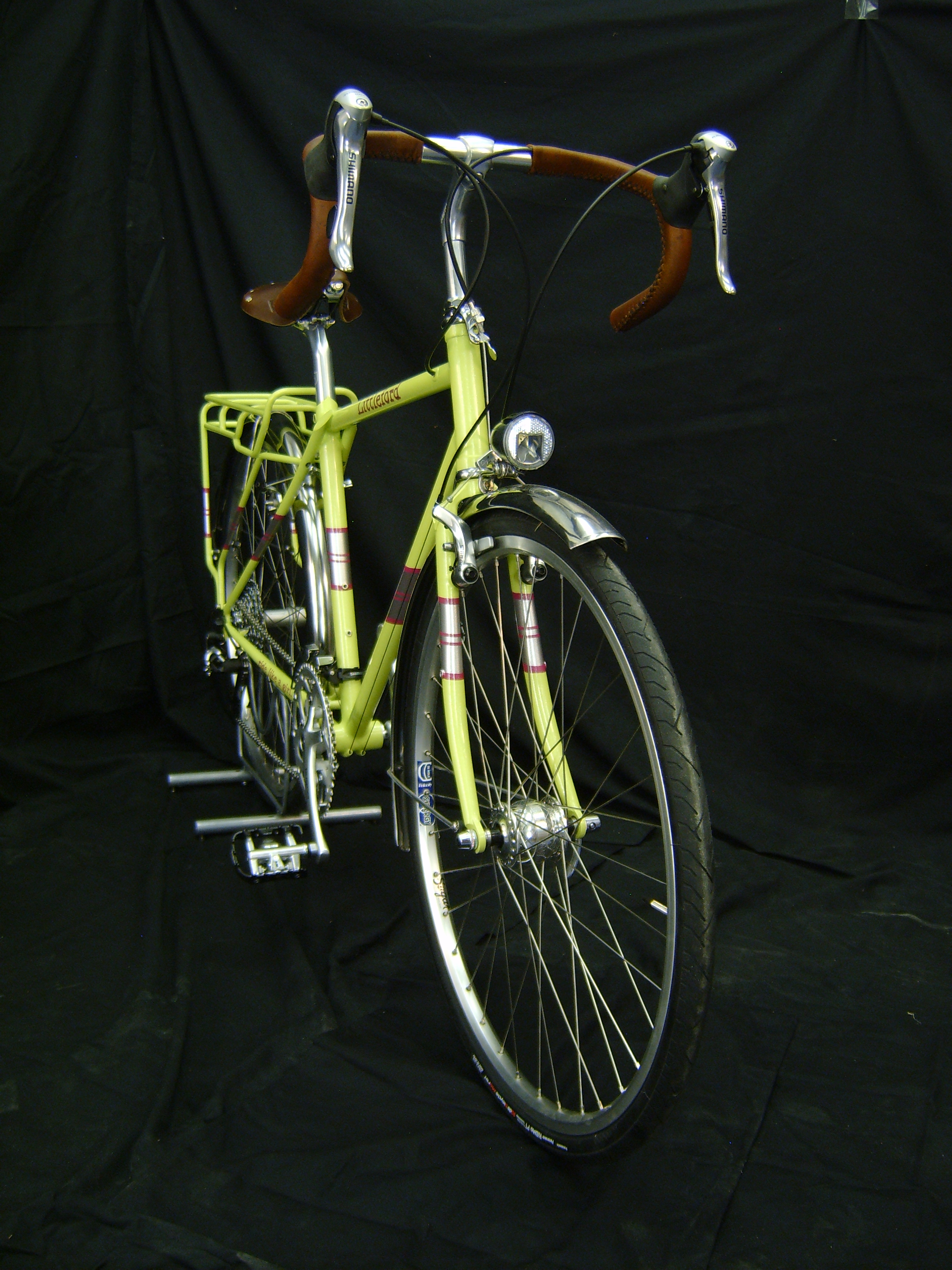 The bar covers are sewn elk hide. Also featured, Stainless Berhoud fenders & Lumotec headlight that turns itself on at dusk. 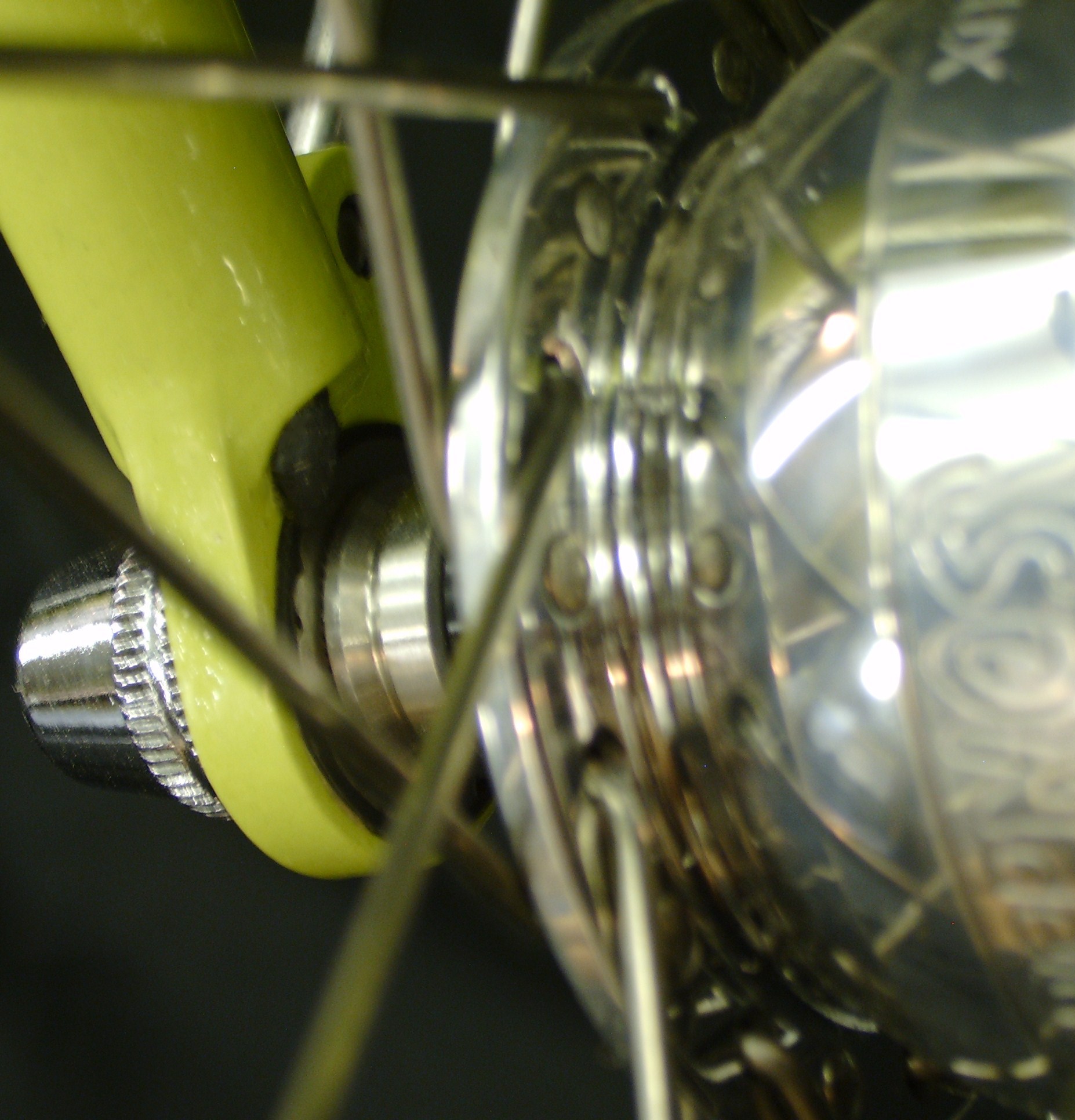 The Schmidt dyno-hub mounts in a specially built fork, so the electrical connection is automatically made with insertion of the front wheel. |
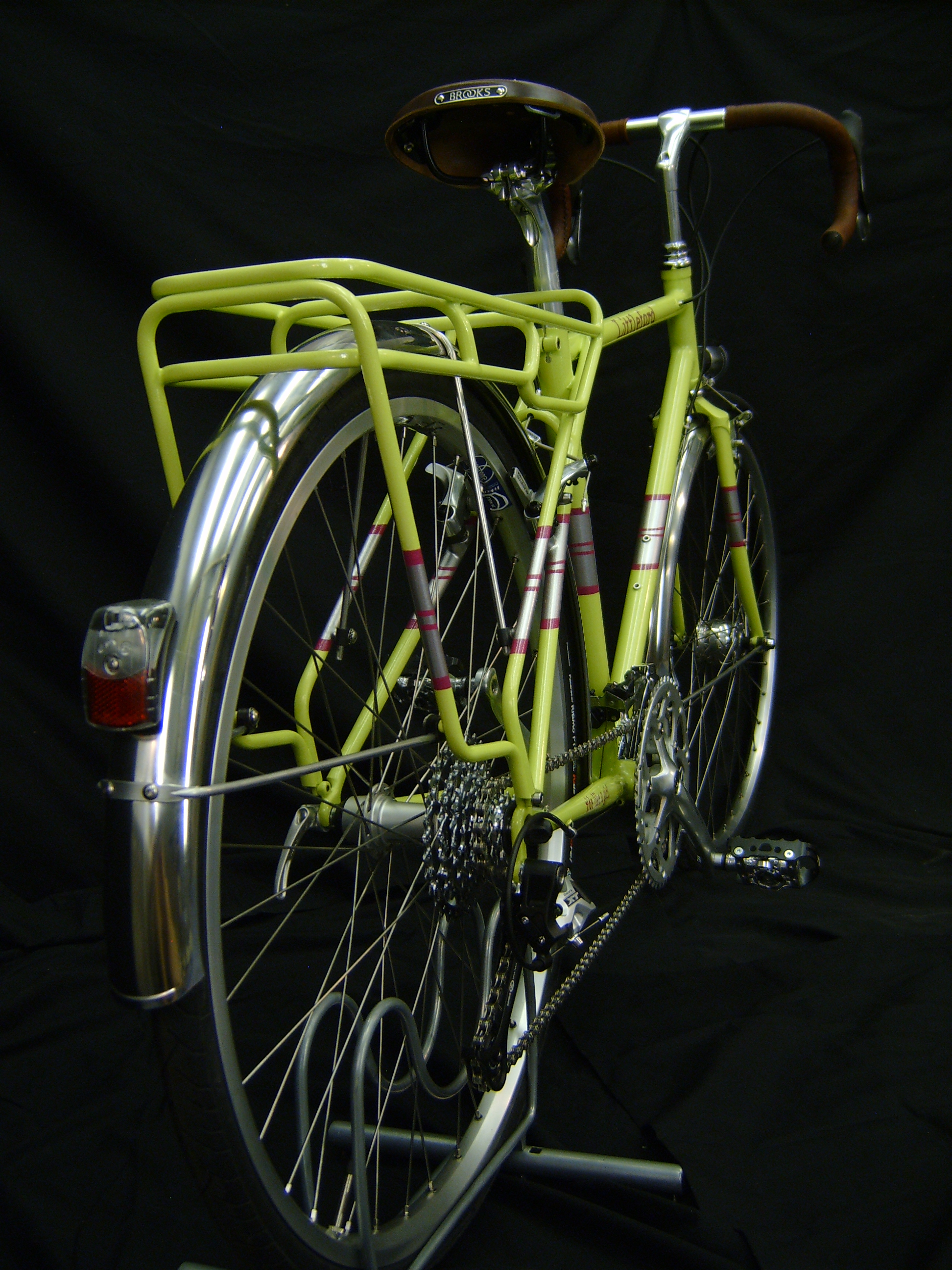
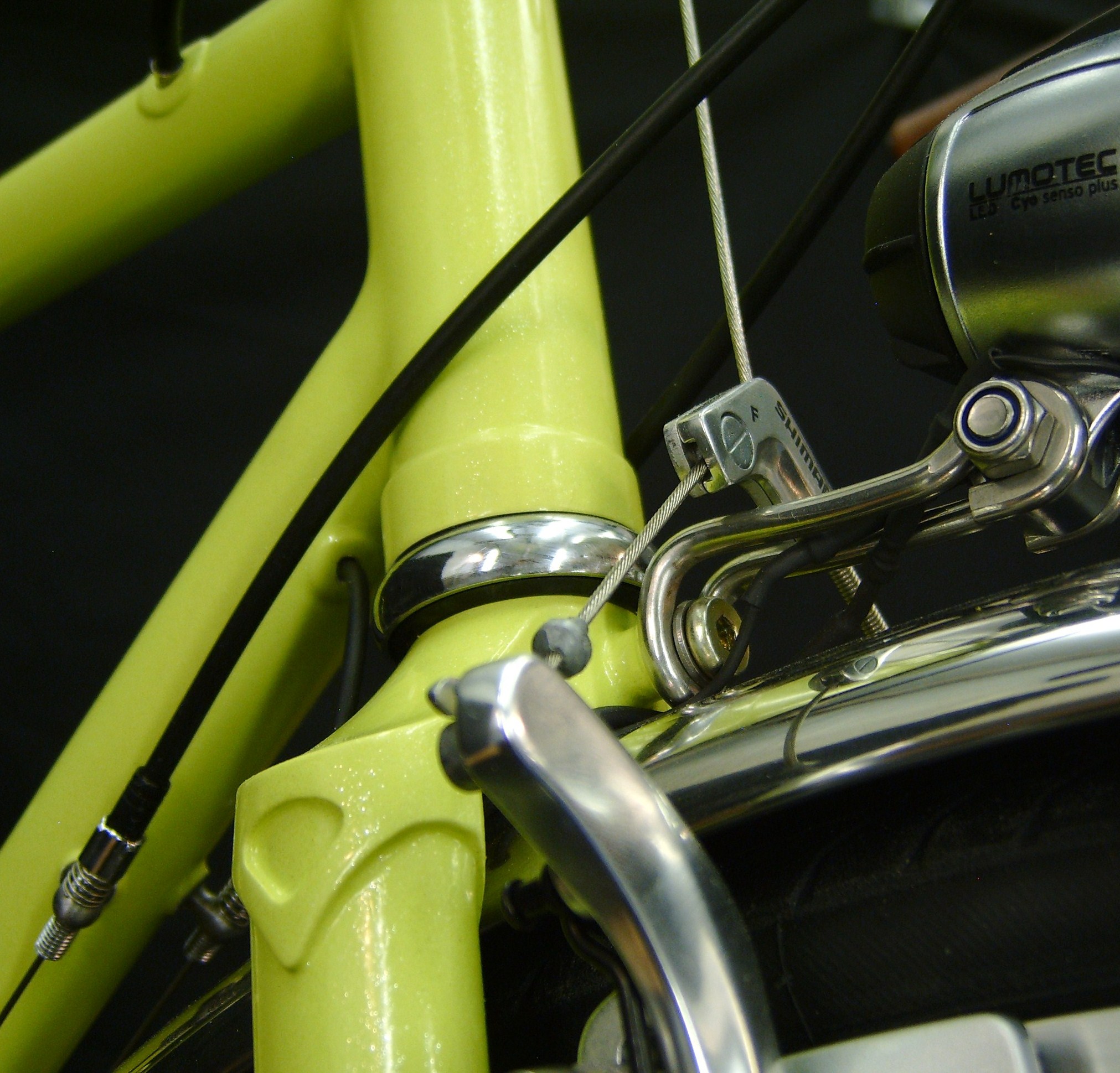 Wiring is completely internal, except for a short length behind the fork crown, where quick disconnects allow for easy fork removal. |
Matt’s Sleek & Seventies All-Arounder
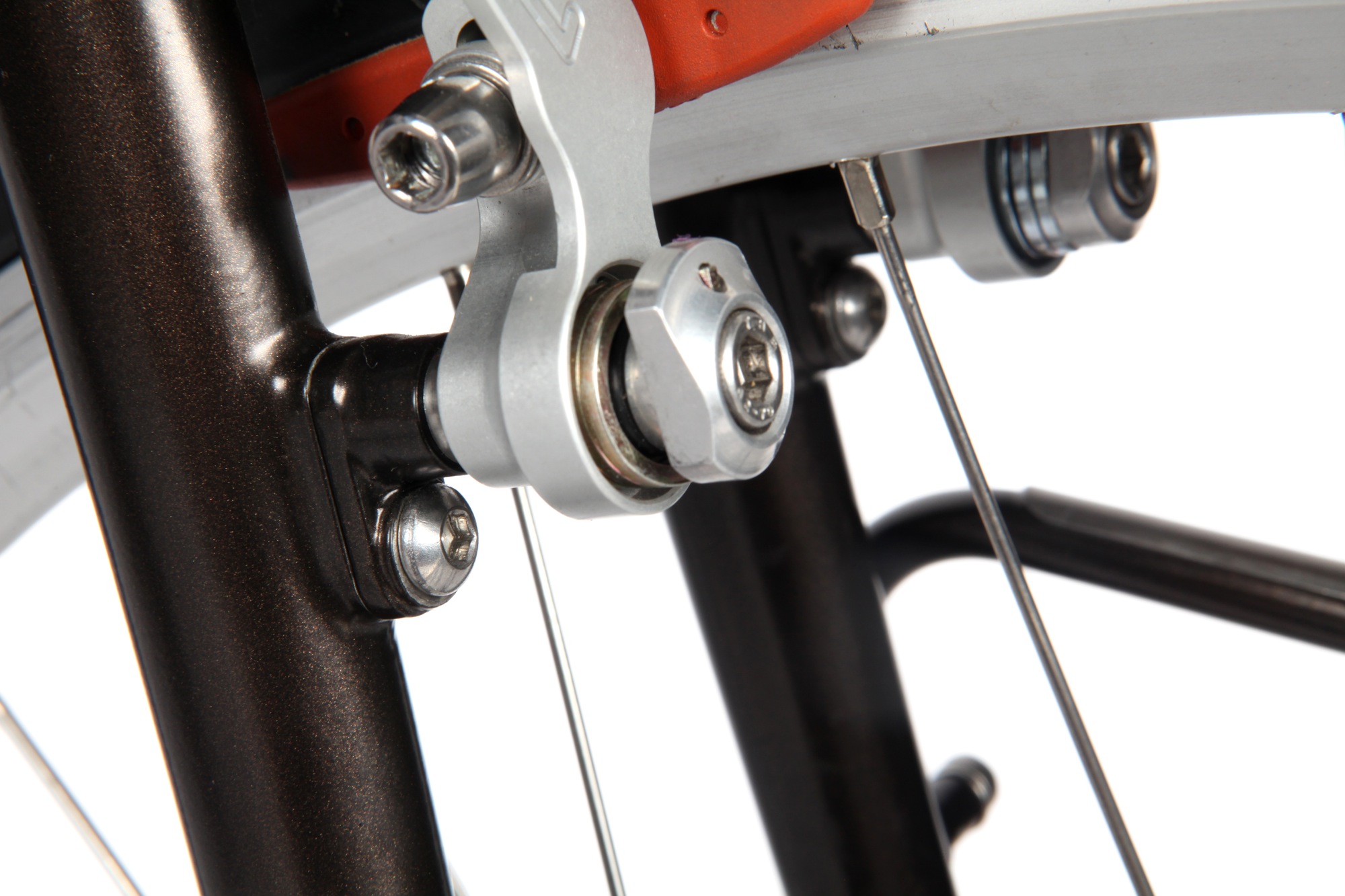
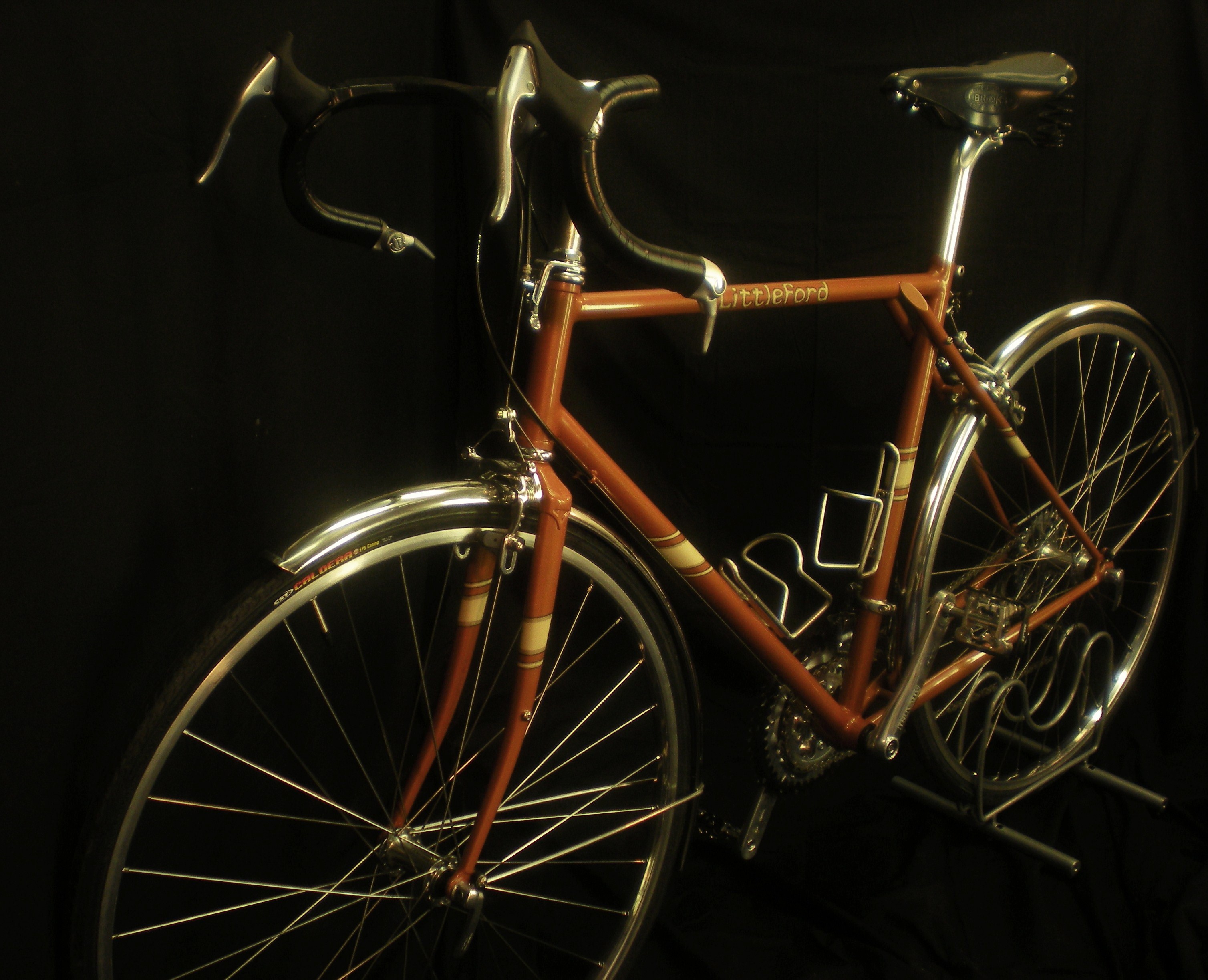
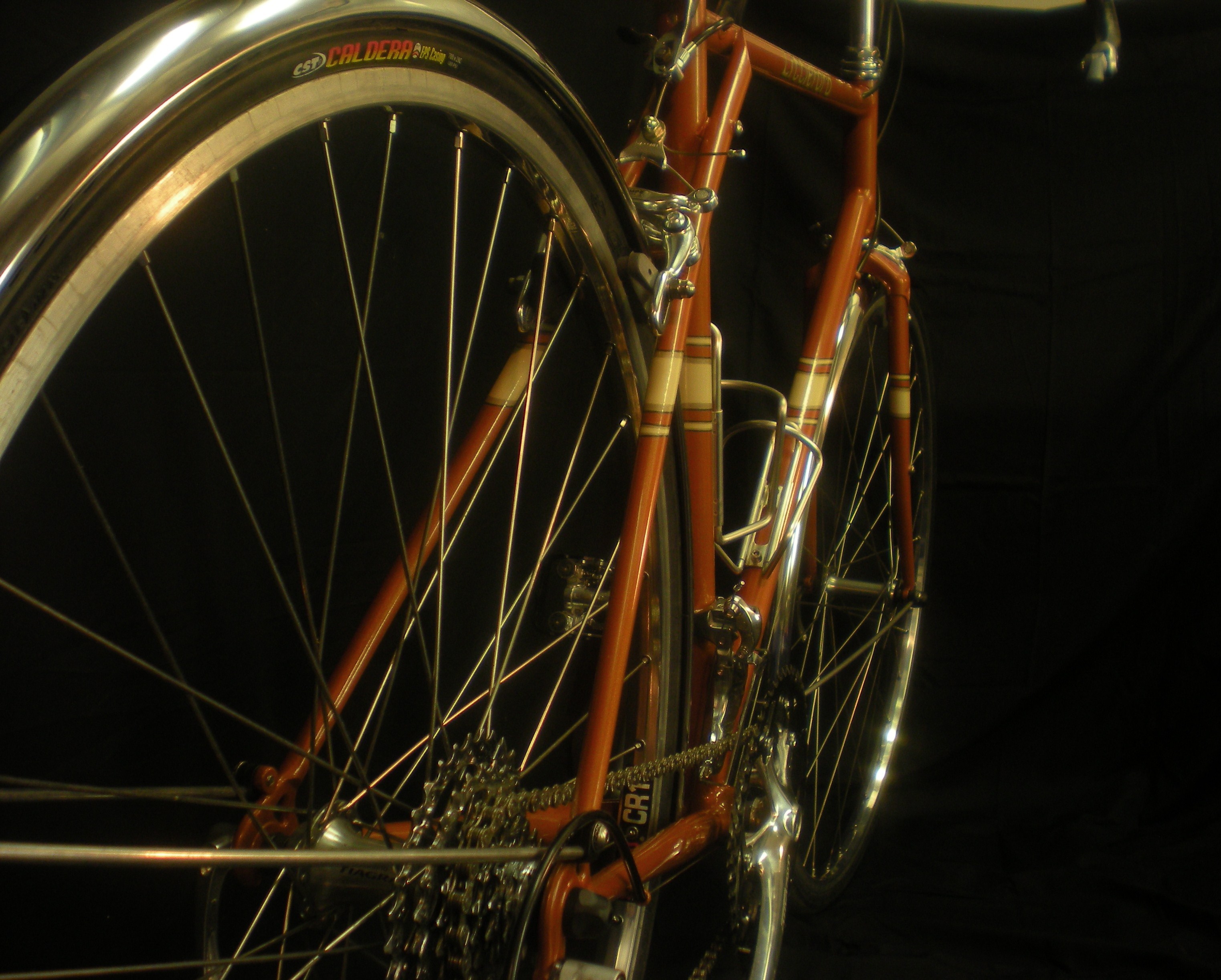
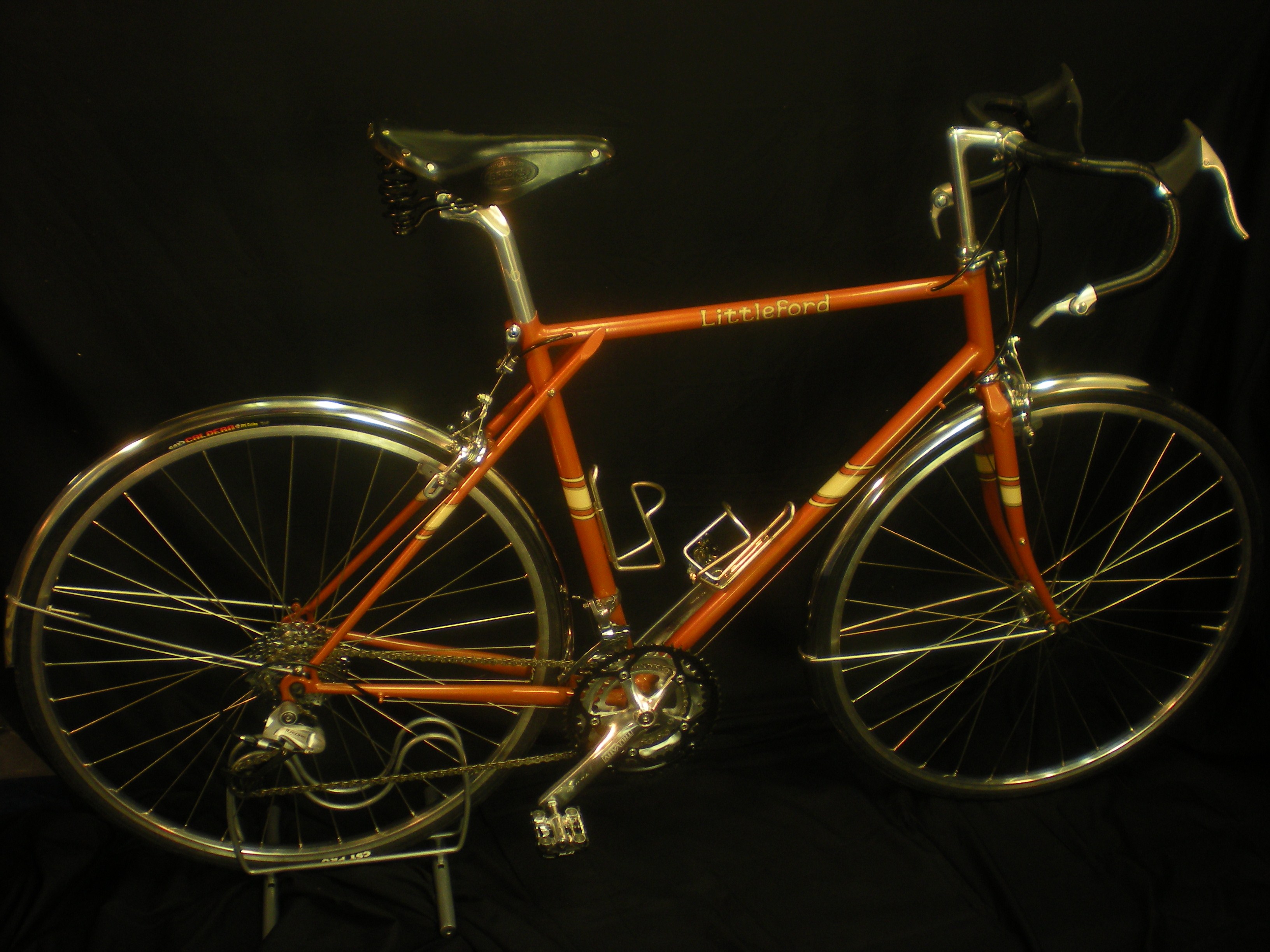
Matt’s commuter is a mix of modern and classic. The fillet brazed frame and 3 x 8 speed drive train is more contemporary, while the center-pull brakes and burnt orange paint scheme give a 70’s feel. The sporty frame is built to tour should the need arise, with a 73 degree head tube, 45 mm chain stays, ample fender clearance, and rear and low rider rack eyelets.
 |
 |
 |
Craig’s Classic Roadie
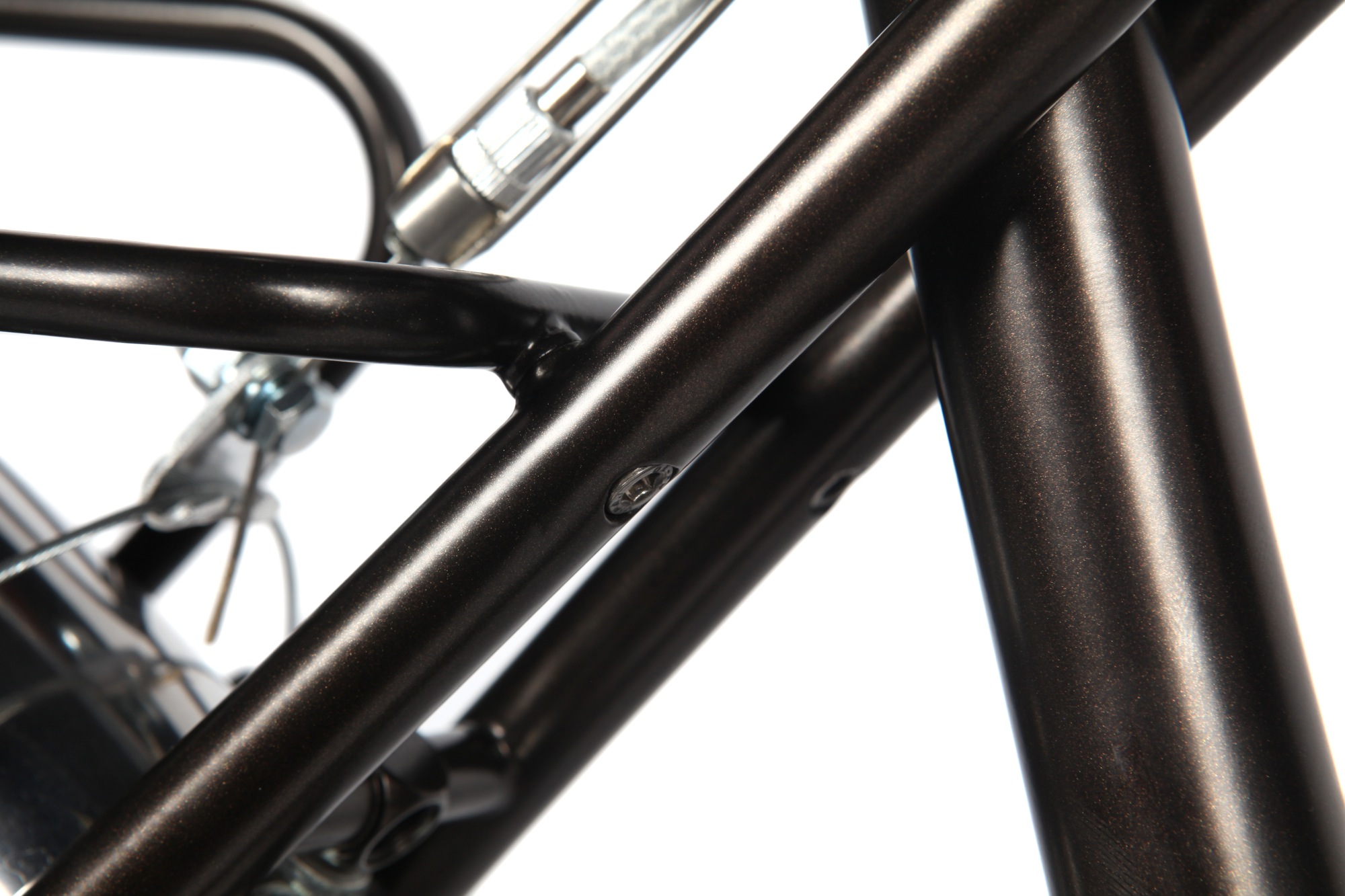
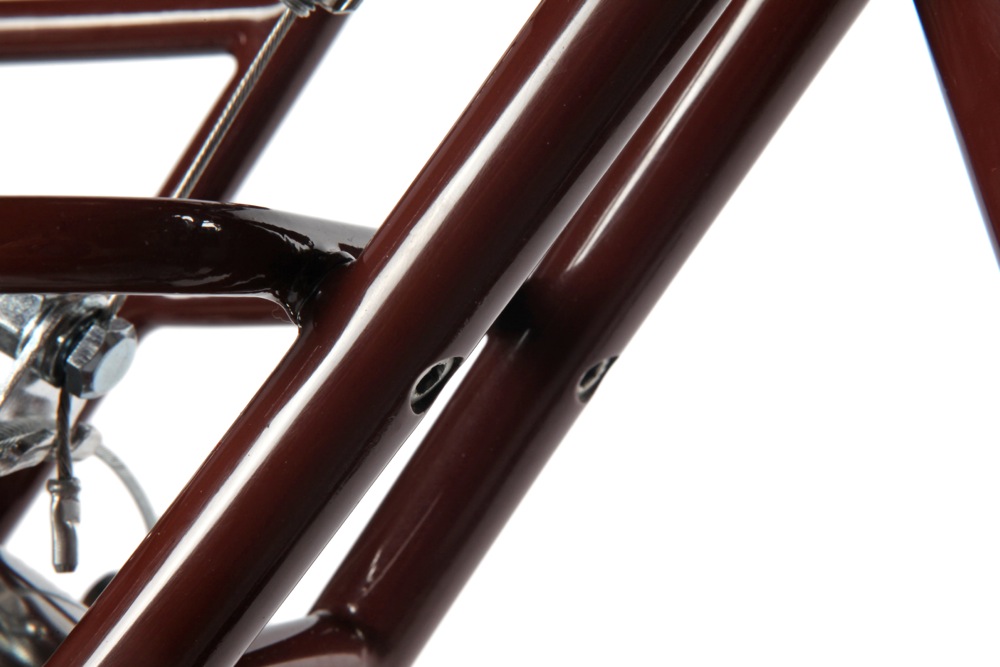
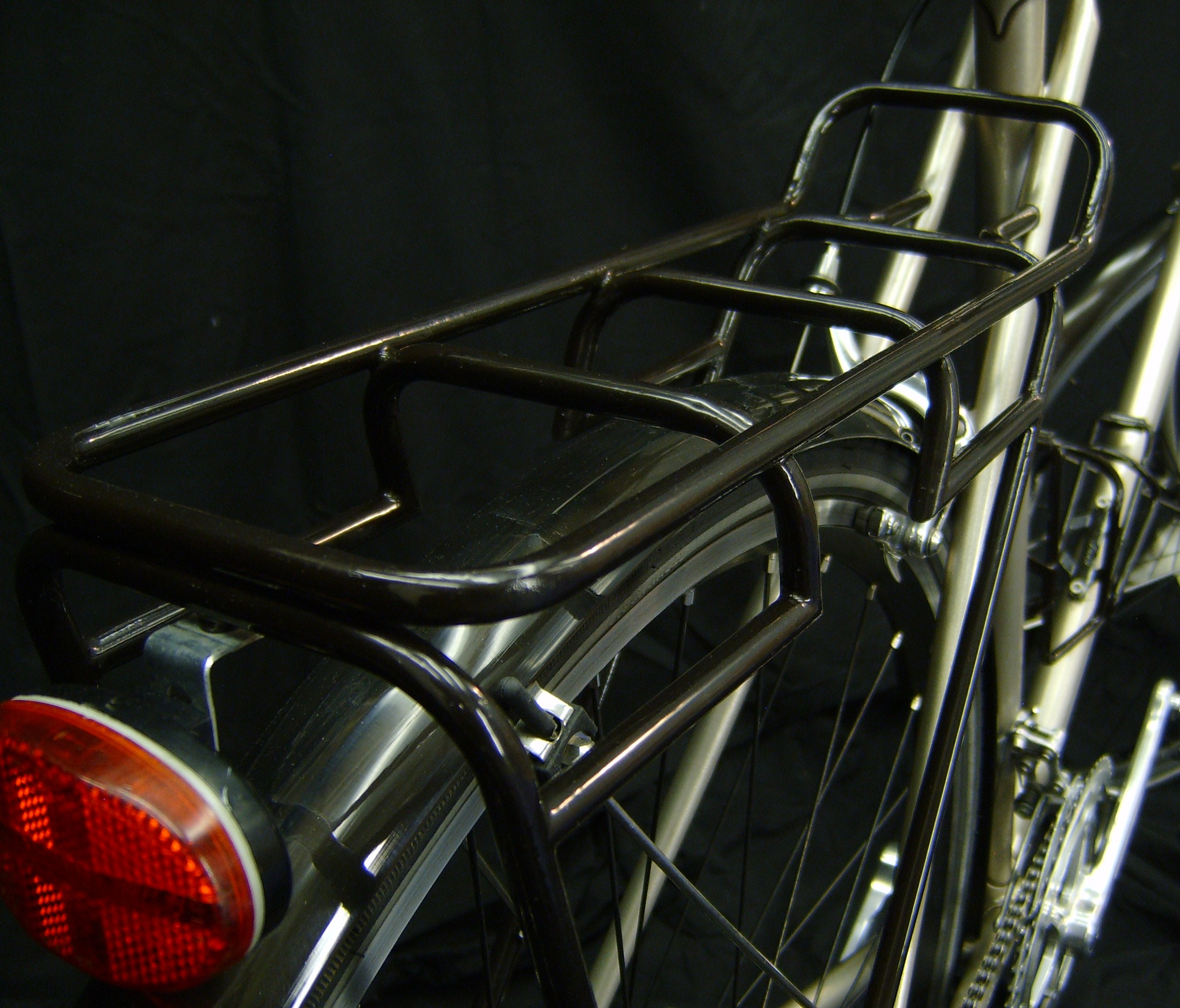
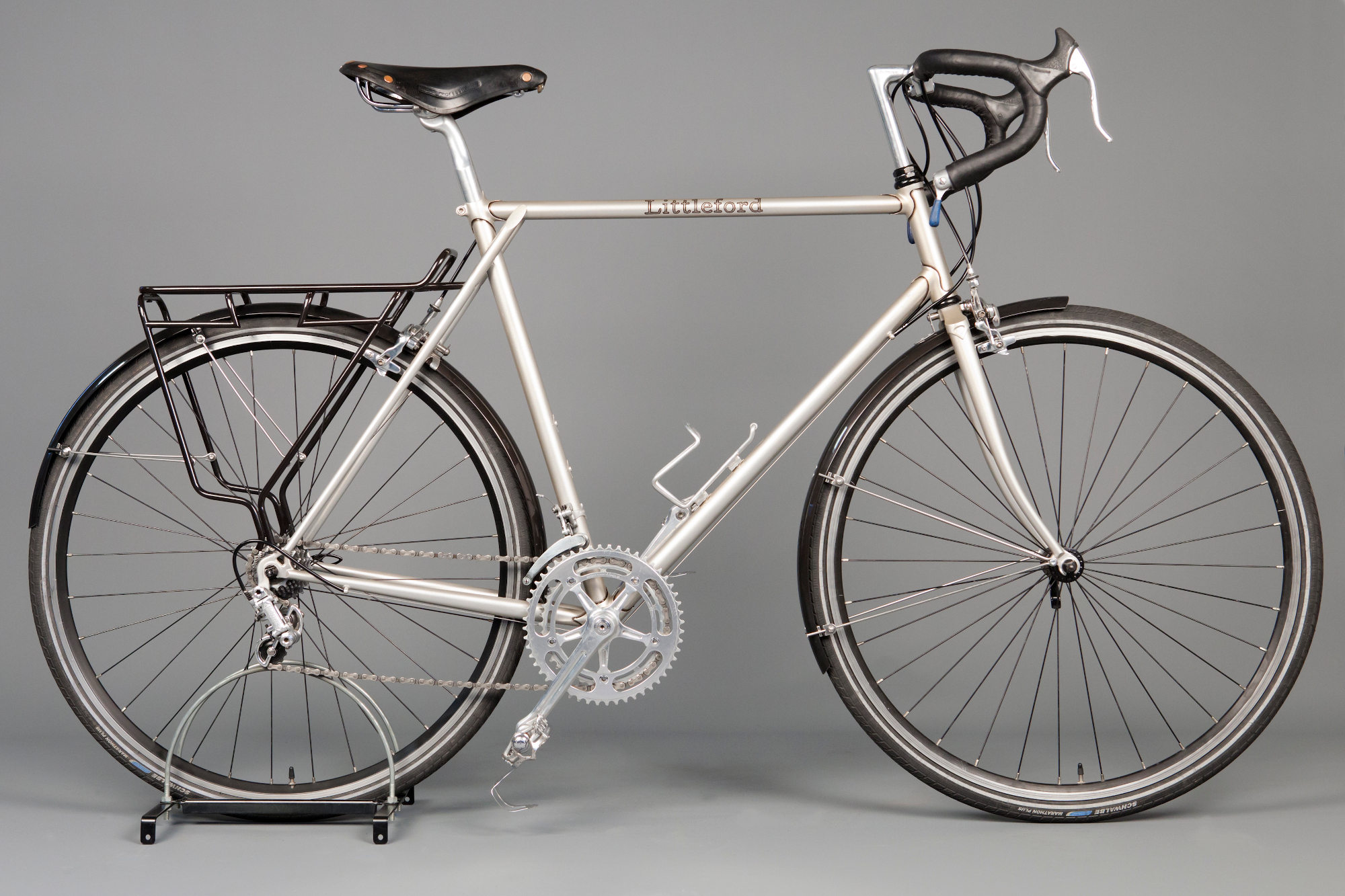
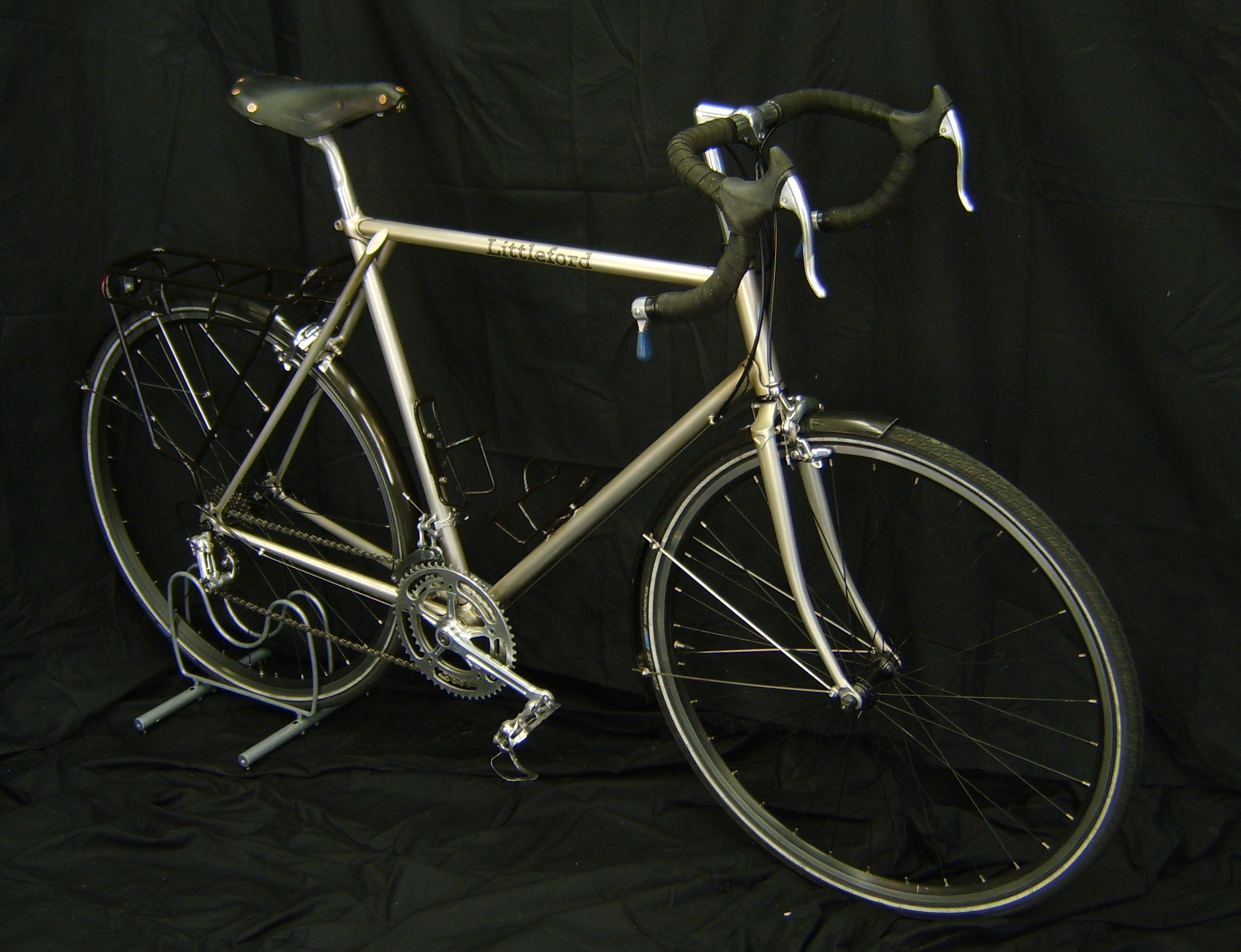
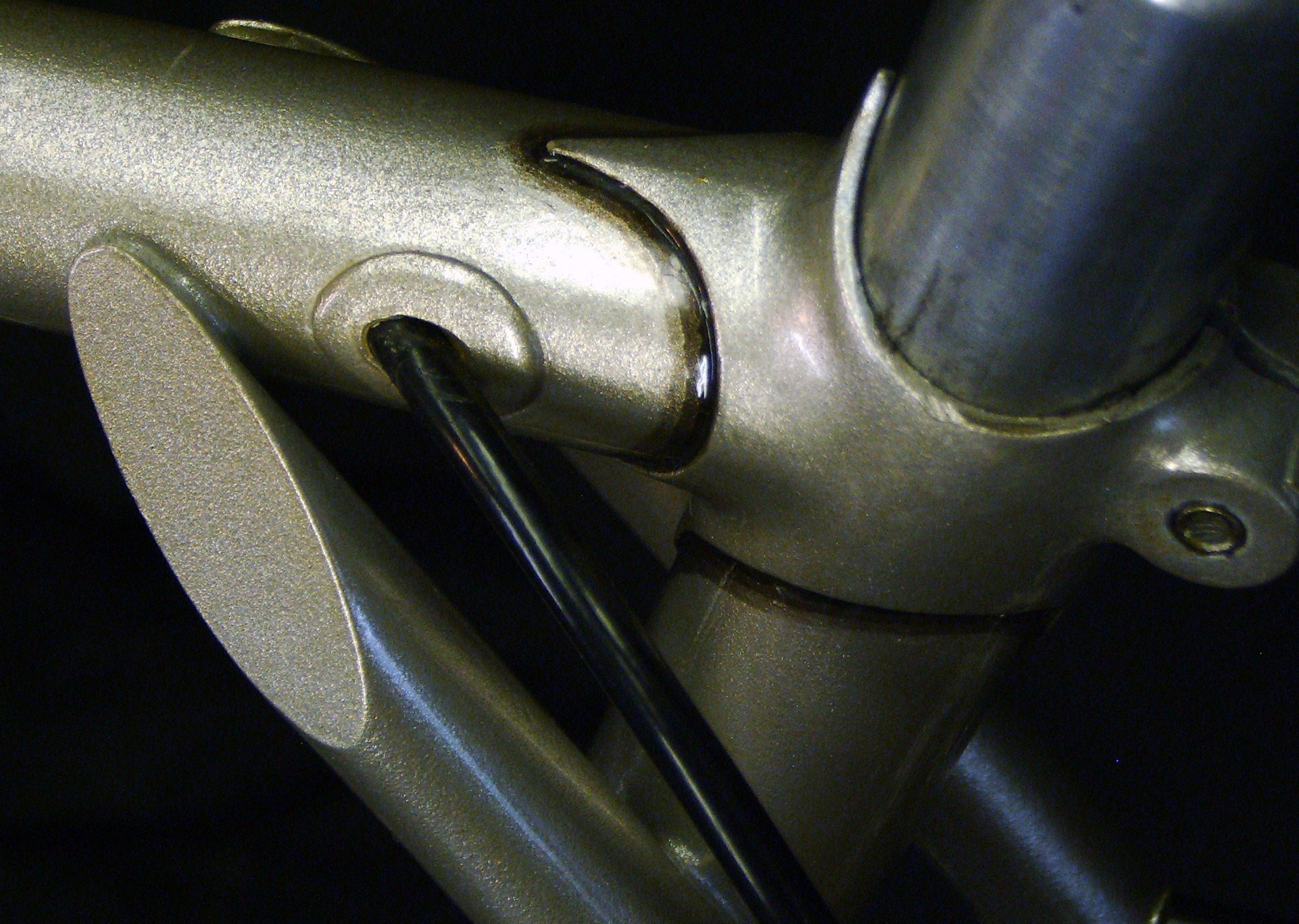
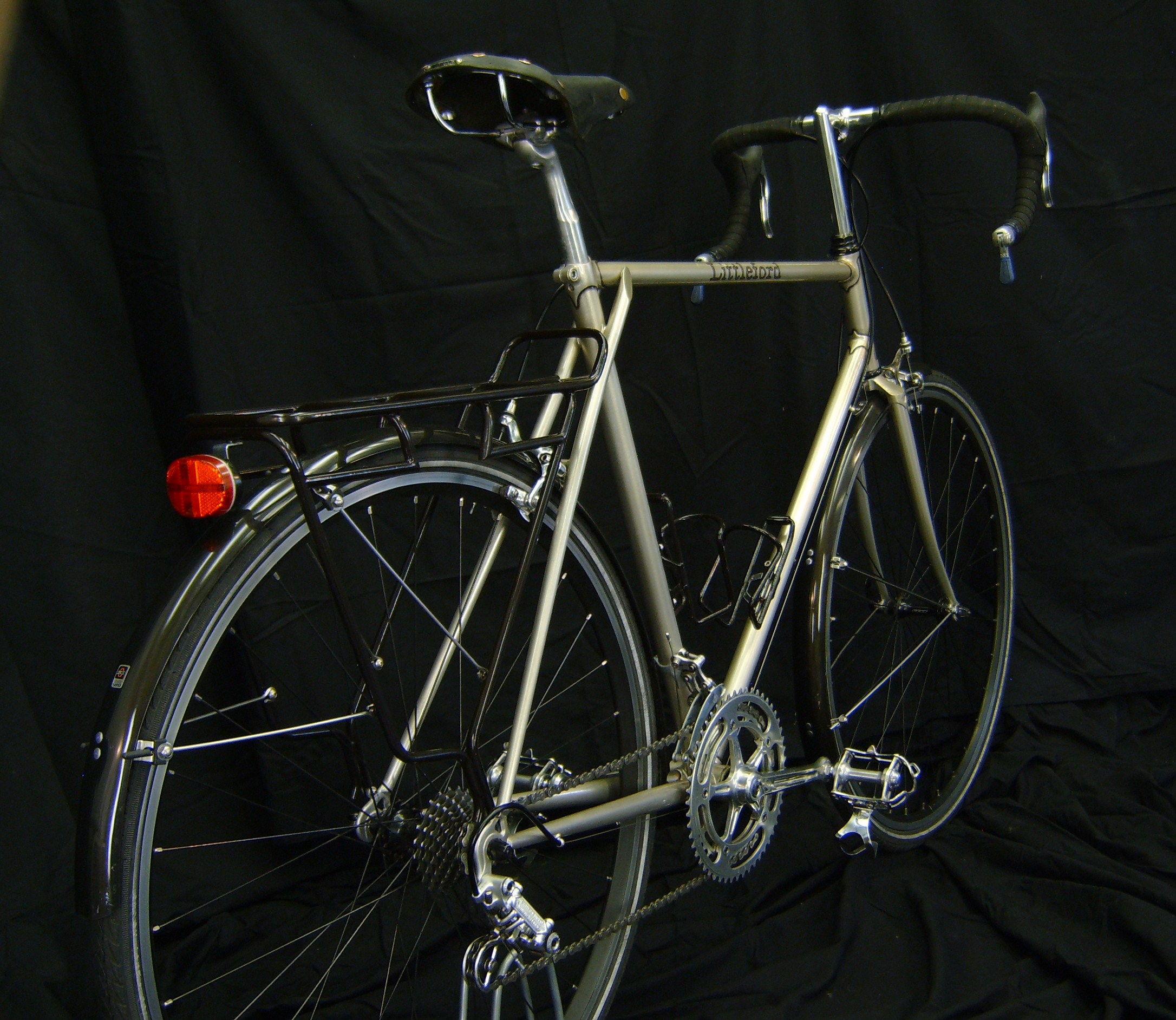
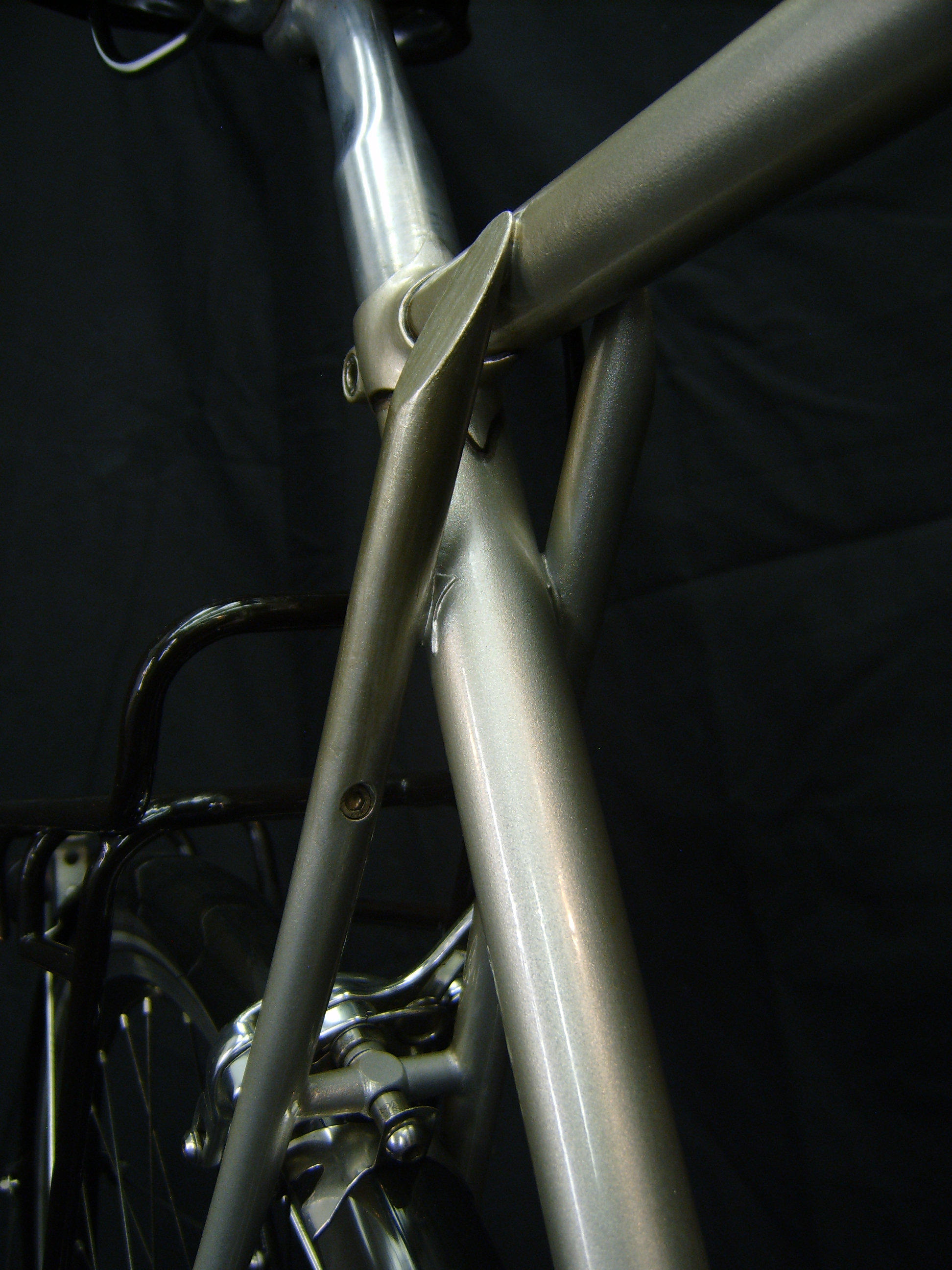
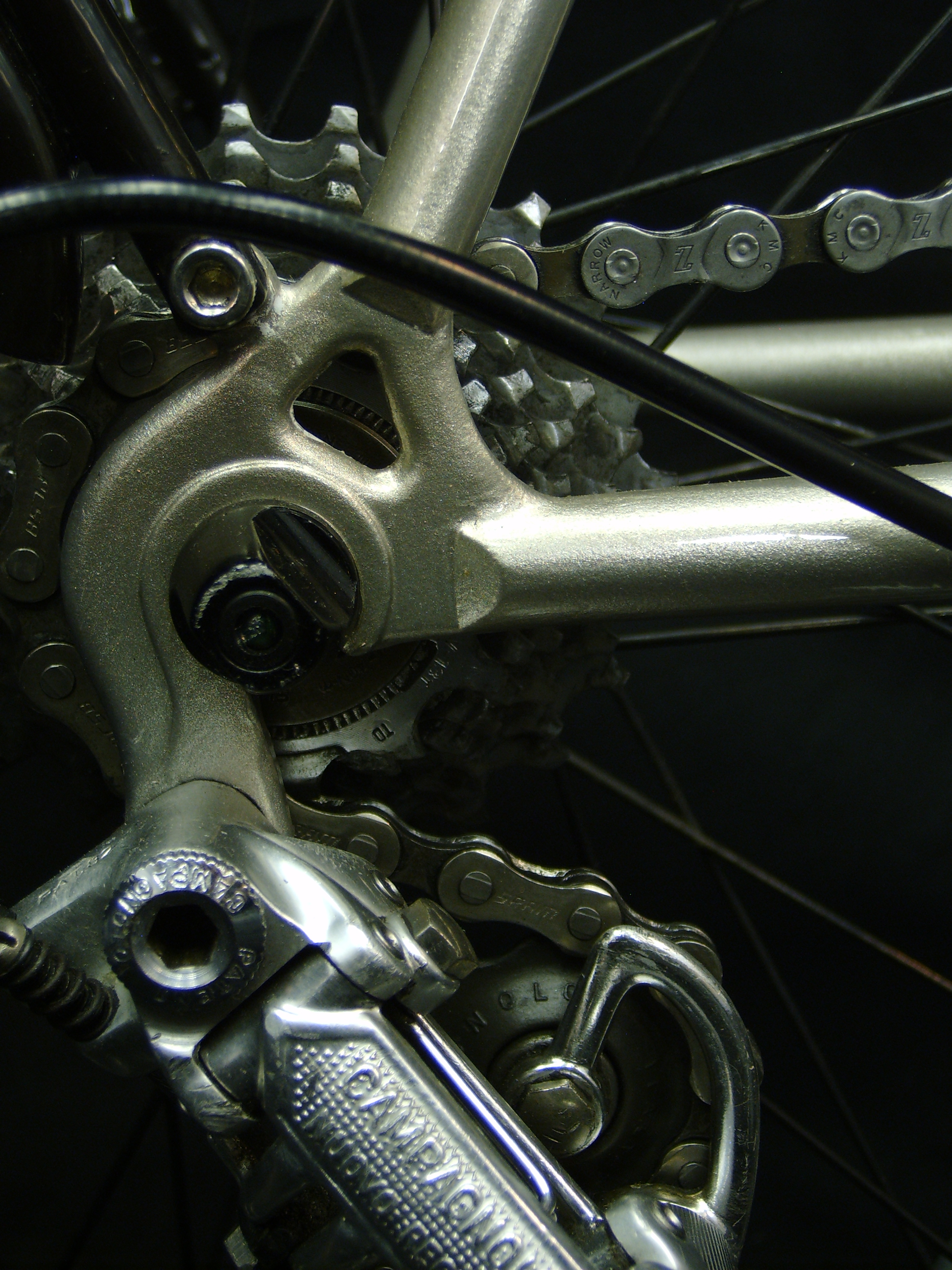
This is Craig’s light and snappy sport tourer. In order to complement his well-used vintage Campagnolo components, I went for a classic feel with old-fashioned steel road geometry and a pearly antique silver paint job. The lower bottom bracket, longer chain stays, and overlapping seat stays keep things comfortable and perfectly functional for long-hauling. This bike was the first Littleford to feature a completely integrated rear rack. The horizontal support struts mount flush to the seat stays, discretely fastened by allen bolts from the underside of the stays. When the rack is removed there are only two small tunnels remaining. (Coming soon; integrated deer whistles!)
  |
  |
   |